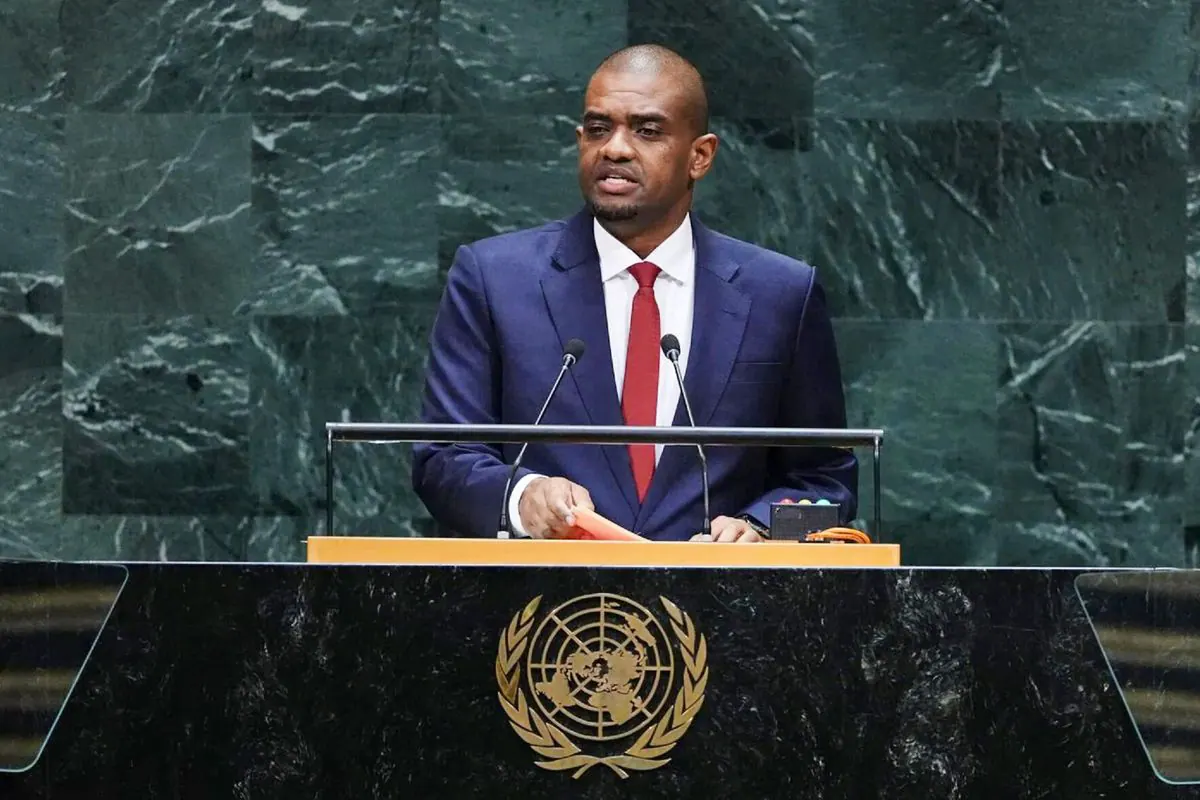
Tanzania has announced its bid for a non-permanent seat on the United Nations Security Council (UNSC) for the 2029-2030 term. Vice President Deogratius Ndejembi made the announcement on September 22, 2026, during the General Debate of the 81st session of the United Nations General Assembly (UNGA 81) in New York. The African Union has formally recognized Tanzania's intention ahead of the election scheduled for June 2028.
According to Vice President Ndejembi, Tanzania's bid is based on its experience in peace and security matters, including serving twice on the Security Council and participating in international peacebuilding initiatives. He cited the adoption of Security Council Resolution No. 1653 in 2006 concerning the Great Lakes region and Tanzania's cooperation with Denmark in establishing the UN Peacebuilding Commission.
If elected, Tanzania plans to focus on conflict-prevention diplomacy, peaceful resolution of disputes, women's participation in peacekeeping, the role of young people in peace and security, and reforms to UN peacekeeping operations. The country aims to work with member states and present its vision while seeking support to serve the world with a strong African voice and principled leadership.
The Tanzania Human Rights Defenders Coalition (THRDC) executive director, Onesmo Olengurumwa, views the bid as a good opportunity for Tanzania, drawing on its previous experience on the Security Council. He noted that during Mwalimu Julius Nyerere's era, Tanzania used its position to influence the decolonization of Africa and peace efforts in countries experiencing conflicts.
However, Olengurumwa emphasized that Tanzania must address its internal challenges before seeking to promote peace internationally. He believes the bid should be accompanied by efforts to reconcile, resolve internal conflicts, and build a clean record before the 2028 vote. This would allow Tanzania to present itself as a credible voice for countries facing conflict.
The Legal and Human Rights Centre (LHRC) executive director, Dr. Anna Henga, stated that securing the seat would provide Tanzania with an opportunity to increase its voice and influence on global peace and security matters, particularly those concerning Africa. She added that the position would also provide an opportunity to increase Tanzania's international influence and standing.
Various stakeholders, including Dr. Paul Loisulie, a political scientist, and advocate Steven Kaswahili, have expressed support for Tanzania's bid, viewing it as a positive step to strengthen the country's voice and position on the international stage. However, Dr. Henga noted that Tanzania would not have veto power, unlike the five permanent members of the Security Council.
Key points
- Tanzania bids for non-permanent UN Security Council seat for 2029-2030
- The bid is based on Tanzania's experience in peace and security matters
- Stakeholders emphasize the need for Tanzania to address internal challenges before promoting peace internationally