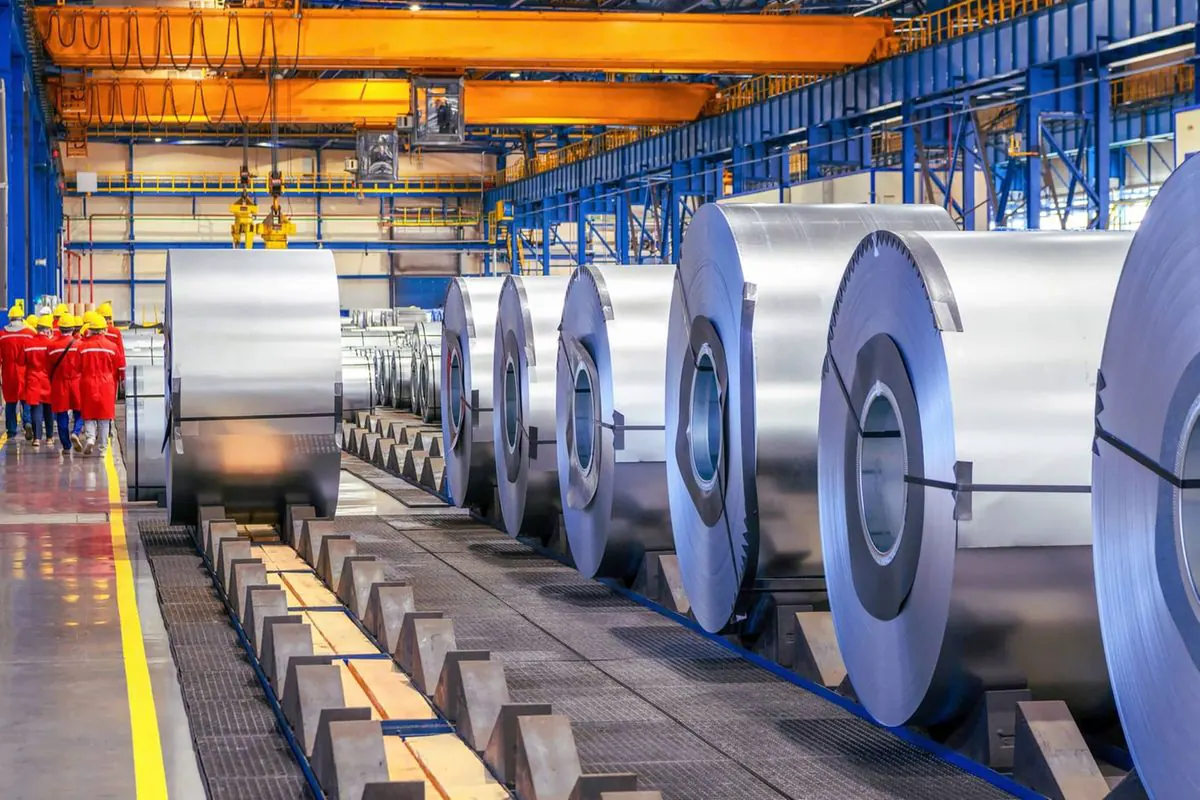
Tanzania's manufacturing sector is poised for growth with China's increasing investment in the country. According to the Tanzania Investment and Special Economic Zones Authority (Tiseza), Chinese investors accounted for $3.14 billion of the $3.38 billion total foreign capital registered under the Export Processing Zone (EPZ) scheme between April and June 2026. This investment is expected to create 19,027 jobs, making China the largest source of foreign investment under the scheme during the quarter.
The investment figures come as manufacturing emerges as the leading investment destination in Tanzania's broader economy. During the April-June quarter, Tanzania registered 243 investment projects under the general investment scheme with total capital of $1.88 billion and potential to create 33,805 jobs. Manufacturing accounted for 139 of those projects, attracting $764.07 million and generating 17,875 projected jobs. The commercial building, construction, and economic infrastructure sector followed with 13 projects worth $387.22 million and 7,343 projected jobs.
Tiseza's Director General, Gilead Teri, said the latest figures showed increasing investor engagement and confidence in Tanzania. "This quarter presents a clear picture: more investors are coming in, more projects are moving through the system, and more activity is taking shape on the ground," Mr. Teri stated. The growing investment footprint in Tanzania presents an opportunity for the country to accelerate manufacturing and industrialization.
However, experts say the benefits of China's investment will depend on how effectively Tanzania converts foreign capital into local production, skills, technology, and businesses. Director of the Centre for Chinese Studies at the University of Dar es Salaam, Prof. Humphrey Moshi, said Tanzania needs to ensure Chinese investment contributes to value addition inside the country instead of simply increasing the volume of raw materials or low-value products exported.
Prof. Moshi emphasized the need for Tanzania to develop interconnected industries, creating a wider domestic industrial ecosystem. "We need to expand the chain of industries. One industry should be able to produce a product that becomes a raw material for another industry. That is how we can create more industries and expand the industrial base," he said. This will create more employment opportunities and increase the value of Tanzania's exports.
Chief Executive Officer of the Institute of Management and Entrepreneurship Development, Dr. Donath Olomi, said Tanzania needs a deliberate strategy for engaging China as the country becomes an increasingly important investor and market. "We need a strategy for engagement now. There is an opportunity, but there is also a challenge. China is a dominant investor and a substantial market, so we need to be deliberate about how we engage," Dr. Olomi said.
The scale of investment already being recorded gives the issue greater urgency, with 250 new investment projects registered across the general and EPZ/SEZ schemes, bringing the cumulative number to 934 projects valued at $8.8 billion, with potential to create more than 253,512 jobs. For Tanzania, the size of the investment pipeline underscores the importance of having policies that ensure foreign investment strengthens domestic productive capacity.
Key points
- China's investment in Tanzania's manufacturing sector has the potential to create 19,027 jobs.
- Tanzania needs a deliberate strategy for engaging China as a dominant investor and market.
- The country's manufacturing sector is poised for growth with China's increasing investment.