Tanzania's growing youth jobs drive has shown promise, with youth unemployment declining from 8.3 percent in 2024 to 7.5 percent in 2025, according to the National Bureau of Statistics. However, the figure still represents a substantial number of young people struggling to enter the labour market. The latest survey shows agriculture remains the largest employer, accounting for 54.4 percent of employment, while services account for 35.5 percent and industry 10.1 percent. Only 13.2 percent of workers were in paid employment.
Vice President Deogratius Ndejembi has directed public institutions to become more active in preparing young people for the world of work. On September 28, he gave the Ministries of Planning and Investment, Finance and Agriculture two weeks to prepare a practical training programme targeting at least 10,000 young people in public institutions and private-sector organisations, with stipends for those placed in public institutions. He also called for at least another 20,000 opportunities in the private sector.
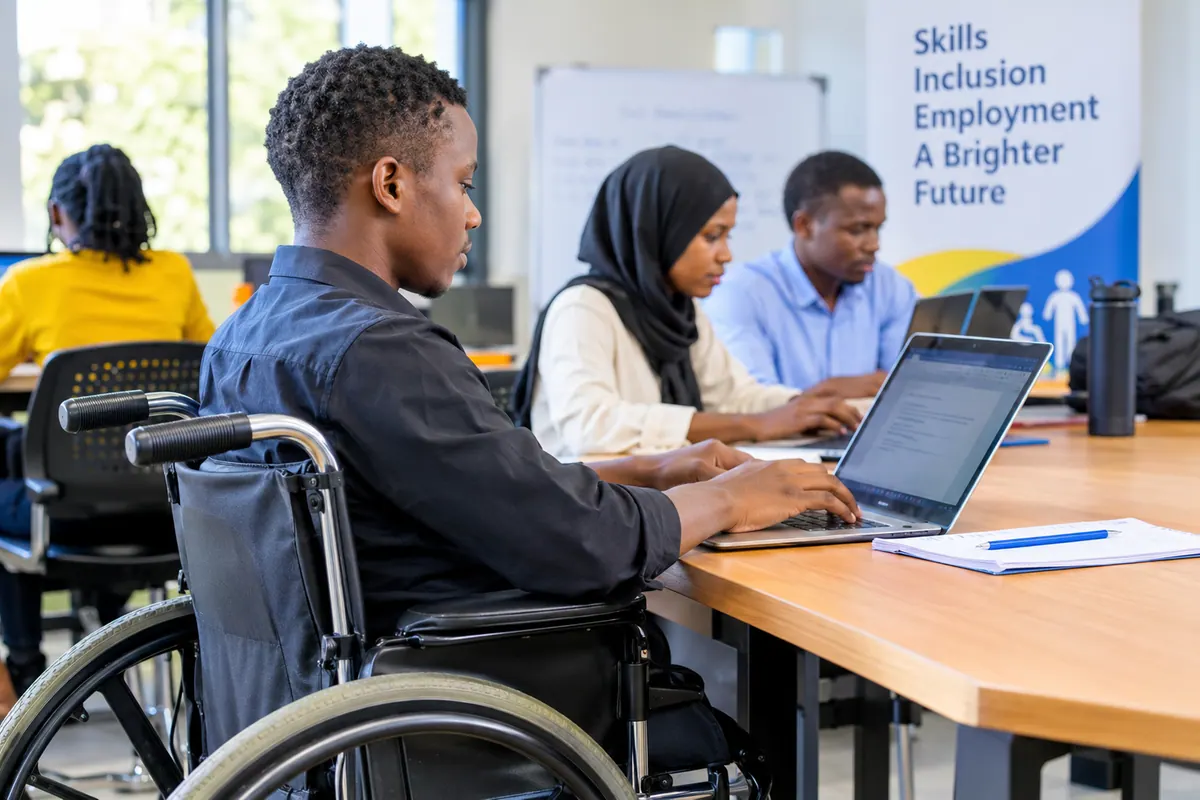
However, experts warn that the drive must address the needs of young people with disabilities, who remain at risk of being left behind. Shivyawata, a national federation of organisations of persons with disabilities, organised discussions on September 29, 2026, to address the issue. Disability organisations, employers, and government officials called for recruitment and workplace systems that judge people by their skills rather than their disabilities.
The executive director of Shivyawata, Nemes Temba, emphasised that inclusion is not charity, but rather a matter of removing unnecessary barriers that prevent qualified candidates from demonstrating their abilities. He noted that people with disabilities were still underrepresented in employment and entrepreneurship despite growing numbers acquiring education and professional skills.
The law already provides a basis for disability inclusion, with Section 31 of the Persons with Disabilities Act requiring every public and private employer with a vacancy suitable for a person with a disability to employ a qualified applicant. The law also provides for a three percent quota for employers with a workforce of 20 or more. However, implementation remains a major challenge, with employers falling short of the three percent requirement.
To address this challenge, the government is using the Persons with Disabilities Management Information System (PDMIS) to build a more reliable picture of people with disabilities and their access to services, including employment. The system is intended to connect information about a person with a disability with information provided by employers, making it possible to establish whether someone reported as employed by an organisation is also reflected in the national disability information system.
The government's 10,000-internship initiative offers more than an employment intervention. If implemented inclusively, it could also test whether Tanzania can build a labour market where practical experience, skills, and productivity, rather than assumptions about disability, determine who gets an opportunity. The Prime Minister's Office says the PDMIS has been connected with 11 government systems, including student information, health, and loan systems.
Key points
- The Tanzanian government must ensure that its youth jobs drive is inclusive of young people with disabilities.
- The law requires employers to employ a qualified applicant with a disability, but implementation remains a major challenge.
- The government is using the Persons with Disabilities Management Information System to build a more reliable picture of people with disabilities and their access to services, including employment.