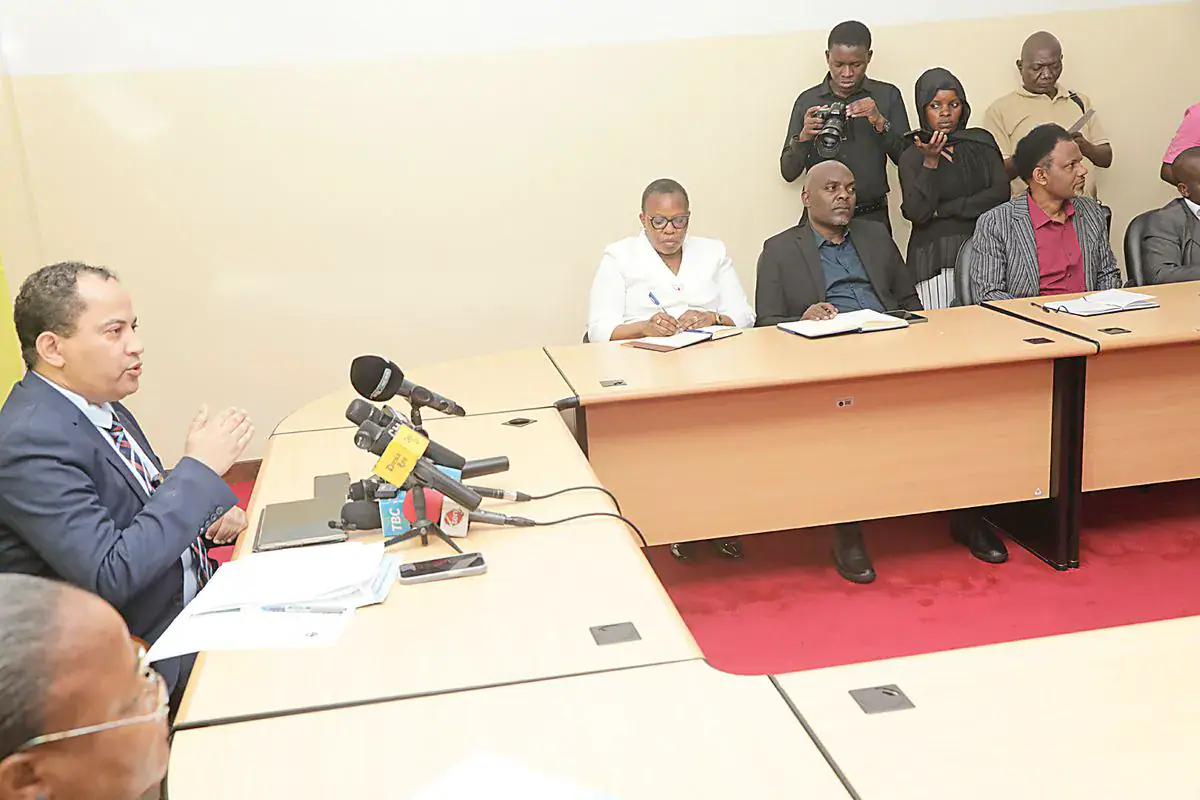
The National Examinations Council of Tanzania (Necta) released results showing 970,876 out of 1,139,273 candidates passed, with an overall pass rate of 85.22 percent, up from 81.80 percent in 2025. However, the pass rate in Science and Technology fell by 4.09 percentage points to 80.34 percent. The share of candidates earning Grades A and B in Science and Technology dropped from 48.14 percent in 2025 to 33.60 percent this year.
Mathematics also tells a similar story, with a pass rate of 62.56 percent, but only 32.47 percent of candidates achieved the top grades of A and B. These figures suggest that quality is not keeping pace with quantity in subjects that underpin scientific careers. The results raise questions for policymakers about whether efforts to draw more pupils towards science, technology, engineering, and mathematics (STEM) are being matched by the quality of learning in classrooms.
Tanzania is pursuing a $1 trillion economy under Development Vision 2050, which demands many more scientists, engineers, researchers, and skilled professionals. The government has introduced initiatives such as the Samia Scholarship Programme to support top-performing science students and the Sh780 billion Second Education and Skills for Productive Jobs Programme to strengthen practical and technical skills.
Education experts warn that incentives at the top of the system cannot substitute for sound foundations. The most pressing concern is the gap between urban and rural schools, where many rural public schools struggle with shortages of science teachers, inadequate laboratories, and limited opportunities for practical learning. Closing this gap requires action at both primary and secondary levels.
Experts suggest that science education in primary schools must move beyond memorisation, with pupils given more opportunities to conduct simple experiments and understand how scientific concepts apply to everyday life. The ministry of Education and PO-RALG are also urged to address the unequal distribution of science teachers, particularly in rural areas, by providing hardship allowances and other incentives.
The issue is not limited to primary schools, as rural secondary schools also face serious shortages of physics and chemistry teachers, inadequate laboratories, and social barriers that limit girls' participation in science subjects. Without targeted rural subsidies and specialised teacher deployment, government motivation schemes may primarily benefit a privileged urban minority.
Ultimately, rectifying actions are required in both primary and secondary schools to address these concerns. This includes addressing teacher shortages, improving laboratory infrastructure, and promoting equal access to science education, particularly for rural girls.
Key points
- Tanzania's 2026 Primary School Leaving Examination results show a decline in performance in science subjects.
- The country's ambition to nurture scientists and innovators is under scrutiny due to these results.
- Experts warn that sound foundations in primary and secondary education are crucial to producing a future generation of scientists and engineers.