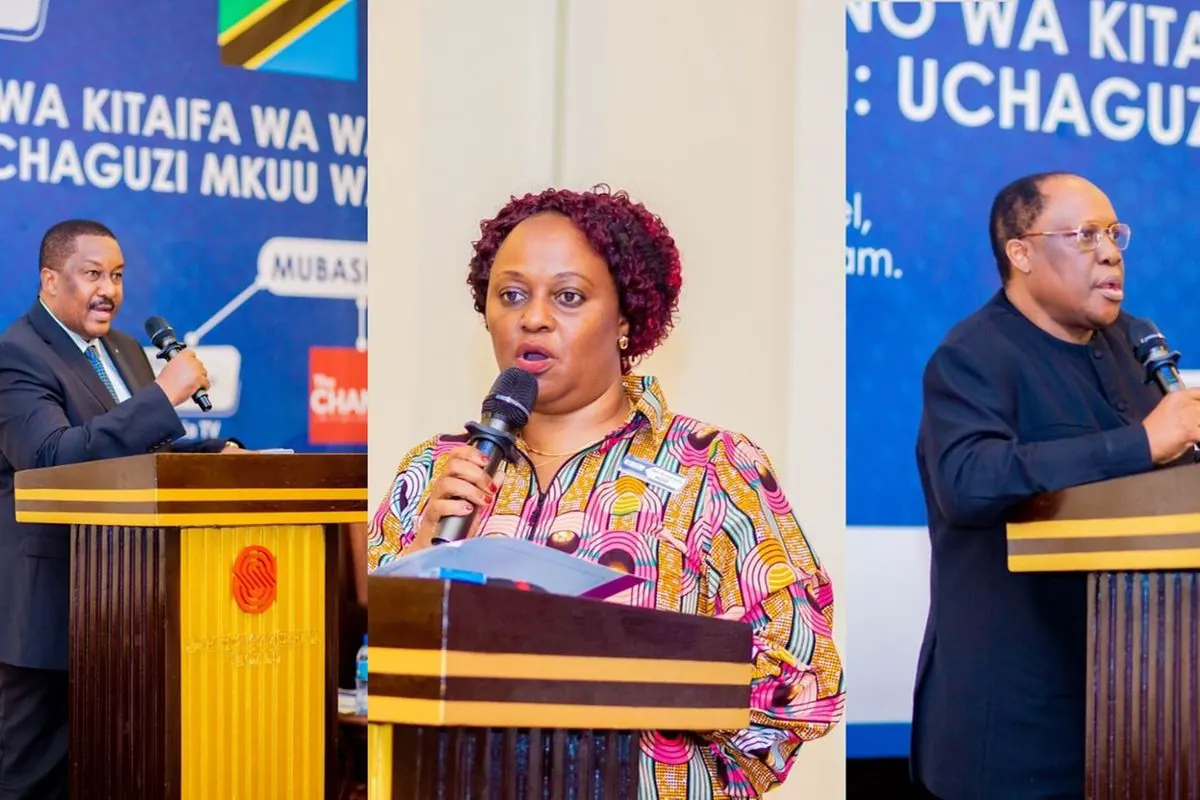
Tanzania's political future appears to be taking a positive turn as various stakeholders, including political parties, religious leaders, government representatives, diplomats, academics, and civil society actors, came together to discuss the challenges facing the country following the 2025 General Election. The meeting, held at the Tanzania Centre for Democracy (TCD) National Conference in Dar es Salaam, aimed to examine the election's consequences and identify necessary reforms to prevent similar issues in the future.
According to Dr. Rodrick Kweyunga, a Senior Lecturer in Political Science from the University of Dar es Salaam, the conference revealed a broad recognition that Tanzania cannot move forward without addressing the wounds left by the election. The events of the 2025 election left deep wounds on people, families, social and political relationships, and even affected the level of trust within society. Dr. Kweyunga emphasized that people's trust in public and democratic institutions is crucial for the legitimacy of the political system.
The conference highlighted the need for comprehensive electoral reforms, with participants calling for a clear timetable for a new Constitution and resolving political and constitutional questions. Dr. Kweyunga stated that the discussions exposed a gap between laws and implementation, adding that the existence of rights and laws is not sufficient without their implementation in practice in a manner that people can trust. Corruption, leadership ethics, and inequalities were also raised during the conference.
Participants at the conference emphasized the importance of wider participation by young people, women, people with disabilities, and farmers, as well as dialogue on Union matters. Dr. Kweyunga noted that reconciliation required political will, commitment, and willingness to compromise for the national interest. He added that deliberate efforts are needed to heal the country and prevent a recurrence of the 2025 events.
Various political analysts and stakeholders shared their views at the conference, with University of Dar es Salaam political analyst Salbinus David stating that the conference showed that Tanzanians with different views could acknowledge challenges and seek solutions. Former Prime Minister and First Vice President Joseph Warioba called for Tanzania to return to values that guided its founders, including national unity, equality, patriotism, honesty, and self-reliance.
Other stakeholders, including Chairman of the National Council of Political Parties, Juma Ali Khatib, and Registrar of Political Parties Judge Francis Mutungi, emphasized the need for dialogue and openness to prevent a recurrence of the challenges experienced during and after the election. TCD chairperson Dorothy Semu stated that Tanzania needed institutions capable of protecting democracy regardless of who was in power.
The conference concluded with a call for a specific plan with timeframes and accountability for implementing the agreements, with reforms expected to progress before 2029. Key points from the conference include the need for comprehensive electoral reforms, wider participation by various groups, and a clear timetable for a new Constitution.
Key points
- Tanzania's stakeholders call for comprehensive electoral reforms.
- Conference highlights need for wider participation by young people, women, and people with disabilities.
- Stakeholders emphasize importance of national unity, equality, and patriotism.