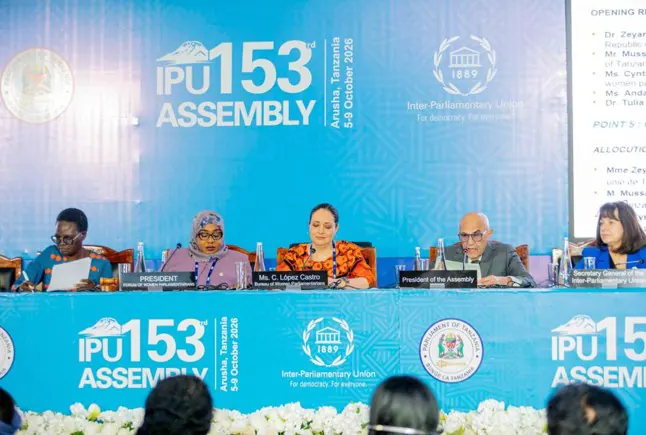
The 153rd Inter-Parliamentary Union (IPU) Assembly has opened in Arusha, Tanzania, with over 2,000 parliamentarians and officials from 183 member parliaments in attendance. The event, which runs from October 5 to 9, focuses on enhancing good governance and empowering communities through inclusivity, trust, and opportunities for all. However, the gathering is overshadowed by the detention of Tanzania's main opposition leader, Tundu Lissu, who faces treason charges.
Lissu, a former presidential candidate and Chadema national chairman, was arrested in April 2025 and charged with treason in connection with statements prosecutors claim were intended to incite the public to prevent the October 2025 general election. The case remains before the High Court, with Lissu arguing that the prosecution failed to establish the legal elements required for treason. The prosecution has rejected this position, citing 17 witnesses who established that Lissu intended to incite the public.
Chadema has seized on the IPU assembly to demand that the organization hear competing accounts of Tanzania's political situation and meet its national chairman. The party's Secretary-General, John Mnyika, called on the IPU to speak with citizens, political parties, and others affected by the country's political disputes rather than relying on a single account. Mnyika urged the IPU to obtain information from different sides before forming an understanding of the political and democratic situation in Tanzania.
The IPU has a formal mechanism for examining allegations involving parliamentarians, including Lissu's case. The organization has recorded allegations of intimidation, arbitrary arrest and detention, due-process concerns, and restrictions on freedom of opinion and expression. The Tanzanian government has presented a counter-narrative, arguing that Lissu's arrest followed statements it considered an attempt to disrupt the electoral process.
The government has described the IPU assembly as a major diplomatic achievement and an opportunity to showcase Tanzania's tourism, investment, culture, and hospitality. The event is expected to admit Naoero, bringing the organization's membership to 184 national parliaments. The assembly will discuss various topics, including peace and security, climate change, artificial intelligence, disability rights, maritime security, and the future of work.
Chadema has urged international delegates to listen to people beyond the formal conference program and examine claims concerning deaths during the election period, detained opposition figures, and political leaders facing serious criminal charges. The party has also called on the IPU leadership to meet Lissu. Whether such a meeting takes place and what the organization says about the case could determine whether the political controversy remains a parallel campaign outside the conference halls or becomes part of the summit's formal human-rights conversation.
The IPU assembly has been framed as a call for cooperation rather than division. The organization's president, Zungu, has argued that parliamentary institutions should turn differences into dialogue and competing interests into debate, while insisting that humanity shares a common future. The event's outcome and the IPU's response to Chadema's appeal will be closely watched, as they may have implications for Tanzania's democratic institutions and the country's international reputation.
Key points
- The IPU assembly has been overshadowed by the detention of opposition leader Tundu Lissu, who faces treason charges.
- Chadema has urged the IPU to hear competing accounts of Tanzania's political situation and meet its national chairman.
- The IPU has a formal mechanism for examining allegations involving parliamentarians, including Lissu's case.