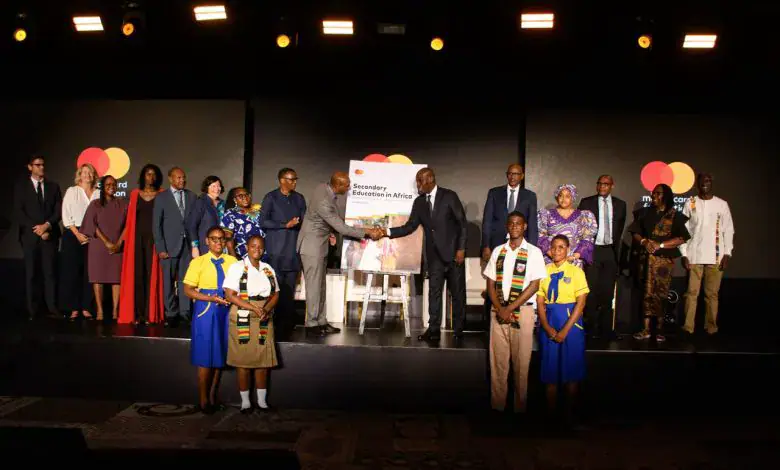
A recent report by the Mastercard Foundation has highlighted Tanzania's education reforms as an example for other African countries to follow. The report, titled "Secondary Education in Africa: Expanding Pathways to Work, Livelihoods, and Lifelong Learning," notes that Tanzania's revised curriculum, introduced in 2023, has started to bring about a new approach to teaching, emphasizing practical skills, critical thinking, and the connection between education and economic activities.
The report, which studied seven countries including Tanzania, Ethiopia, Ghana, Malawi, Rwanda, Senegal, and Sierra Leone, found that Tanzania's education system has started to show positive changes. Some students and teachers have reported a shift from rote learning to discussions, practical learning, and linking classroom knowledge to income-generating opportunities. The introduction of Business Studies, for example, has enabled students to see the connection between what they learn in school and the possibility of starting entrepreneurial ventures.
The report also notes that Tanzania has started to integrate secondary education with technical and vocational training. Students who choose this path can complete their secondary education with a certificate from the National Council for Technical and Vocational Education and Training (NACTVET). This development aligns with the report's main argument that secondary education should not prepare young people for only one path in life, such as pursuing higher education or formal employment.
According to Daniel Hailu, Acting Program Director at the Mastercard Foundation, secondary education can no longer be structured around the assumption that all students will follow one path or that there are predictable transitions from school to work. The report emphasizes that education must be relevant and enable young people to reach their full potential. For many young people in Africa, secondary education is the last opportunity for the formal education system to reach them on a large scale.
Despite these developments, Tanzania still faces significant challenges in ensuring that education reforms benefit more students. Statistics show that in the 2023 National Form Four Examination, the failure rate was around 25% in Mathematics, 69% in English, and 97% in Kiswahili. Moreover, only about a quarter of students proceed to higher secondary education, while those who pursue technical and vocational training make up only about 0.5% of all secondary students.
The report also highlights disparities in access to and completion of secondary education across different regions. The difference in the number of students completing lower secondary education between high-income and low-income districts is around 50%. Furthermore, two-thirds of employed young people in Tanzania work in the agricultural sector, while formal employment accounts for only 5% of youth employment.
The Tanzanian government has acknowledged that challenges in the education sector have not been fully addressed and has committed to addressing them. The Prime Minister, Mwigulu Nchemba, recently announced that Shilingi 1.77 trillion is needed to improve education, particularly at the secondary level, including the construction of classrooms, laboratories, and recruitment of new teachers.
Key points
- Tanzania's revised curriculum emphasizes practical skills and entrepreneurship.
- The country has started to integrate secondary education with technical and vocational training.
- Despite progress, Tanzania still faces significant challenges in ensuring equal access to quality education.
Reporting sources
- Kwa nini mageuzi ya elimu Tanzania ni mfano kwa Afrika · habarileo.co.tz