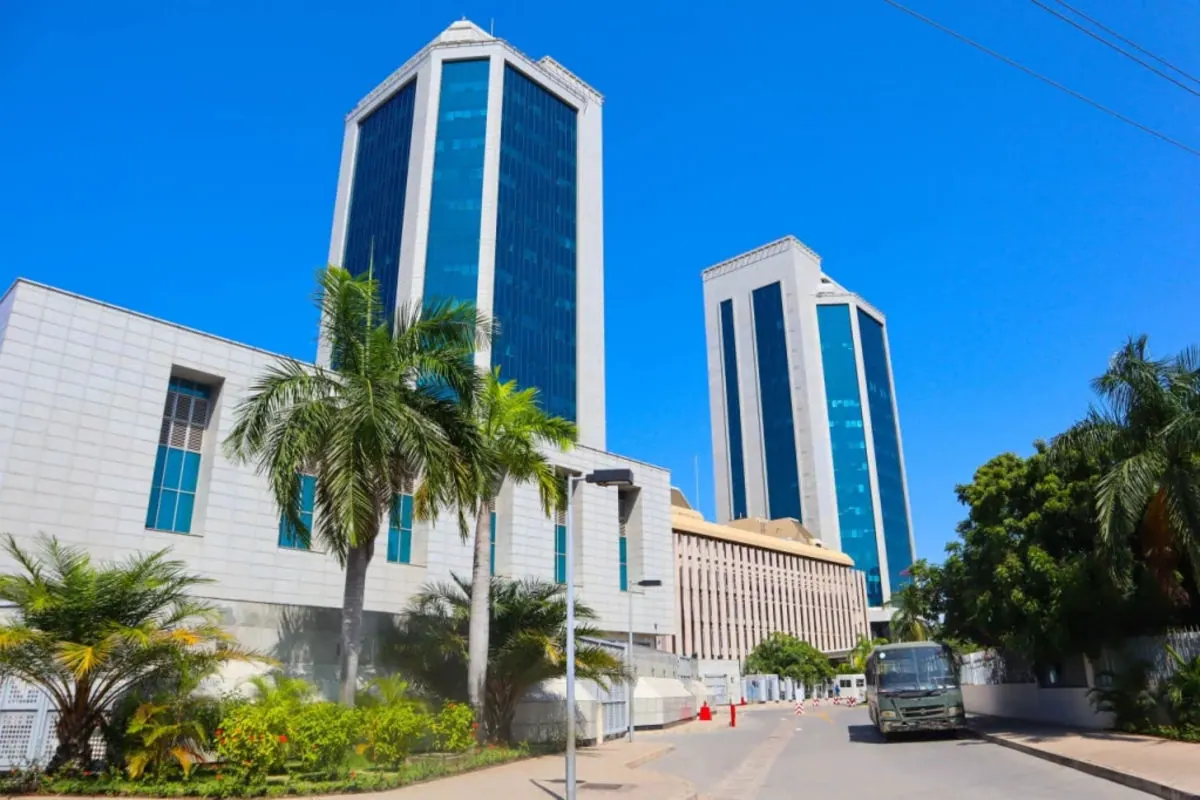
The Bank of Tanzania has announced that the country's economy has effectively expanded by about Sh6.2 trillion after updating national accounts to reflect changes in the structure of economic activity. This update, known as rebasing, has raised Mainland Tanzania's nominal gross domestic product (GDP) for 2025 to Sh234.104 trillion, from Sh230.073 trillion under the previous statistical series. The combined nominal GDP of Mainland Tanzania and Zanzibar reached Sh243.346 trillion in 2025.
The rebasing exercise involved changing the base year used to calculate GDP from 2015 to 2019, allowing national accounts to better capture changes in the economy and the relative contribution of different sectors. This review also covered Zanzibar, where nominal GDP for 2025 increased to Sh9.242 trillion, from Sh7.029 trillion under the previous series. The National Bureau of Statistics and the Office of the Chief Government Statistician harmonized national accounts data, enabling the compilation of GDP and related indicators for the United Republic of Tanzania.
According to the Bank of Tanzania's Monetary Policy Committee, the economy maintains strong growth momentum despite external pressures, including elevated global commodity prices and geopolitical tensions. In the first quarter of 2026, Mainland Tanzania's economy grew by six percent and is estimated to have expanded by more than six percent in both the second and third quarters. Growth has been supported by financial services, industrial production, infrastructure investment, and social services.
Zanzibar's economy also showed significant growth, with a 6.7 percent increase in the first quarter of 2026, and growth estimated to have exceeded seven percent in each of the following two quarters. This growth was driven mainly by tourism, construction, and irrigation projects. The central bank stated that the outlook remained favourable, although global commodity prices, supply-chain disruptions, and possible El Niño-related shocks could weigh on growth.
The Monetary Policy Committee maintained the Central Bank Rate at 6.25 percent for the quarter ending December 2026, saying the current monetary policy stance remained appropriate to contain inflationary pressures while supporting economic activity. Mainland inflation rose to 4.3 percent in August, from an average of 4.1 percent in the quarter ending June, mainly due to higher global oil prices, which pushed up domestic fuel and transport costs.
Despite the increase in inflation, it remained within the medium-term target range of three to five percent. The Bank of Tanzania also reported that private-sector credit growth remained strong, averaging 32.5 percent in the quarter ending September, while non-performing loans stood at 2.5 percent in August, below the five percent tolerable threshold. Foreign exchange reserves also remained above $6 billion, providing 4.3 months of import cover in September.
The Bank of Tanzania attributed the strong economic performance to stronger exports, particularly of gold, tourism services, and manufactured goods, which helped cushion the impact of higher imports and freight costs on the country's external position. The rebasing of GDP is expected to provide a more accurate picture of Tanzania's economy and inform policy decisions to support sustainable economic growth.
Key points
- Tanzania's combined GDP reaches Sh243.3 trillion ($92 billion) after rebasing.
- The economy maintains strong growth momentum, with Mainland Tanzania growing by six percent in the first quarter of 2026.
- The central bank maintains the Central Bank Rate at 6.25 percent to contain inflationary pressures while supporting economic activity.