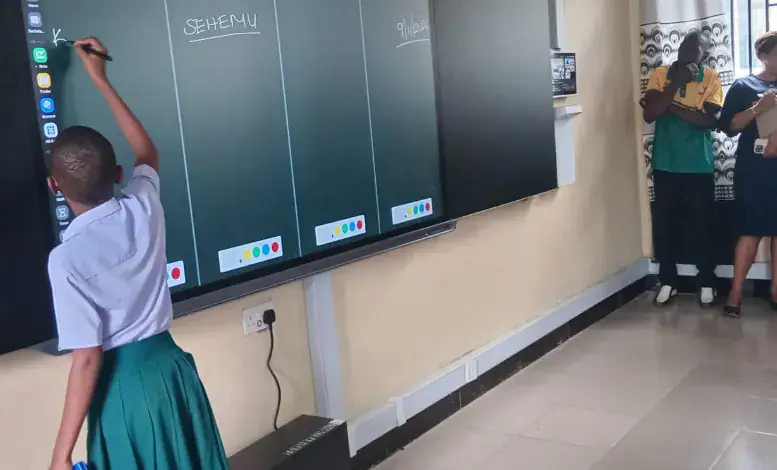
The Tanzanian government's efforts to improve education in rural areas are bearing fruit with the introduction of digital classrooms. Through the Basic Education Improvement Project (BOOST), the government has built digital classrooms, provided information and communication technology (ICT) equipment, and trained teachers and students in all 26 regions. This initiative has transformed the teaching and learning process, enabling one teacher to instruct students from multiple schools simultaneously.
During a recent visit to Samia Primary School in Mwanza, Minister of State Dr. Dugange noted that the use of ICT has simplified teaching, increased teacher efficiency, and expanded opportunities for students to access quality education regardless of their location. The minister observed a teacher using digital classrooms and interactive boards to instruct students from different schools at the same time. This technology has helped address the shortage of teachers in rural areas.
The BOOST project has made significant investments in education infrastructure in Mwanza, with 26 schools built and equipped with ICT facilities. At Samia Primary School, the government has spent over 200 million Tanzanian shillings on building 10 classrooms and purchasing learning materials. Similar investments have been made in other schools, such as Kigongo Primary School, which received 141 million shillings for infrastructure development.
The introduction of digital classrooms has improved the learning environment and increased student efficiency. Teachers and students have acquired skills in using ICT for educational purposes, including basic computer skills and digital learning. According to Chacha Joseph, headteacher of Samia Primary School, the school has received a digital classroom with 20 computers and an interactive board, enhancing the use of technology in teaching and learning.
The impact of the BOOST project extends beyond infrastructure development. It has also improved teacher training and student outcomes. Silvano Pamba, an ICT teacher at Kigongo Primary School, noted that digital classrooms have reduced the challenges posed by teacher shortages, enabling one teacher to instruct multiple schools at once. The technology has also enhanced teacher reporting and increased student motivation to learn.
Local residents have welcomed the government's initiative, citing its potential to address education disparities in rural areas. Charles Mayela, a government representative, praised the initiative, saying it prepares students for a technology-driven world. George Ngole, a resident of Kigongo, noted that the improved infrastructure has enabled children to study in a conducive environment and access quality education comparable to that in urban areas.
As the government continues to roll out the BOOST project, students and teachers are reaping the benefits of digital classrooms. Witness Kigongo, a student at Kigongo Primary School, credited the digital classroom with helping him learn quickly and acquire ICT skills. With continued investment in education infrastructure and technology, Tanzania is poised to make significant strides in improving education outcomes in rural areas.
Key points
- The Tanzanian government's BOOST project has introduced digital classrooms in rural areas, bridging the education gap and improving student outcomes.
Reporting sources
- Madarasa janja yanavyoleta mapinduzi ya elimu vijijini · habarileo.co.tz