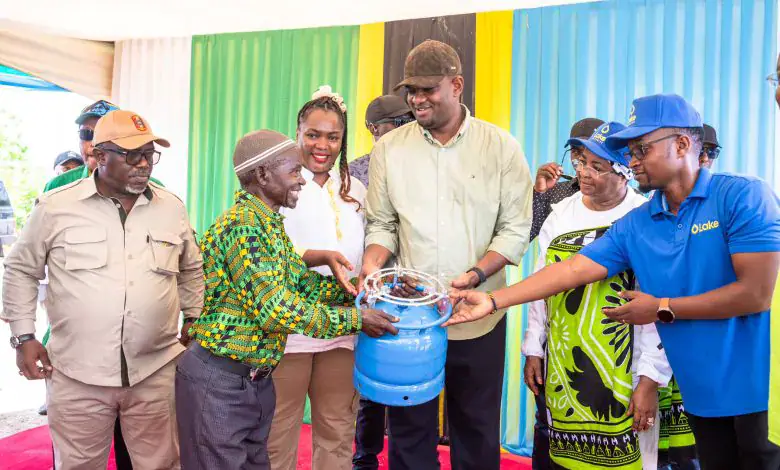
Tanzania's Deputy President, Deogratius Ndejembi, has emphasized the benefits of using clean cooking energy, citing its potential to reduce health risks associated with smoke, protect the environment, and lower energy costs for households. Speaking during a ceremony to distribute 750 gas cylinders to residents of Mchinga constituency in Lindi region, Ndejembi encouraged the use of gas as a safer alternative to firewood and charcoal. The initiative is a collaboration between Lake Gas company and the area's Member of Parliament, Salma Kikwete.
The distributed gas cylinders have a capacity of six kilograms and are part of efforts to promote the use of clean energy for cooking. Ndejembi noted that the shift to clean energy is crucial in reducing the reliance on firewood and charcoal, which can have adverse effects on users' health and the environment. He highlighted that using gas for cooking will not only safeguard health but also decrease the expenses associated with traditional cooking methods.
Member of Parliament for Mchinga, Salma Kikwete, expressed her gratitude to Lake Gas for partnering with her office to provide the gas cylinders, enabling residents to transition to clean cooking energy. She emphasized that this initiative is a significant step towards reducing the community's dependence on firewood and charcoal. The collaboration aims to support the government's goal of increasing the use of clean cooking energy across the country.
Sadiq Sabri, Head of Sales and Marketing at Lake Gas Tanzania, explained that the company's involvement in distributing the gas cylinders is part of its commitment to supporting the government's efforts to promote clean cooking energy. He mentioned that the goal is to achieve 80% usage of clean cooking energy among Tanzanians by 2034. The initiative in Mchinga is a step towards realizing this objective.
The promotion of clean cooking energy is a key priority for the Tanzanian government, particularly in households that still rely on firewood and charcoal for cooking. The use of clean energy is expected to significantly reduce indoor air pollution, which is a major health concern in many parts of the country. By encouraging the adoption of gas and other clean cooking fuels, the government aims to improve public health and mitigate environmental degradation.
Deputy President Ndejembi's advocacy for clean cooking energy aligns with the government's broader strategy to address environmental and health challenges associated with traditional cooking methods. The distribution of gas cylinders in Mchinga is an example of the collaborative efforts between the government, private sector, and local leaders to promote sustainable energy solutions. Such initiatives are crucial in supporting Tanzania's development goals and improving the quality of life for its citizens.
As the government continues to promote the use of clean cooking energy, residents of Mchinga are set to benefit from reduced health risks and lower energy costs. The initiative also underscores the importance of partnerships between the public and private sectors in driving sustainable development and achieving national goals. With the support of stakeholders like Lake Gas, Tanzania is making progress towards a cleaner, healthier, and more sustainable future.
Key points
- The use of clean cooking energy can reduce health risks associated with smoke, protect the environment, and lower energy costs for households.
Reporting sources
- Ndejembi ataja faida matumizi nishati safi ya kupikia · habarileo.co.tz