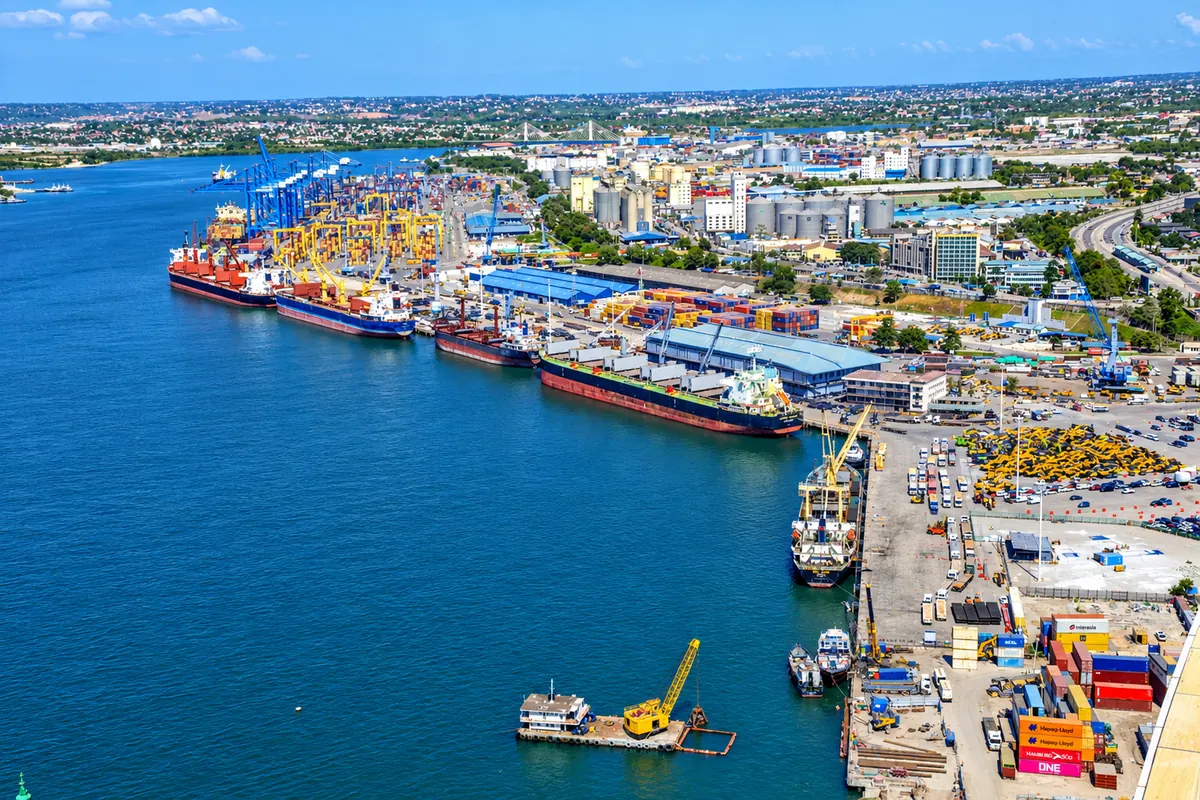
The Port of Dar es Salaam has made significant strides in improving its efficiency and attracting investment, thanks to a multi-billion-dollar modernisation programme. According to the World Bank's Container Port Performance Index (CPPI), the port rose from 360th position globally in 2024 to 255th in 2025, becoming the highest-ranked port in East Africa. This improvement is a result of the Tanzania Ports Authority's (TPA) efforts to strengthen the country's position as a gateway to regional markets.
The modernisation programme, which began with a $345 million World Bank-financed credit in 2017, includes new berths, deeper shipping channels, improved cargo-handling facilities, and private sector participation. The programme has led to the construction of ten new berths, increasing the total from 12 to 22, at an estimated cost of $2 billion. The deepening of the entrance channel from 10 metres to 15.5 metres will allow larger vessels carrying up to 8,000 containers to access the port.
Private sector participation has become a key part of the modernisation programme, with the TPA signing concession agreements with DP World and Adani International Ports. DP World has invested about Sh214.2 billion in equipment and modern systems, while Tanzania East Africa Gateway Terminal Limited is investing Sh410.4 billion to rehabilitate and upgrade berths 8 to 11. These investments have led to a reduction in container vessel turnaround time from an average of 30 days to six days.
The improvements at the port have also delivered benefits to traders and the government. The elimination of a $1,000 container demurrage fee has reportedly generated annual savings of $600 million, equivalent to about Sh1.5 trillion, for traders. The partnership with DP World has generated Sh325.3 billion in government revenue through land rent, royalties, and wharfage charges.
The modernisation programme is also creating employment opportunities. Direct jobs linked to the investments had reached 764 by June 2025, while industry stakeholders report wider employment gains across the logistics and transport sectors. Tanzania Shipping Agents Association chairman Daniel Malongo said private operators had contributed to improved efficiency and sustained cargo growth.
The Port of Dar es Salaam serves Tanzania and several landlocked countries, including the Democratic Republic of Congo (DRC), Zambia, Rwanda, Burundi, Uganda, Malawi, and Zimbabwe. Tanzanian ports handled about 12.6 million tonnes of transit cargo in 2024/25, with the DRC accounting for nearly six million tonnes, followed by Zambia with 3.5 million tonnes and Rwanda with 1.7 million tonnes.
As expansion continues, the port's ability to sustain efficiency gains, attract further investment, and connect effectively with rail and road networks will be critical to Tanzania's ambition to capture a larger share of regional trade. The integration with the Standard Gauge Railway (SGR) is expected to strengthen the port's regional reach, with a 68,000-square-metre cargo terminal in Morogoro capable of handling 600 containers a day.
Key points
- The Port of Dar es Salaam has risen to 255th globally in the World Bank's Container Port Performance Index.
- The modernisation programme has led to a reduction in container vessel turnaround time from an average of 30 days to six days.
- The programme has generated significant savings for traders and revenue for the government, as well as created employment opportunities.