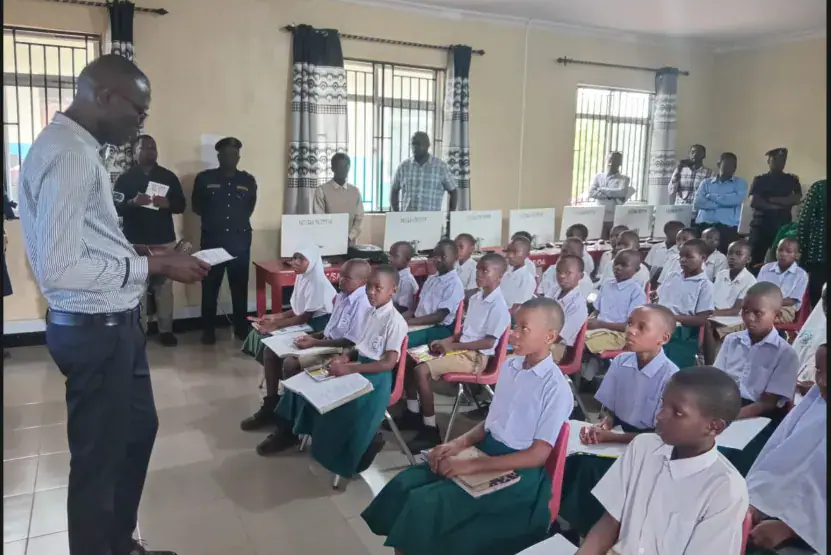
The Tanzanian government's BOOST Primary Student Learning Programme, launched in 2022 and set to conclude on December 30 this year, has far surpassed its initial objectives. The programme aimed to construct 12,000 classrooms, rehabilitate dilapidated schools, build new schools, and invest in Information and Communications Technology (ICT). With a budget of approximately 1.15 trillion Tanzanian shillings, the project has successfully constructed over 16,000 classrooms, exceeding its target. This significant achievement was highlighted by Deputy Minister in the President's Office – Regional Administration and Local Government (PO-RALG), Dr. Festo Dugange, during a recent inspection of project infrastructure.
Dr. Dugange inspected the infrastructure built through the project at Samia Primary School in Nyamagana District and Kigongo Primary School in Misungwi District, Mwanza Region. He emphasized that the Sixth Phase Government, led by President Samia Suluhu Hassan, has made substantial reforms in the education sector, prioritizing heavy investment in improving teaching and learning environments, including the integration of modern technology. The government's efforts aim to enhance the quality of education, increase teaching efficiency, and provide students with better learning environments.
A significant portion of the allocated funds, 237.9 billion Tanzanian shillings, was utilized to rehabilitate 1,059 dilapidated primary schools. This initiative aimed to improve the environments for both students and teachers. Additionally, 53.9 billion Tanzanian shillings was spent on rehabilitating 369 primary schools and rebuilding 51 schools that were in a dilapidated condition. These investments are part of the government's broader strategy to expand access to quality education by improving infrastructure in early childhood and primary schools nationwide.
The BOOST project is one of the government's largest investments in the education sector. By enhancing infrastructure, the programme seeks to improve the overall quality of education in Tanzania. The project's success is attributed to the government's commitment to prioritizing education and allocating substantial resources to support its development. The construction of over 16,000 classrooms and rehabilitation of dilapidated schools have significantly contributed to creating a more conducive learning environment for students.
The programme's achievements demonstrate the government's dedication to improving the education sector. The use of modern technology and investment in ICT infrastructure are expected to enhance teaching efficiency and the overall learning experience. As the project comes to a close, the government is expected to continue its efforts to build on the successes achieved through the BOOST programme.
The BOOST programme's impact extends beyond infrastructure development, as it aims to improve the quality of education and increase access to education for Tanzanian students. The programme's success will likely have a lasting impact on the country's education sector, contributing to the development of a more educated and skilled workforce.
As the government continues to prioritize education, the BOOST programme's achievements serve as a testament to the importance of investing in the sector. The programme's legacy will be seen in the improved learning environments and enhanced educational opportunities for generations of Tanzanian students to come.
Key points
- The programme constructed over 16,000 classrooms, exceeding its initial target of 12,000 classrooms.