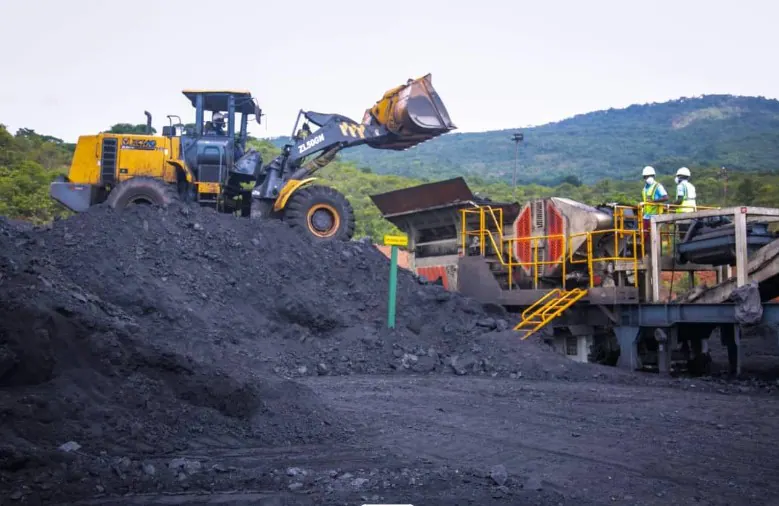
Tanzania is emerging as a significant player in the global battery supply chain, driven by its growing graphite and critical-minerals sector. The country has attracted investment aimed at supplying the rapidly growing battery-materials market. In August 2026, Tanzania signed a $100 million agreement with China's Henan Yudi Mining Company for a graphite project in Morogoro. The project aims to produce 50,000 metric tonnes of graphite annually.
The graphite project in Morogoro is a significant development in Tanzania's battery sector. According to S&P Global, the government is expected to hold a 17% equity stake, while Henan Yudi Mining Company holds the remaining 83%. Tanzania's graphite production has expanded rapidly, rising from about 13,500 tonnes in 2023 to 38,140 tonnes in 2024, according to USGS data. This growth has positioned the country to become a major supplier of graphite.
However, producing graphite is only one part of the battery industry. The highest-value stages involve refining, production of battery materials, cathode and anode materials, battery-cell manufacturing, recycling, and eventually electric-vehicle manufacturing. A 2026 academic study on Tanzania's critical-minerals sector identified limited refining capacity, technical skills, and supplier networks as constraints. The study suggested that Tanzania's near-term opportunities include battery-material refining, graphite processing, and rare-earth separation.
Indonesia's experience with nickel provides a cautionary tale for Tanzania. Indonesia restricted exports of raw nickel ore to encourage domestic processing and attracted major investment into nickel-processing facilities. While this helped Indonesia become a dominant force in global nickel supply, it also generated serious environmental and social concerns. Tanzania could face similar risks if it does not carefully manage its battery sector.
The global battery supply chain is highly concentrated, with substantial Chinese investment in Indonesia's nickel industry and Tanzania's graphite sector. This raises questions about ownership and control of the battery industry's value chain. Tanzania needs to consider who owns the processing facilities, where refined material will be sold, and how much technology will be transferred to Tanzanian companies.
To prepare for its battery future, Tanzania can develop a long-term battery-minerals strategy that connects mining with industrialisation. This could include establishing graphite and nickel processing plants, developing battery-material research centres, and training Tanzanian engineers and chemical-processing specialists. The government has already considered a strategic minerals centre of excellence with a focus on battery technology and mineral value addition.
The opportunity for Tanzania is larger than simply exporting graphite or nickel. The country's real test will be whether its mineral wealth becomes the foundation for a domestic battery-material and manufacturing industry—or whether it remains primarily at the beginning of a global supply chain whose highest-value stages occur elsewhere.
Key points
- Tanzania's growing graphite sector draws investment from companies like China's Henan Yudi Mining Company.
- The country faces challenges in developing its battery sector, including limited refining capacity and technical skills.
- Tanzania can develop a long-term battery-minerals strategy to connect mining with industrialisation and ensure control over its battery future.