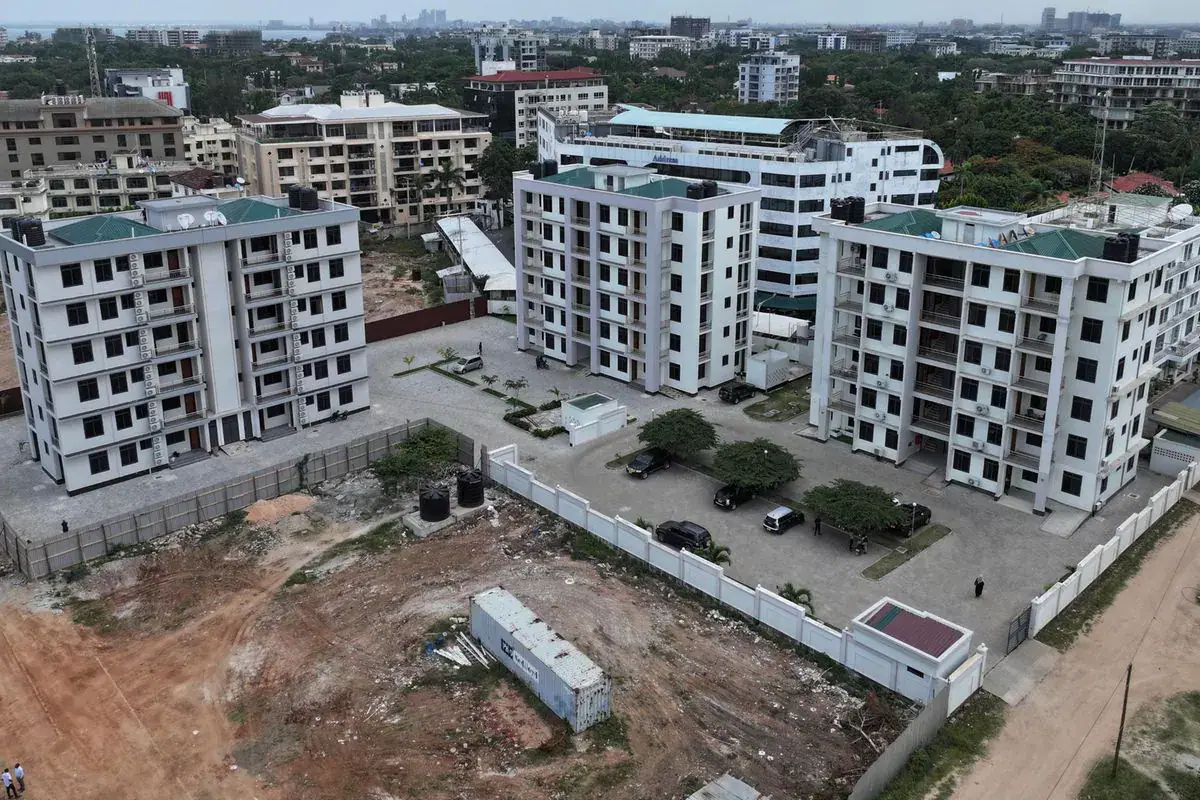
The rising cost of land and housing in Dar es Salaam is exacerbating the challenge of providing affordable homes to ordinary Tanzanians. The situation has sparked a debate about balancing foreign investment, commercial interests, and access to affordable housing. Minister for Planning and Investment Prof Kitila Mkumbo defended foreign property acquisitions, stating that many properties now owned by foreigners were originally sold by Tanzanians. However, this argument raises questions about who can afford to live in desirable neighborhoods.
In areas like Masaki, Oysterbay, and Mikocheni, property prices have reached levels beyond the reach of most Tanzanians. A 500-square-meter plot in Masaki can fetch up to $1 million, equivalent to about Sh2.6 billion. The trend reflects a property market increasingly shaped by high-income demand, while affordable housing remains a major challenge. Tanzania faces an estimated housing deficit of over 3.8 million units and annual demand of approximately 200,000 homes. Prof Mkumbo noted that most real estate developments target high-income earners, mostly foreigners, leaving a significant gap in the market for ordinary Tanzanians.
The issue goes beyond foreign ownership, with housing institutions citing high construction costs, expensive land, taxation, and limited government support as major challenges. The National Housing Corporation (NHC) Acting Manager for Public Affairs and Information, Yahya Charahani, explained that public housing institutions must operate commercially, generating enough revenue to cover expenses. The cost of land, particularly in established commercial areas, contributes significantly to property prices. Although Parliament introduced a Value Added Tax (VAT) exemption for residential properties selling for less than Sh50 million, developers argue that rising construction and land costs make it difficult to deliver affordable houses.
Developers face challenges in providing affordable housing due to urban planning requirements in prime commercial locations, which encourage high-density developments. Charahani explained that constructing multi-storey buildings allows developers to spread land costs across several housing units but also comes with higher structural engineering and construction expenses. Tanzania lacks dedicated housing funds and direct government subsidies available in some countries to support affordable housing delivery. Previously, public housing institutions benefited from government subsidies and loans, but resources are now directed towards other priorities, including healthcare facilities, schools, and infrastructure development.
Watumishi Housing Investments (WHI) remains committed to providing affordable housing, particularly for public servants and pension fund members. Senior Public Relations and Marketing Officer, Maryjane Makawia, acknowledged that the supply of homes for low- and middle-income earners remains limited. Percentage-wise, very few developers in the country cater to low- and middle-income groups, with most focusing on high-income property buyers. The market has fewer incentives to deliver housing for households with modest incomes.
The debate requires a distinction between owning land and acquiring property within a building. Under the Land Act, all land in Tanzania is public land vested in the President as trustee on behalf of citizens. Section 20 restricts non-citizens from being allocated or granted land except for approved investment purposes. Legal expert James Mbani emphasized the importance of this distinction, as foreign investors do not enjoy the same ordinary land rights as Tanzanian citizens.
Regulatory changes have been introduced, including the Foreign Currency Use Regulations, 2025, which require prices for goods and services within Tanzania to be quoted in shillings. Another regulatory change reserves real estate brokerage and agency activities for Tanzanian citizens. These changes aim to address concerns about foreign ownership and ensure that the property market serves the needs of ordinary Tanzanians. The government's efforts to balance foreign investment and affordable housing will be crucial in addressing the country's housing challenge.
Key points
- Tanzania faces an estimated housing deficit of over 3.8 million units and annual demand of approximately 200,000 homes.