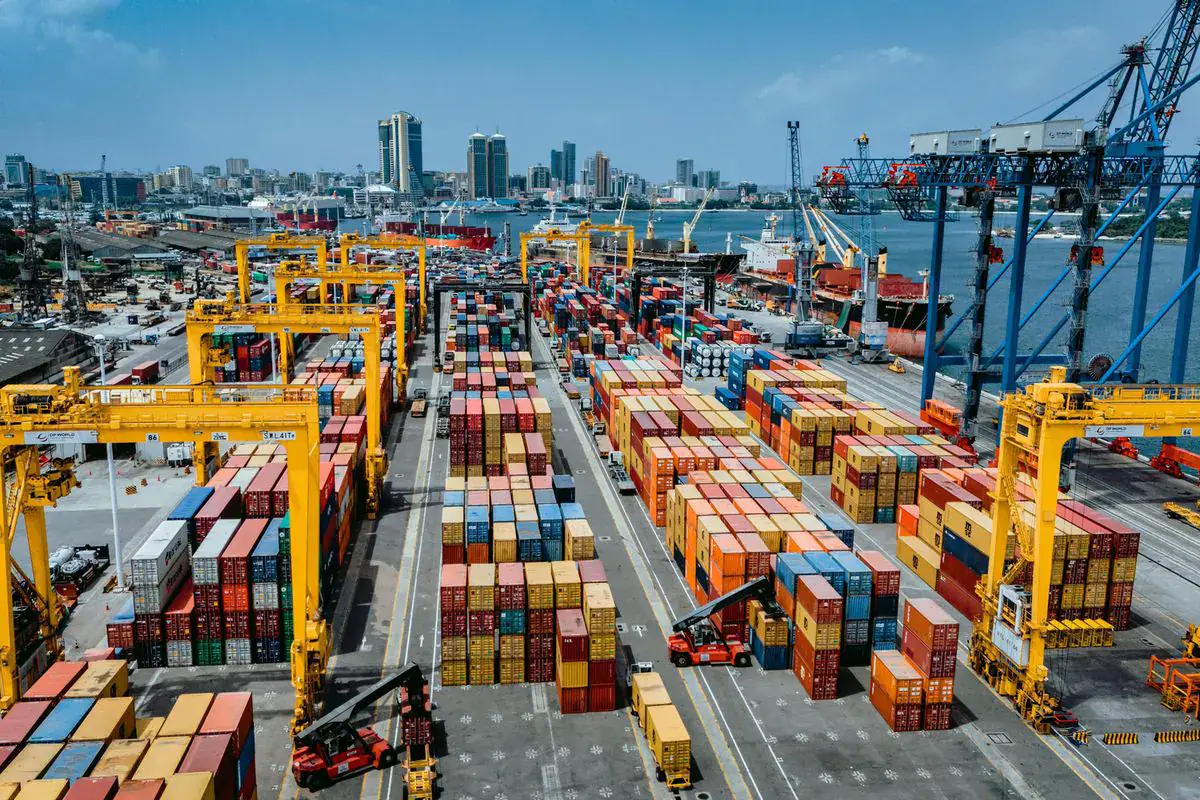
Tanzania's investment landscape has shown promising growth, with 3,538 projects registered with the Tanzania Investment and Securities Regulatory Authority (TISEZA), totaling $68.6 billion in capital and expected to create over a million jobs within five and a half years. However, the actual conversion rate of these registered projects into operational ones remains uncertain. According to Amne Suedi, Managing Director of Shikana Investment and Advisory, registration is merely a statement of intent that unlocks incentives, land, and permits, but disbursement and operation are separate events.
In 2024, TISEZA registered 911 projects worth approximately $9.3 billion, comprising both domestic and foreign investments. In contrast, the United Nations Conference on Trade and Development (UNCTAD) reported actual foreign direct investment inflows of $1.72 billion for the same year. While these figures measure different aspects of investment, the disparity between them is significant, as it is in this gap that deals often falter. The distance between registered capital and actual disbursement is a crucial metric for investment strategists.
Tanzanian participation in registered projects has seen a notable increase, rising from about a fifth to 54 percent, indicating that domestic capital is increasingly entering formal channels rather than being held in land and treasury bills. The manufacturing sector leads in project count, followed by transport and tourism. This profile suggests that the economy is shifting towards production rather than mere extraction. The source of investments also reveals interesting trends, with China leading at $14.1 billion, followed by the UAE with about $5 billion, and Mauritius third at $2.1 billion.
Mauritius, not being a manufacturing power, hosts holding companies due to its treaty cover, illustrating how capital chooses its passport before selecting a project. This highlights the importance of bilateral investment treaties for Tanzania. The country has signed 21 or 22 such treaties, but only about half are in force. Tax treaties tell a similar story, with Tanzania having signed agreements with several countries, but fewer than ten are currently in force. The agreement with Türkiye, signed in May, was described as the country's thirteenth, yet it is one of the few new additions.
The status of bilateral investment treaties and tax treaties significantly affects the risk premium, loan tenor, and availability of political risk cover for investors. When Russia's economy minister mentioned in Arusha in May that an investment protection agreement is crucial for banks assessing risk, he underscored how credit committees operate. The treaty's status of the holding jurisdiction influences investment decisions, often impacting the cost of capital more than any tax holiday offered. Therefore, having more treaties is welcome, but their effectiveness depends on certain conditions.
To make bilateral investment treaties more valuable, three disciplines are necessary. Firstly, Tanzania should ratify treaties before signing more, as dormant treaties can undermine the intended message. Clearing the backlog of ratifications would be more impactful than additional signing ceremonies. Secondly, reconciling treaties with domestic law is essential, particularly in areas like dispute resolution for natural resources. The 2017 natural wealth laws direct disputes to Tanzanian fora, while most treaties point to international arbitration, highlighting the need for a published model treaty.
Thirdly, measuring conversion is vital; TISEZA should publish the share of registered projects that reached operation within three years, categorized by sector and source country. This data exists within the system, but its publication is necessary for accountability. The ratio would enable the government to evaluate treaties, roadshows, and incentives based on actual disbursement rather than just signatures. Furthermore, as Tanzanian participation in projects grows, domestic law must offer protection to insider investors, ensuring that the most patient capital is not left unprotected.
Key points
- The conversion rate of registered projects into operational ones is crucial for evaluating the effectiveness of Tanzania's investment pipeline.
- Bilateral investment treaties must be ratified, coherent with domestic law, and measured against disbursement to be effective.
- Publishing conversion rates and ensuring domestic law protects insider investors are essential for maximizing the value of Tanzania's $68.6 billion investment pipeline.