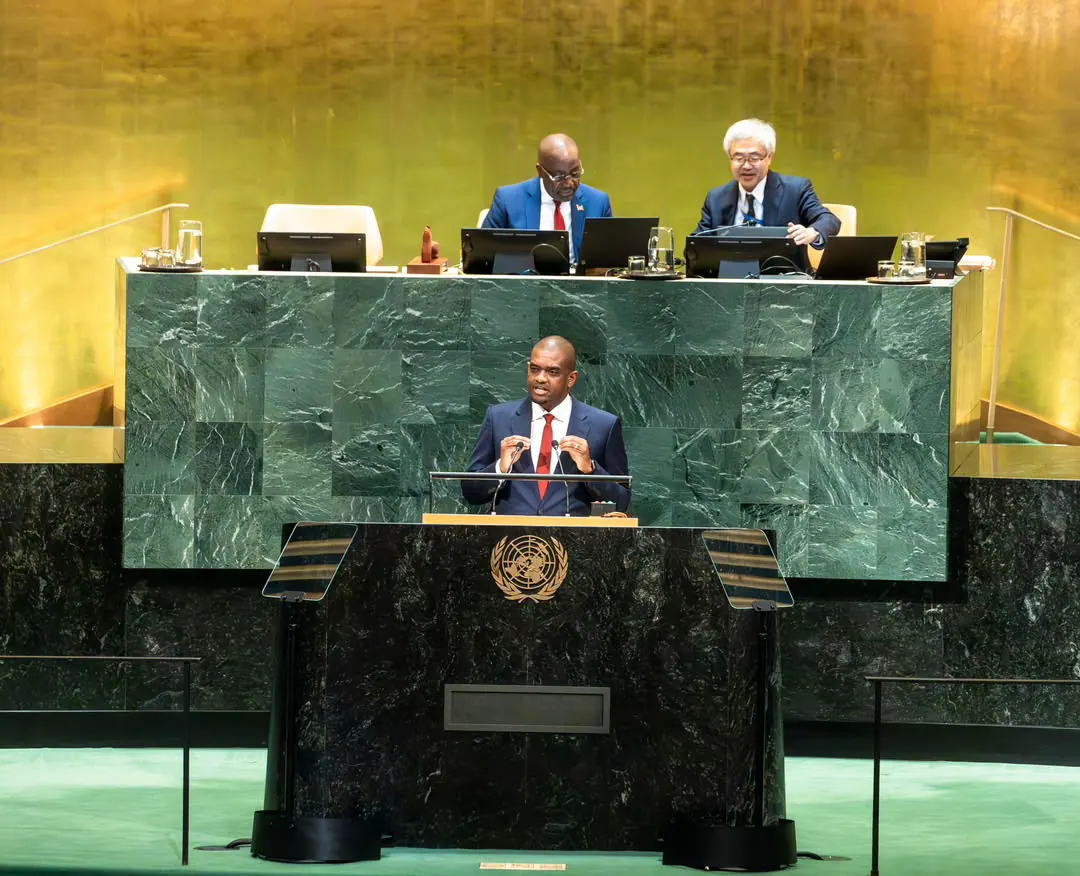
Tanzania has recorded a notable increase in births taking place at health facilities, rising from 51% in 2015 to 81% in 2022. This achievement was highlighted by Vice President Deogratius Ndejembi while representing President Samia Suluhu Hassan at the 81st Session of the United Nations General Assembly in New York. The Vice President emphasized that this progress demonstrates the effectiveness of investing in practical interventions and prioritizing people's welfare in development.
Vice President Ndejembi further stated that President Samia had accepted the responsibility of championing maternal and child health on behalf of the African Union. This underscores Tanzania's role in advancing efforts to improve health outcomes across the continent. By taking on this responsibility, Tanzania is poised to play a leading role in promoting maternal and child health in Africa.
According to Vice President Ndejembi, Tanzania has achieved an 80% reduction in maternal deaths over a seven-year period under President Samia's leadership. This significant reduction is a testament to the country's commitment to improving maternal and child health. The Vice President attributed this success to the implementation of practical interventions and the prioritization of people's welfare.
Tanzania is now pursuing the "Three Zeros" agenda, aimed at achieving zero preventable maternal and child deaths, zero home deliveries, and zero children missing essential vaccinations. This ambitious agenda demonstrates the country's commitment to further reducing maternal and child deaths. The Vice President emphasized that achieving these targets will require strong political leadership, adequate financial resources, and stronger cooperation.
The Vice President also highlighted that Tanzania's experience demonstrates that Africa can achieve these targets if countries strengthen political commitment, mobilize adequate financial resources, and enhance international cooperation. He called on the international community to support efforts aimed at advancing maternal and child health, emphasizing that sustained investment is critical to ensuring progress is maintained and expanded.
Vice President Ndejembi's remarks at the United Nations General Assembly underscore the importance of international cooperation in promoting maternal and child health. He stressed that achieving these targets will require strong political leadership, adequate financial resources, and stronger cooperation. The Vice President's call for support from the international community highlights the need for collective action to address these critical health issues.
Tanzania's progress in reducing maternal and child deaths serves as a model for other countries in Africa. The country's experience demonstrates that with strong political commitment, adequate financial resources, and enhanced international cooperation, it is possible to achieve significant reductions in maternal and child deaths. As Tanzania continues to pursue its "Three Zeros" agenda, the country is likely to remain a leader in promoting maternal and child health in Africa.
Key points
- Tanzania has achieved an 80% reduction in maternal deaths over a seven-year period under President Samia's leadership.
- The country is pursuing the "Three Zeros" agenda aimed at achieving zero preventable maternal and child deaths, zero home deliveries, and zero children missing essential vaccinations.
- Vice President Ndejembi called on the international community to support efforts aimed at advancing maternal and child health, emphasizing that sustained investment is critical to ensuring progress is maintained and expanded.