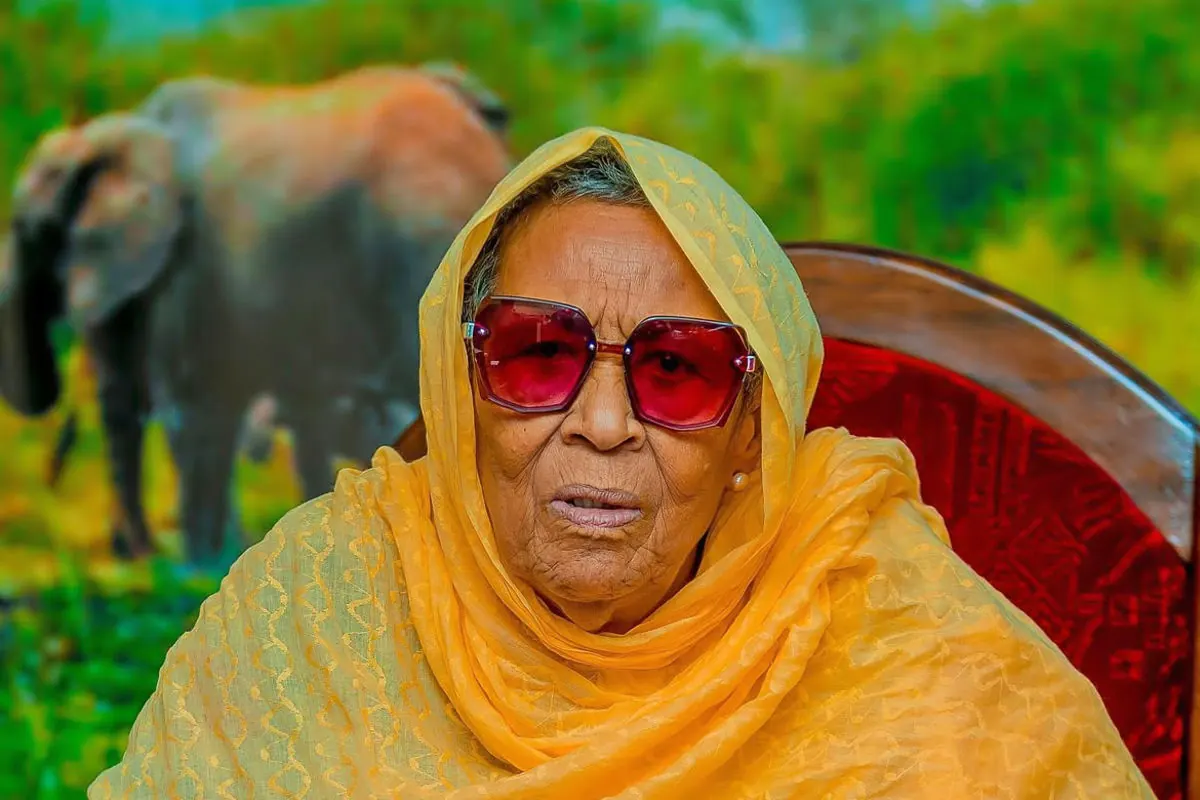
Fatma Karume, wife of Zanzibar's first President Sheikh Abeid Amani Karume, was laid to rest at the Karume family cemetery in Mbweni, Zanzibar, after a funeral attended by dignitaries and mourners. President Samia Suluhu Hassan paid tribute to Karume, describing her as an important figure in Zanzibar's history, particularly during the struggle for independence, the 1964 Zanzibar Revolution, and the establishment of the United Republic of Tanzania.
Born on February 2, 1929, in Bumbwini Misufini, North Unguja, Karume was the daughter of Gulamhussein Ismail and Mwanasha Mbwana Ramadhani. She received her primary education at Bumbwini School and later married Sheikh Karume, then a senior Afro-Shirazi Party (ASP) leader. Her involvement in Zanzibar's political history began before she became First Lady, as she joined a women's group involved in the independence struggle while still young.
Karume's contributions to Tanzania's history went beyond her role as First Lady. She served as a clerk for a women's group that campaigned for women's voting rights and participated in presenting demands to a delegation from Lancaster House in London. The group also formed income-generating activities, such as sewing and cooking, to raise money and enable women to meet the requirements for voting.
After Sheikh Karume's assassination on April 7, 1972, Karume continued to share her memories of the independence struggle, the Revolution, and the early years of Zanzibar's post-revolution government. Her legacy extended to sports, particularly with Yanga football club, where she played a crucial role in helping the club acquire land for its headquarters in Dar es Salaam.
Tributes have been pouring in for Karume, with Zanzibar President Hussein Ali Mwinyi describing her death as a loss to both her family and the nation. Former political colleagues, including Khadija Jabir Mohamed, who worked with Karume in the ASP, recalled her role in the independence struggle and her dedication to the party.
Karume's family also remembered her for her role in promoting political, economic, and social development in Tanzania. Her children, including Amani Abeid Karume, who later became Zanzibar's sixth President, and Ali Abeid Karume, who served as a diplomat and ambassador, will carry on her legacy.
President Samia Suluhu Hassan has assured that the nation will continue to honor Karume's contribution to preserving Tanzania's history and heritage.
Key points
- Fatma Karume was an important figure in Zanzibar's struggle for independence and the establishment of the United Republic of Tanzania.
- Karume played a crucial role in promoting women's voting rights and participated in income-generating activities to empower women.
- Her legacy extends beyond politics to sports, particularly with Yanga football club, where she helped acquire land for its headquarters.