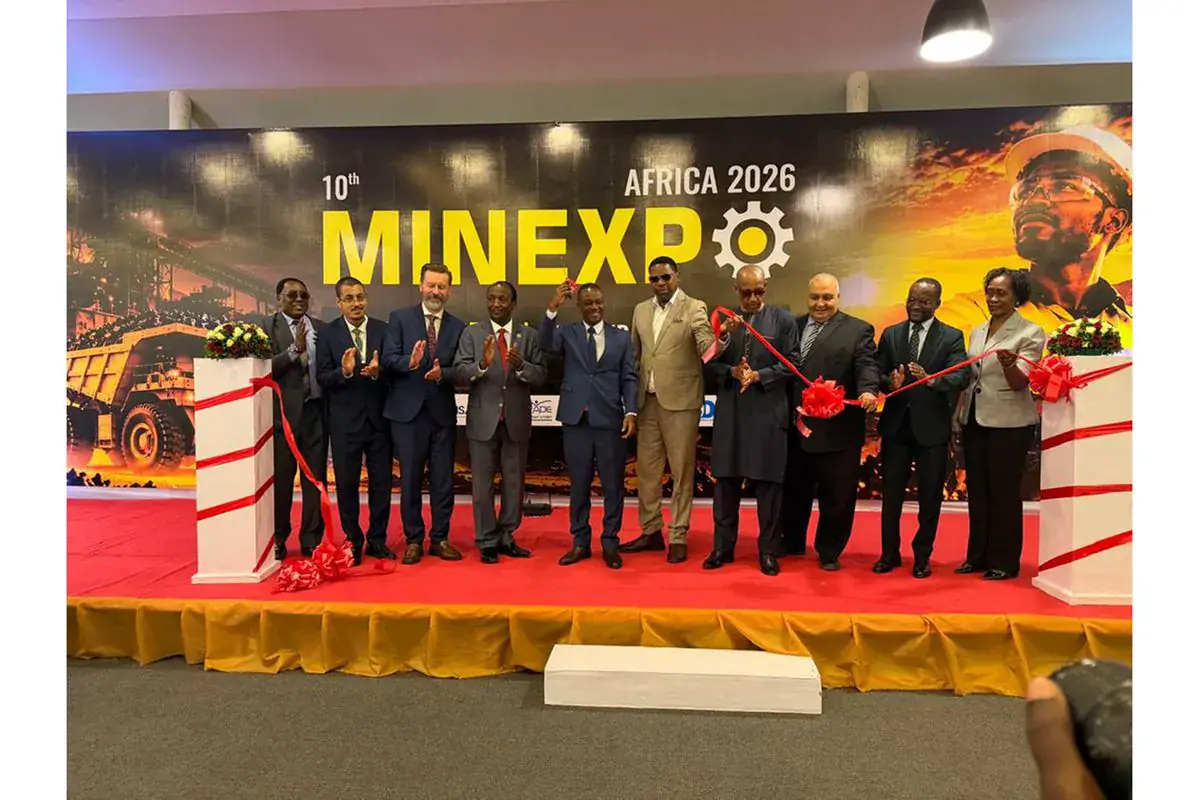
The Tanzanian government has reaffirmed its commitment to banning the export of raw minerals, urging investors to establish local processing plants, smelters, and mining equipment factories. This move aims to increase the mining sector's contribution to the economy. The ban on exporting raw minerals without prior value addition is strictly enforced, according to Eng Yahya Samamba, Permanent Secretary in the Ministry of Minerals.
Speaking at the 10th International Mine Expo Tanzania 2026 in Dar es Salaam, Eng Samamba highlighted the progress made in the mining sector since the introduction of mining reforms and local content regulations. Tanzania has established 13 metal smelters and six operational gold refineries. These developments have contributed to an increase in the mining sector's contribution to GDP from 9.1 percent in 2023 to 10.3 percent in 2025.
The government has set a target of 15 percent contribution to GDP by 2030. Gold production in Tanzania reached 65 tonnes in the 2025/26 financial year, with artisanal and small-scale miners accounting for 27 tonnes. The Ministry of Minerals issued 12,000 mining licences during the year, including 9,000 to small-scale operators. This indicates a significant growth in the sector.
Eng Samamba also mentioned that the government has signed 16 framework agreements with international investors since 2023, covering strategic minerals such as graphite, nickel, lithium, uranium, and rare earth elements. Negotiations on the Liganga iron ore and Mchuchuma coal project are nearing completion. These agreements are expected to boost the sector's growth.
To attract investors in mining equipment manufacturing, the government has allocated land and offered tax incentives in designated special economic zones, including Kahama. Minerals Commissioner Dr Abdulrahman Mwanga urged foreign investors to consider Tanzania a destination for mining technology and equipment investments. This move aims to reduce dependence on imports.
The Tanzania Mining Suppliers and Services Association (TAMISA) called for greater local production of mining supplies to reduce dependence on imports. The association encouraged foreign investors to partner with Tanzanians to manufacture products locally. This will help create jobs and stimulate economic growth.
The 10th International Mine Expo Tanzania 2026 brought together government institutions and private companies to showcase technologies aimed at improving mining efficiency, safety, and productivity. The expo provided a platform for stakeholders to discuss the future of the mining sector in Tanzania and explore opportunities for growth and development.
Key points
- The Tanzanian government has reiterated its ban on exporting raw minerals, urging local and foreign investors to establish processing plants, smelters, and mining equipment factories.
- The mining sector's contribution to GDP increased from 9.1 percent in 2023 to 10.3 percent in 2025, with a target of 15 percent by 2030.
- The government has signed 16 framework agreements with international investors covering strategic minerals, including graphite, nickel, lithium, uranium, and rare earth elements.