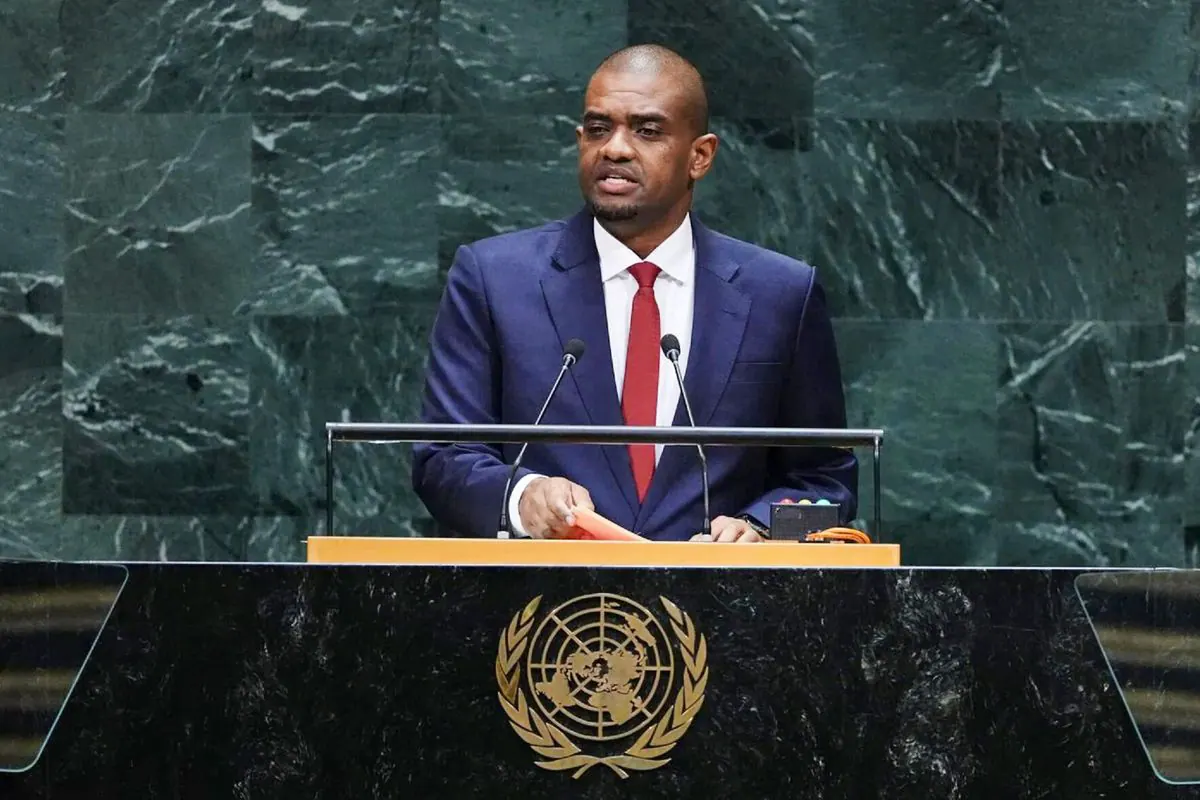
Tanzania has reaffirmed its support for the Palestinian people's right to self-determination, while calling for the protection of civilians in Gaza, unhindered humanitarian assistance, and renewed diplomatic efforts to resolve the Israel-Palestine conflict. This stance was reiterated by Vice President Deogratius Ndejembi at the 81st United Nations General Assembly in New York on September 22, 2026. Tanzania's position is rooted in its longstanding foreign policy principles and support for a two-state solution.
According to Vice President Ndejembi, Tanzania's support for the Palestinian people is based on its foreign policy principles and commitment to a two-state solution, allowing Israel and Palestine to coexist peacefully in accordance with international law and relevant UN resolutions. He emphasized that lasting peace must guarantee dignity, security, and legitimate aspirations for both peoples. This position has been maintained by Tanzania for 50 years, dating back to the era of Julius Nyerere and Yasser Arafat.
Tanzania was an early supporter of the Palestine Liberation Organization (PLO) and hosted one of Africa's earliest Palestinian embassies in 1973. The country's longstanding foreign policy position has been that Israel and Palestine should live side by side in peace and security, in line with international law and UN resolutions. Vice President Ndejembi's statement at the UN General Assembly reaffirmed Tanzania's commitment to this position.
In addition to the Israel-Palestine conflict, Vice President Ndejembi called for reforms to the international financial system, citing high borrowing costs, rising debt, and limited access to affordable long-term financing as major constraints for developing countries. He emphasized that these challenges hinder progress towards achieving the Sustainable Development Goals (SDGs). Tanzania's Development Vision 2050 aims to build an inclusive and competitive economy, but limited access to affordable financing may undermine these ambitions.
Vice President Ndejembi highlighted Tanzania's progress in maternal and child health, citing a significant increase in births taking place in health facilities from 51 percent in 2018 to 81 percent in 2022. He emphasized that sustained investment and implementation can achieve significant results, with Tanzania targeting zero preventable maternal and child deaths, zero home deliveries, and zero unvaccinated children.
The Vice President also called for greater climate financing and technology transfer to help developing countries respond to climate change. He expressed support for UN Secretary-General António Guterres' UN80 reform initiative but cautioned that changes should not weaken the organisation's development work, particularly its country offices and programmes in developing countries.
Tanzania reiterated its opposition to unilateral sanctions, with Vice President Ndejembi calling for restrictions that undermine development and human rights to be lifted. He also used his address to promote Tanzania's candidacy for a non-permanent seat on the UN Security Council for the 2029–2030 term, highlighting priorities such as preventive diplomacy, peaceful settlement of disputes, and reform of UN peacekeeping operations.
Key points
- Tanzania reaffirms support for Palestinian self-determination and a two-state solution
- Vice President Ndejembi calls for reforms to the international financial system
- Tanzania promotes its candidacy for a non-permanent seat on the UN Security Council