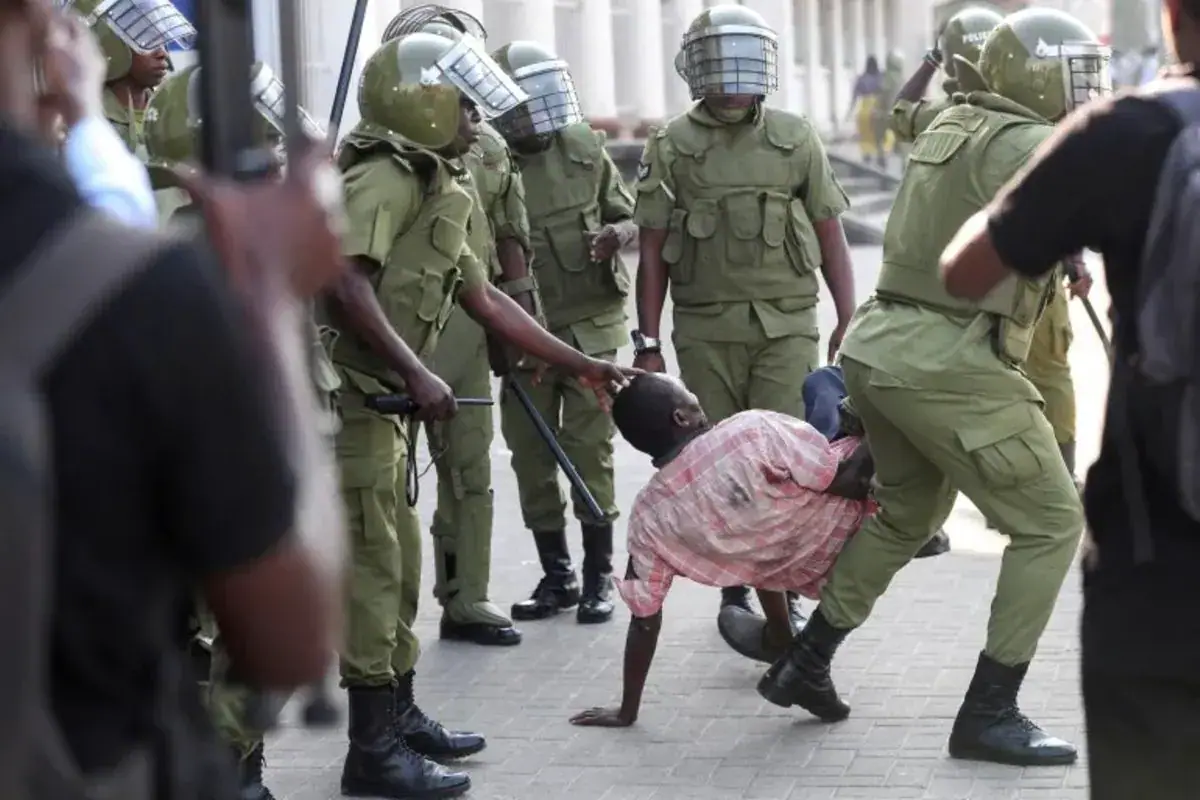
Recent incidents in Tanzania have highlighted growing tensions between police officers and civilians during arrest operations. Confrontations involving pushing, verbal exchanges, and physical altercations have sparked debate over the use of force, respect for human dignity, and the responsibilities of both parties in enforcing the law. These incidents have raised questions about how arrests are conducted and whether officers and members of the public fully understand their respective rights and obligations.
One such incident occurred on September 8, 2026, in Lugalo, Dar es Salaam, involving a traffic police officer and Dr. Conrad Kahyoza. Another incident took place on November 9 in Kariakoo, where a civilian allegedly assaulted an officer conducting an arrest. These events have prompted discussions about the need for police officers to follow proper arrest procedures and for civilians to cooperate with lawful operations. Legal experts and human rights advocates emphasize that preventing such confrontations requires responsibility from both sides.
Lawyer William Maduhu notes that police officers are guided by several legal instruments, including the 1977 Constitution of the United Republic of Tanzania, the Police Force and Auxiliary Services Act, and the Criminal Procedure Act. He states that officers conducting arrests are required to identify themselves, explain the reasons for the arrest, and disclose the authority under which they are acting. Maduhu adds that wearing a police uniform does not entitle officers to use abusive language, threats, or unnecessary force while performing their duties.
Maduhu emphasizes that identification is particularly important for plain-clothes officers, as members of the public may struggle to establish whether the person attempting to arrest them is a police officer or someone else. However, he stresses that dissatisfaction with how an arrest is being conducted does not give civilians the right to assault, attack, or forcibly obstruct officers. Instead, citizens should cooperate with lawful operations without resorting to violence.
A Kariakoo businessman, Mr. Shabaan Msondo, believes that police officers need to follow proper arrest procedures to maintain public confidence in law enforcement institutions. He suggests that respectful language, proper identification, and treating suspects with dignity are essential to reducing friction between police and civilians. Msondo adds that even when someone has committed an offense, that does not mean they should be stripped of their rights.
Dr. Anna Henga, executive director of the Legal and Human Rights Centre, notes that confrontations between police officers and civilians are unhealthy for the country and should prompt both sides to reflect on their conduct. She emphasizes that police have a responsibility to ensure officers follow the law and apply their training, while members of the public also need to respect lawful authority and comply with the law.
Police Commissioner for Operations and Training Awadh Haji has urged citizens to obey the law voluntarily and cooperate with officers carrying out their lawful duties. He emphasizes that every citizen is required to obey the law without compulsion and that cooperation is essential for effective law enforcement. The 1977 Constitution of the United Republic of Tanzania provides safeguards against unlawful arrest and protects individual rights and dignity.
Key points
- The incidents have raised concerns about the use of force and respect for human dignity during arrest operations in Tanzania.
- Legal experts emphasize that preventing confrontations requires responsibility from both police officers and civilians.
- The police have a responsibility to ensure officers follow the law and apply their training, while members of the public also need to respect lawful authority and comply with the law.