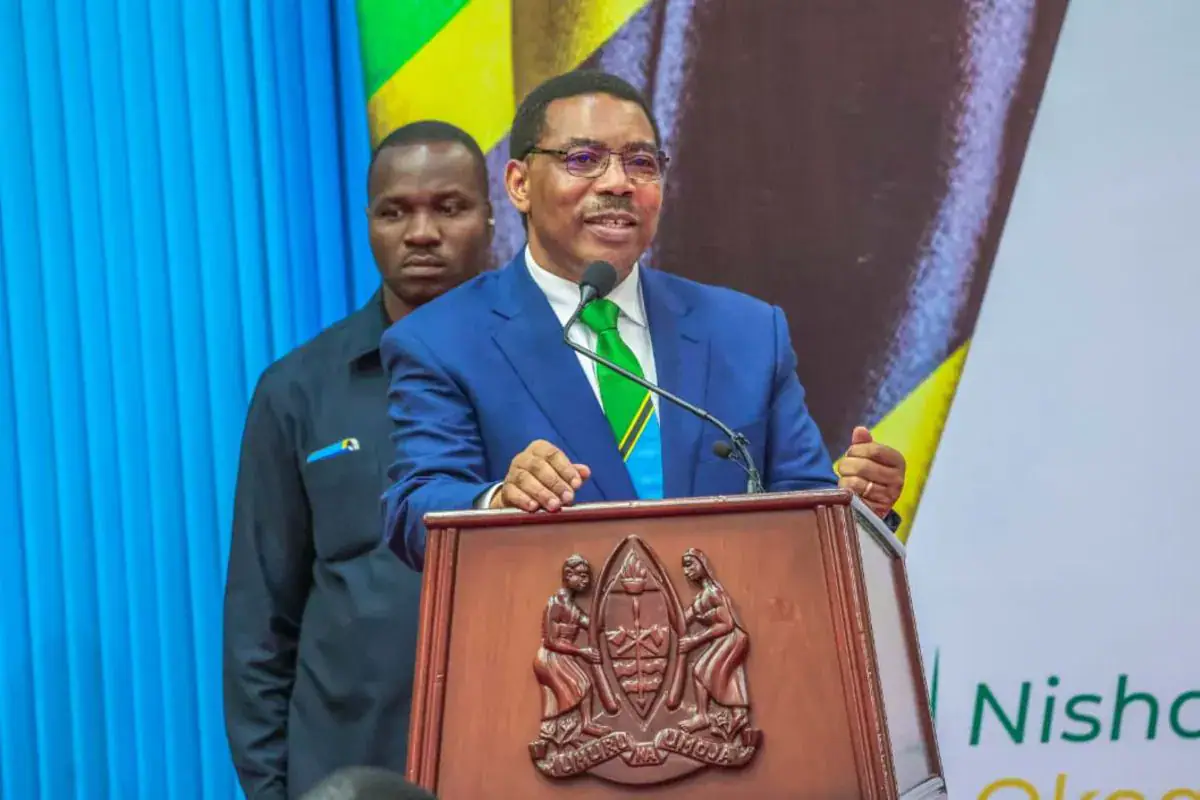
Prime Minister Mwigulu Nchemba has directed regional commissioners to review President Samia Suluhu Hassan's clean cooking directives and report on progress in implementing them. He made the remarks at a meeting with regional commissioners in Dodoma on November 28, 2026. The meeting aimed to accelerate the adoption of clean cooking solutions, with a target of 80 percent of Tanzanians using clean cooking solutions by 2034. Nchemba emphasized that regional leaders must go beyond drawing up plans and ensure households and public institutions switch from firewood and charcoal to cleaner alternatives.
Nchemba identified Singida, Simiyu, Shinyanga, Tabora, and Katavi as regions needing stronger interventions. He urged commissioners to set practical, measurable targets, clear timelines, and submit regular progress reports to ministers. The Prime Minister cited a region with 20 boarding schools, suggesting they could start by converting 10 to clean cooking systems. This approach aims to ensure tangible progress and accountability. About 31,395 institutions serving large numbers of people have been identified for transition, but only about 2,700 have so far been reached.
Tanzania aims to raise clean cooking adoption to 35 percent by December 2026, from 6.9 percent in 2024. The rate reached 28.6 percent in 2025, according to Felichismi Mramba, Permanent Secretary in the Ministry of Energy responsible for electricity and renewable energy. Mramba presented progress on the strategy, stating that the projected 35 percent adoption rate would represent about 20.2 million people. He emphasized that the government's long-term ambition required commitment from public institutions, local authorities, households, and the private sector.
The clean cooking strategy, launched by President Hassan on May 8, 2024, seeks to address the health, environmental, and economic effects of dependence on traditional cooking fuels. Figures presented at the meeting showed estimated annual deaths associated with household air pollution had fallen from 33,000 when the strategy was launched to 19,000. The strategy's implementation is a collective responsibility that requires commitment, cooperation, and accountability at all levels.
Dodoma Regional Commissioner Rosemary Senyamule reported that the region is implementing the campaign by distributing subsidized LPG cylinders and improved cookstoves, alongside public awareness initiatives. In 2025, Dodoma received 19,530 subsidized LPG cylinders worth about Sh409 million, while 1,060 improved cookstoves valued at Sh55.8 million were distributed to residents. Additionally, 14,792 prison staff in the region received cooking stoves as part of the prison service's shift to clean energy.
The government has distributed 145,659 improved cooking stoves and 484,410 LPG cylinders nationwide. However, adoption remains uneven, with usage in 2025 at 48.6 percent in urban areas, compared with 8.3 percent in rural areas. The government is promoting electric cooking through Tanesco's credit arrangements for induction and pressure cookers, while encouraging investment in LPG distribution, alternative charcoal, and other clean cooking technologies.
Despite progress, affordability remains a challenge for some households. Dodoma plans to organize a clean cooking awareness marathon to encourage more residents to adopt alternative technologies. As the government pushes to meet its 2034 target, regional commissioners will play a crucial role in driving the campaign forward. Their performance will be crucial to achieving the government's clean cooking goals.
Key points
- The government aims to achieve 80 percent clean cooking adoption by 2034.
- Tanzania's clean cooking strategy seeks to address health, environmental, and economic effects of traditional cooking fuels.
- Regional commissioners have been tasked with leading the clean cooking campaign in their respective regions.