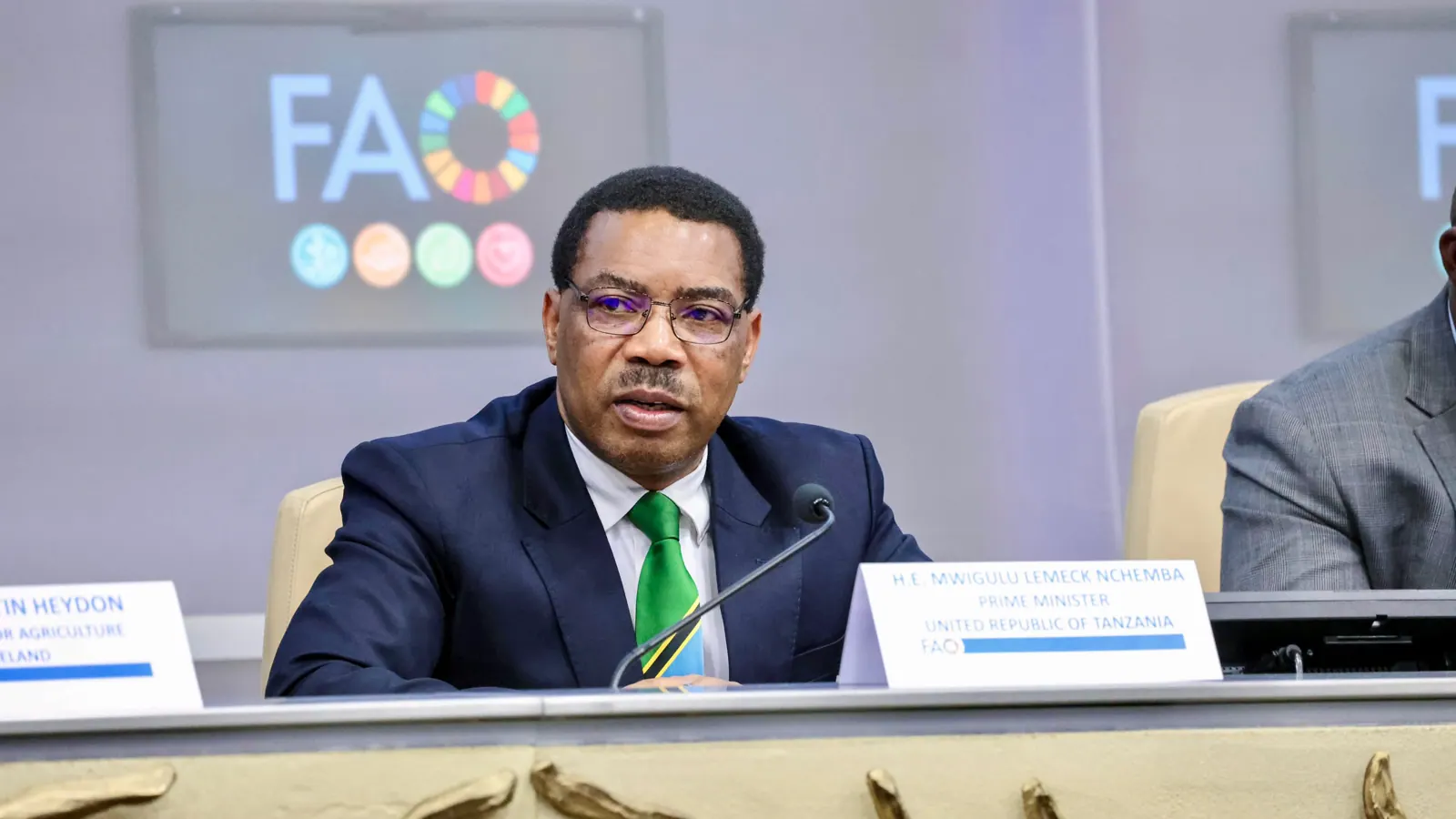
Tanzanian Prime Minister Mwigulu Nchemba has reaffirmed the country's commitment to working closely with the Food and Agriculture Organization of the United Nations (FAO), the World Organisation for Animal Health (WOAH), and the African Union to bolster its livestock disease-control systems. This pledge was made during a high-level discussion in Rome, Italy, on investment in the eradication of Peste des Petits Ruminants (PPR) and the control of Foot-and-Mouth Disease (FMD). The discussion was part of an international conference organized by the FAO.
The Prime Minister emphasized the need for stronger, more predictable, and sustainable investment in livestock disease control. He stressed that national ownership and domestic financing must be the foundation, supported by international partners, including the FAO, WOAH, and the African Union. Dr. Nchemba also called for a shift from fragmented interventions to permanent systems, from nationally focused plans to regional cooperation, and from commitments to measurable results.
The eradication of PPR by 2040 is a key goal for Tanzania, and Dr. Nchemba acknowledged that vaccination alone is not sufficient. He highlighted the need for functional laboratories, robust surveillance systems, reliable vaccine distribution, livestock identification systems, skilled professionals, and cross-border cooperation, particularly in border areas. This comprehensive approach aims to address the complexities of livestock disease control.
Dr. Nchemba also underscored the importance of regional cooperation in controlling livestock diseases. He pointed out that diseases do not respect national borders and that animals are already moving across borders faster than countries are progressing with regional integration efforts. The Prime Minister cited the East African Community as an example, where member states are still discussing steps towards a federation, but animals have already begun to move freely across borders.
The international conference, organized by the FAO, focused on implementing the One Health approach across food and agriculture systems. This approach recognizes the interconnectedness of human, animal, and environmental health. The conference brought together stakeholders from various sectors to discuss ways to address the challenges of livestock disease control and promote sustainable agriculture practices.
Tanzania's commitment to strengthening its livestock disease-control systems is crucial for the country's agricultural sector and the well-being of its people. The livestock sector is a significant contributor to Tanzania's economy, and effective disease control measures can help improve animal health, increase productivity, and enhance food security. By working with international partners, Tanzania aims to make progress towards its goal of eradicating PPR by 2040.
The collaboration between Tanzania and international organizations such as the FAO, WOAH, and the African Union is expected to yield positive results in the fight against livestock diseases. With a comprehensive approach, robust systems, and regional cooperation, Tanzania can make significant strides in controlling and eradicating diseases that affect its livestock population. This, in turn, can contribute to the country's economic growth, food security, and human well-being.
Key points
- Tanzania aims to eradicate Peste des Petits Ruminants (PPR) by 2040 through collaboration with international organizations.
- The country needs functional laboratories, robust surveillance systems, and reliable vaccine distribution to control livestock diseases.
- Regional cooperation is crucial in controlling livestock diseases that do not respect national borders.