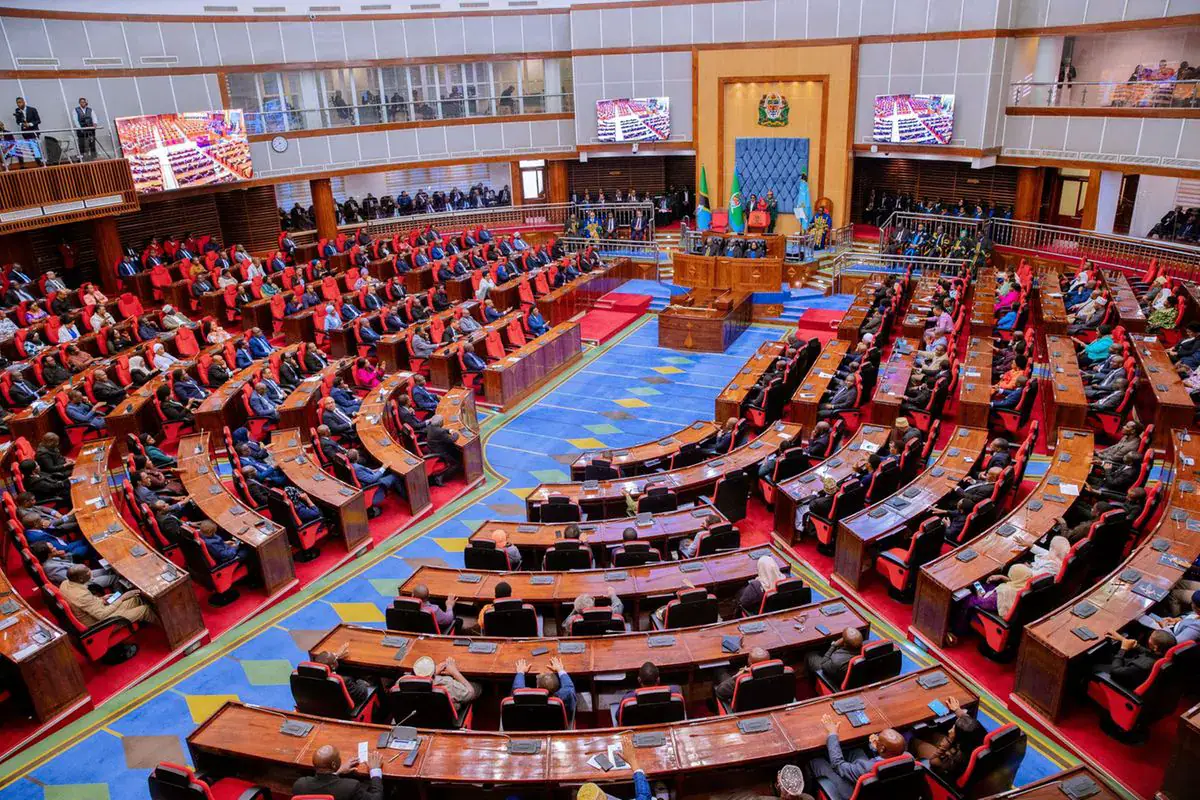
Members of Parliament in Tanzania have raised concerns about the government's ability to mobilize the required Sh89.3 trillion to implement the 2027/28 National Development Plan. The plan, presented by the minister of State in the President's Office, Prof Kitila Mkumbo, on October 28, 2026, has sparked debate among lawmakers who warned that delays in preparing investment projects, bureaucracy, and weak revenue mobilization could undermine development ambitions.
Under the proposed framework, the private sector is expected to contribute Sh62.3 trillion, the government Sh20.7 trillion through the national budget, and public corporations the remaining Sh6.3 trillion. Musoma Rural MP Prof Sospeter Muhongo urged the government to focus on international markets, arguing that expanding production, processing, and exports could generate greater returns than relying heavily on domestic taxes and levies.
Prof Muhongo cited the global rice market, worth about $318 billion, and questioned Tanzania's strategy for securing a larger share of the trade. He proposed that natural gas and related industries account for 25 percent of the economy, while manufacturing and mining contribute 20 percent. He also called for greater investment in natural gas, manufacturing, mining, tourism, fisheries, and livestock, urging the country to move beyond exporting raw materials.
Muleba North MP Adonis Bitegeko questioned the government's readiness to attract private investors, citing slow progress in preparing public-private partnership (PPP) projects. He said ministries and government agencies had been directed to prepare at least one PPP project each, while local government authorities were expected to identify at least three, but progress remained limited.
Bitegeko also noted that public institutions appeared more willing to pursue projects financed through government funds or loans than those requiring private capital. He called for better use of existing infrastructure, including the Standard Gauge Railway, Julius Nyerere Hydropower Project, and ports, to create investment opportunities.
Maswa West MP Mashimba Mashauri Ndaki said growing trade volumes were putting pressure on roads despite expansion of ports and railways. He called for private investment in road construction and maintenance, alongside more targeted repairs to reduce costs. Ndaki also urged the government to explore capital markets to finance healthcare and industrial development.
Other MPs proposed a dedicated project finance unit to identify bankable projects, assess repayment capacity, and attract investors and lenders. They raised concerns about implementation monitoring, noting that only 150 of 500 projects had been registered in the electronic delivery system by September 5, 2026.
Key points
- Private investment is projected to account for 62.31 percent of the plan's financing.
- The government aims to mobilize Sh89.3 trillion for the 2027/28 National Development Plan.
- Lawmakers propose quarterly performance reports and project scoring to identify delays.