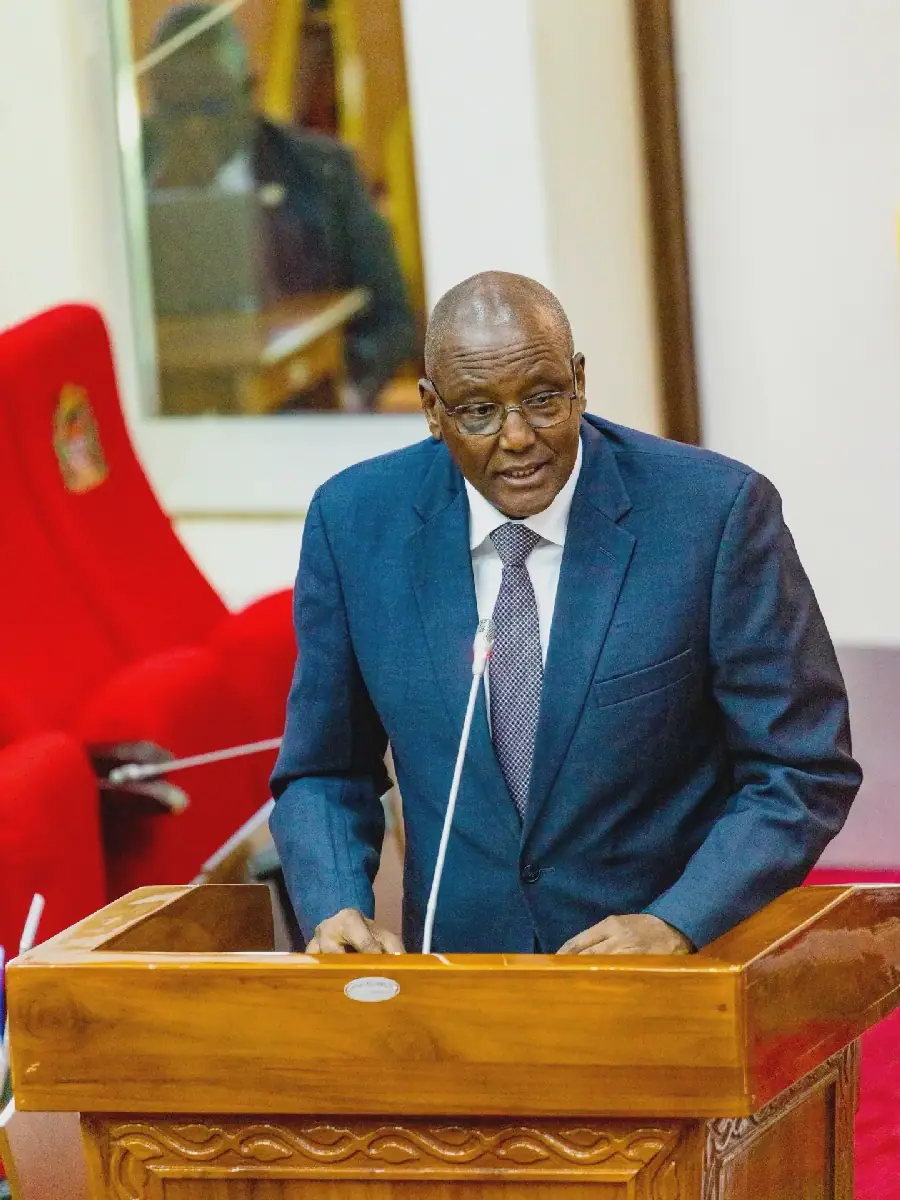
In a recent session of the National Assembly in Dodoma, Deputy Minister for Minerals, Steven Kiruswa, addressed concerns raised by Kahama Urban MP Benjamin Ngaywa regarding various charges imposed on small-scale gold miners operating within licensed mining areas. MP Ngaywa alleged that some licence holders were demanding royalties on minerals extracted by small-scale miners, alongside other charges, and called for clear guidelines to protect miners against arbitrary levies.
Responding to the concerns, Eng Kiruswa clarified that mining royalties are collected through official government systems, and mine and pit owners have no mandate to impose or collect statutory charges from small-scale miners. He stated that royalties are charged at rates ranging from one to seven per cent, depending on the type of mineral, as provided for under the law. The Deputy Minister emphasized that royalty collection is regulated by law and conducted through official government mechanisms.
Eng Kiruswa further explained that the government has implemented measures to ensure that small-scale miners are protected from arbitrary levies. He mentioned that the 0.3 per cent local government levy, along with other royalties, is collected through the government system. This move aims to bring transparency and accountability in the collection of royalties and other charges.
In another development, MP Ngaywa sought clarification on measures being taken to complete surveys of areas covered by Government-held mining licences and make suitable areas available to small-scale miners who do not have licences. Eng Kiruswa responded that the government has cancelled several licences whose holders had failed to develop the respective areas. He also stated that detailed exploration is continuing to identify additional mineral opportunities.
The Deputy Minister disclosed that the government has deployed aircraft to conduct surveys in the Lake Zone and Masutu areas to identify mineral deposits that could be made available to small-scale miners. Additionally, the government is pursuing partnerships with foreign companies to undertake detailed exploration and identify mineral-rich areas suitable for small-scale mining.
Eng Kiruswa also highlighted the efforts of the Geological Survey of Tanzania (GST) to increase the proportion of the country’s mineral potential that has been identified from the current 16 per cent to 50 per cent by 2030. The government is working to strengthen mine inspections, supervision, technical support, and public education for small-scale miners. These measures aim to improve productivity and safety in mining activities, strengthen environmental protection, and safeguard the rights and interests of miners and investors.
The Mining Commission and resident mining officers in all regions are working to address mining disputes and take legal action against individuals who violate mining laws and licence conditions. Licence holders are required to comply with the Mining Act, Cap 123, the Mining (Mineral Rights) Regulations, 2018, and regulations governing environmental protection, occupational health, and safety in mining operations.
Key points
- The government has cancelled several mining licences whose holders failed to develop the respective areas.
- The Geological Survey of Tanzania aims to increase the identified mineral potential to 50 per cent by 2030.
- Royalties are charged at rates ranging from one to seven per cent, depending on the type of mineral.