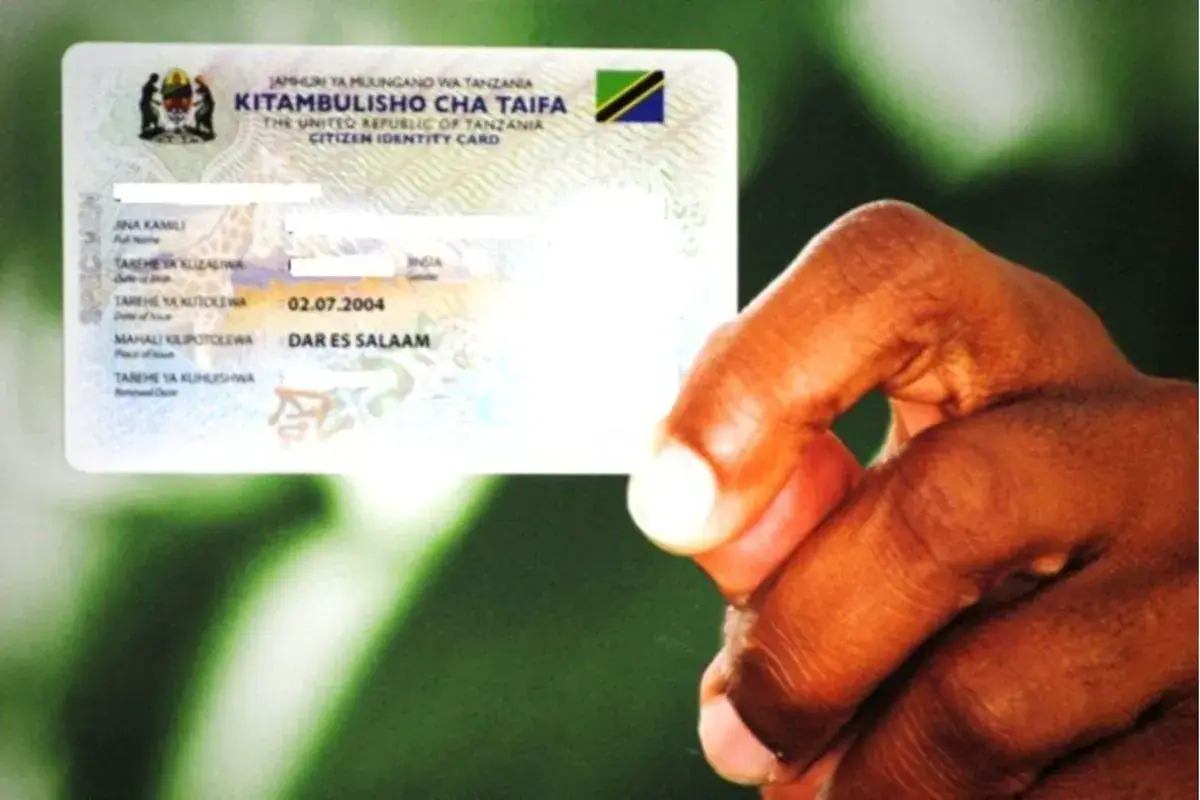
The Government of Tanzania has introduced an upgraded national identity card designed to integrate citizens' personal records and simplify access to public and private services. The new card, unveiled on November 18, 2026, will incorporate information including birth certificate details, health insurance records, Taxpayer Identification Numbers (TIN), blood groups, driving licences, and marital status. This integration aims to reduce the need for citizens to carry multiple documents when seeking services.
The upgraded national identity card will also facilitate cross-border travel to selected countries that have agreements with Tanzania, allowing national identity cards to be used in place of passports. Prime Minister Mwigulu Nchemba, representing President Samia Suluhu Hassan, stated that the initiative reflects the Government's efforts to harness technology to improve service delivery. He added that the upgraded cards would simplify everyday activities, including accessing healthcare and insurance services, obtaining licences, and travelling to selected countries.
The new national identity card will contain eight information sections, compared to four in the previous version. National Identification Authority (Nida) Director General James Kaji stated that the integrated system would include birth certificate details, health insurance information, TIN, blood group, and passport-related information for countries with agreements with Tanzania on the use of national identity cards for cross-border travel. This will eliminate the need for citizens to carry multiple documents.
The integration of TIN details is expected to increase the number of registered taxpayers, while linking health insurance information will make it easier for citizens to access related services. The system will also capture changes in marital status, including marriage and divorce. Additionally, passport-related details will appear on the reverse side of the card for use in countries covered by the agreements, eliminating the need for passport stamps.
A total of 157 institutions, comprising 72 public and 85 private entities, have been connected to Nida's system to facilitate access to services and the use of identity information. Home Affairs Minister Patrobas Katambi stated that the Government is continuing to improve the system, although users may eventually be required to contribute towards data storage costs due to the expense involved in maintaining citizens' records.
The upgraded cards will be issued to people registering from now on, but the introduction of the new version will not invalidate existing national identity cards. Minister Katambi urged holders of the previous cards not to seek replacements without a valid reason, emphasising that both versions will remain valid. The Government is also strengthening its information and communication technology systems to speed up the production and processing of identity records.
Nida offers free replacement of damaged cards, and citizens who have registered but not collected their cards have three months to do so. Former Speaker of Parliament Tulia Ackson suggested that citizen registration should begin at birth rather than waiting until individuals reach the age at which they qualify to apply for national identity cards. The committee overseeing Nida aims to address challenges citizens face when accessing services by connecting different institutional systems.
Key points
- The new national ID will simplify access to public and private services by integrating citizens' personal records.
- The upgraded card will facilitate cross-border travel to selected countries using national identity cards in place of passports.
- The integrated system will include birth certificate details, health insurance information, TIN, blood group, and passport-related information.