The Tanzanian government has introduced various measures to ensure that minerals produced in the country are processed and value-added before being exported. These measures include strengthening legislation, increasing investment in mineral exploration, and designating special areas for mineral processing industries. The goal is to enable Tanzania to derive greater economic benefits from its mineral resources through domestic processing, refining, and smelting.
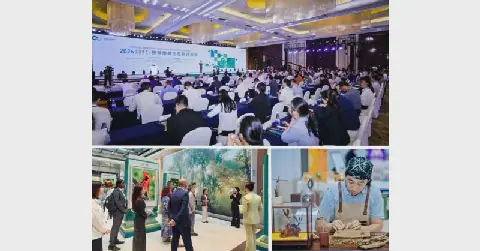
Minister for Minerals, Anthony Mavunde, announced the measures during the Seventh Tanzania Mining and Investment Conference (TMIC 2026) in Dar es Salaam. He stated that the government had established a legal framework requiring minerals to undergo value addition locally before being exported. Sections 133(1)-(5) of the Mining Act, Chapter 123, provide for mineral value addition within the country, while regulations specify the required processing standards for different types of minerals.
To ensure that mineral processing industries have an adequate supply of raw materials, the government has directed that 10 per cent of revenue generated from the mining sector be set aside for mineral exploration activities. This initiative aims to expand the geographical coverage of mineral exploration and generate reliable geological information to help miners, particularly small-scale operators, move away from speculative mining practices and increase production.
The government is preparing to launch extensive mineral exploration activities in various parts of the country, including Kigoma, Katavi, Rukwa, Mbeya, Songwe, Lindi, and Mtwara regions. These activities will help identify available mineral resources and ensure a reliable supply of raw materials for future processing industries. This move is expected to increase economic benefits and accelerate industrial growth.
The government has designated 1,331 acres at the former Buzwagi Gold Mine in Kahama District, Shinyanga Region, as the Buzwagi Special Economic Zone. This designation aims to attract investors interested in establishing mineral value addition industries. The government is also strengthening electricity supply, with plans to increase the country’s power generation capacity to 8,000 megawatts by 2030.
The measures are intended to make the mining sector a key driver of economic growth and industrial development, in line with the theme of TMIC 2026: “Value-Added Minerals: A Key Driver of Economic Growth and Industrial Development.” The mining sector currently contributes 10.3 per cent to the country’s Gross Domestic Product (GDP), with its contribution to the national economy continuing to increase year after year.
The government's objective is to ensure that no minerals leave the country without undergoing the required processing. This move is expected to increase economic benefits and accelerate industrial growth. The implementation of these measures is a significant step towards achieving the country's goal of becoming a major player in the mining industry.
Key points
- The Tanzanian government has introduced measures to ensure minerals are processed and value-added before export.
- The measures aim to increase economic benefits and drive industrial growth.
- The mining sector currently contributes 10.3 per cent to Tanzania's GDP.