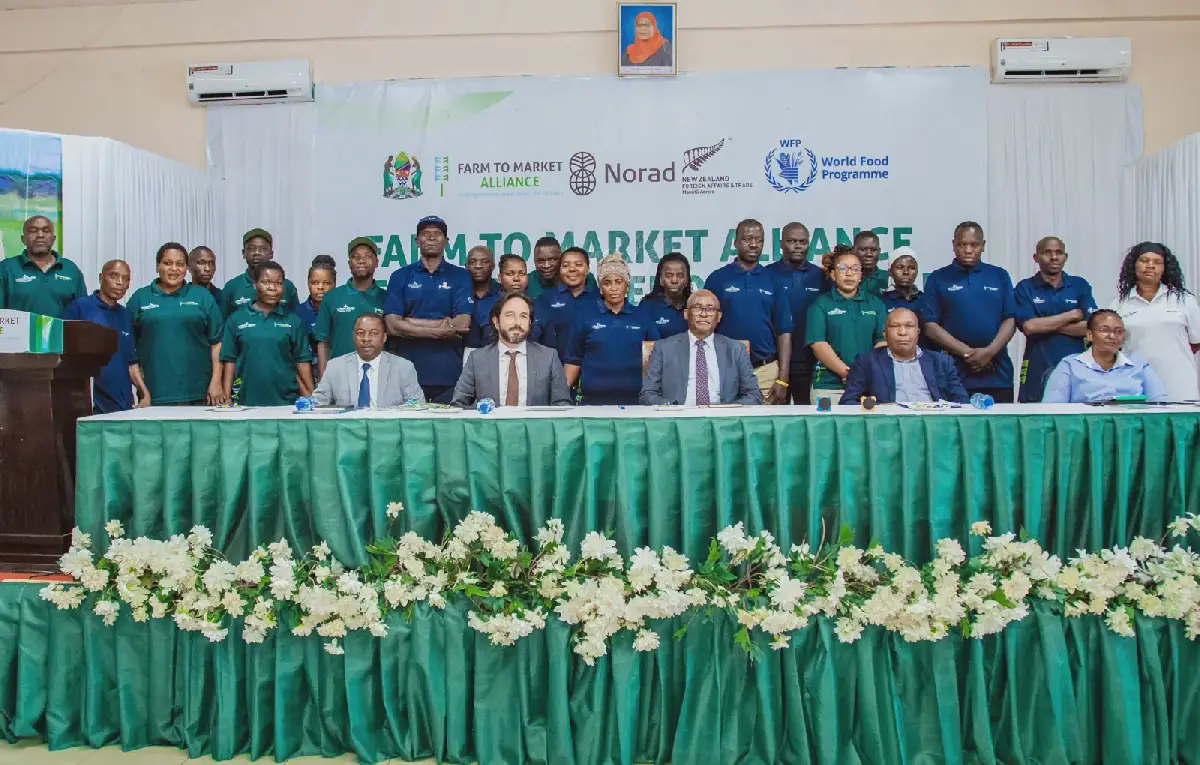
The Tanzanian government is urging successful Farmer Service Centres (FSCs) to scale up operations and mentor new businesses. This initiative aims to sustain a system that has linked over 250,000 smallholder farmers to agricultural services and markets. Professor Peter Msofe, Deputy Permanent Secretary in the Ministry of Agriculture, highlighted the role of these centres in establishing partnerships among government, private sectors, and development organisations.
The FSC model has established 924 centres across 18 districts, with 108 centres meeting required standards. Professor Msofe urged operators of these successful centres to guide others in expanding the network. He suggested that if each of the 108 successful centres opens another, the number could boost to 216 centres serving farmers next year. The centres serve as hubs for rural agribusiness, offering quality seeds, fertilisers, mechanisation, advisory services, financial assistance, market insights, and buyer connections.
The centres aggregate produce from smallholder farmers, facilitating access to larger markets while helping to improve quality and reduce transport costs. Professor Msofe emphasised that the model bolsters the government’s agricultural transformation agenda as outlined in the Agriculture Master Plan 2050. The plan advocates for enhanced access to quality inputs, climate-resilient technologies, storage, processing, markets, and affordable finance.
The Farm to Market Alliance (FtMA) programme, implemented by the United Nations World Food Programme (WFP) with support from New Zealand and Norway, has achieved significant milestones. It has facilitated the aggregation of over 254,000 tonnes of produce valued at over $52 million. Additionally, farmers and centres accessed inputs and services worth more than $15 million.
The network includes 408 youth-led centres and has reached around 95,000 women and 70,000 young farmers. Ronald Tran Ba Huy, WFP Country Director in Tanzania, affirmed the sustainability of the centres as commercially viable agribusinesses capable of supporting farmers beyond the programme’s end. He stressed that continued success depends on commitment from the government, financial institutions, private sector, development partners, and research organisations.
Anastasia Mbatia, Deputy Managing Director of FtMA, noted the model’s adaptability in varying agricultural settings, including cooperatives and individual enterprises. The alliance has reached over 700,000 farmers through more than 3,000 centres in Tanzania, Kenya, and Rwanda. The programme’s impact is evident through individual success stories, such as Dorah Mkelele from Mufindi District.
Dorah Mkelele credited training, business forums, and market linkages with transforming her agro-input enterprise, stating that the programme transformed her from an ordinary farmer into a successful entrepreneur serving hundreds of farmers. The WFP will integrate the Farmer Service Centre approach into broader resilience, livelihoods, and market assistance initiatives, ensuring the centres' continued success and growth.
Key points
- The Tanzanian government aims to expand the Farmer Service Centre network to improve access to agricultural services and markets for smallholder farmers.
- The centres provide a range of services, including quality seeds, fertilisers, mechanisation, advisory services, financial assistance, market insights, and buyer connections.
- The programme has reached over 700,000 farmers through more than 3,000 centres in Tanzania, Kenya, and Rwanda.
Reporting sources
- Government advocates for the expansion of agricultural service centres · sierraleonetoday.co.com