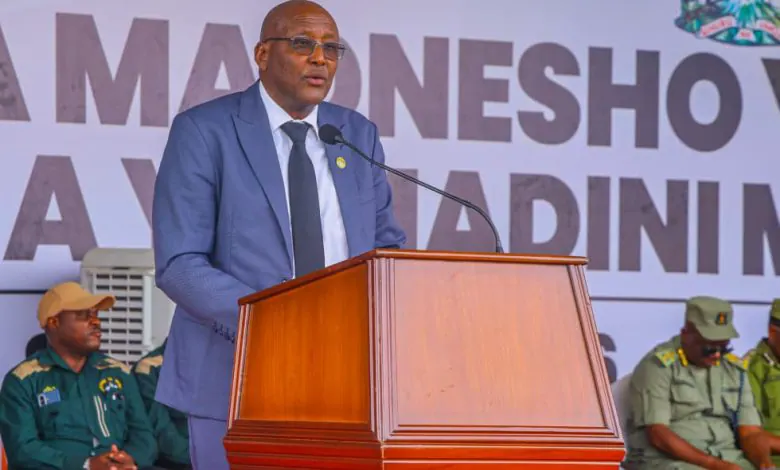
The Tanzanian government has announced plans to expand its geological research coverage from 16% to 50% of the country's area by 2030. This move aims to boost the mining sector's contribution to the national economy, which currently stands at 10% of the GDP and accounts for 56% of foreign earnings. The initiative was revealed by Deputy Minister of Minerals, Dr. Steven Kiruswa, during the launch of the 9th Mining Technology Exhibition in Geita.
Dr. Kiruswa stated that the expanded research will provide more accurate information on mineral-bearing rocks, enabling the ministry to identify new areas for small-scale miners. This, he said, will significantly reduce the costs associated with mineral exploration, which often lead to small-scale miners losing their capital. The deputy minister also emphasized that the government's efforts aim to eradicate outdated practices among some small-scale miners who previously linked mining to superstitious beliefs.
The government's vision for 2030 includes showcasing to Tanzanians the locations, types, quality, and quantities of minerals available, promoting informed investment. Dr. Kiruswa noted that the ministry is implementing the "Mining for a Better Tomorrow" (MBT) program to ensure that minerals benefit all social groups. The program involves providing resources, technical assistance, research information, licensing, and other business and investment opportunities.
The MBT program also aims to enhance collaboration between the mining sector and other industries. Deputy Minister Kiruswa assured Tanzanians that the ministry is reviewing and amending mineral policies and laws, including the law on land rights and mineral rights, to reduce conflicts of interest. This move is expected to address concerns raised by stakeholders, including the Geita Regional Commissioner, Alexander Mnyeti.
Mnyeti emphasized the need to review the law on land rights and mineral rights to prevent conflicts arising from conflicting interests. He noted that the current laws have led to numerous disputes, and swift action is required to protect Tanzanians' interests. The government's efforts to reform the mining sector have been acknowledged by stakeholders, including the Tanzania Trade Development Authority (TANTRADE).
According to TANTRADE's Deputy Director, Fredy Liundi, the value of mineral sales in Tanzania has increased significantly, reaching TSH 11.7 trillion in 2025, up from TSH 7.2 trillion in 2021. Liundi attributed this growth to the effective management of the mining sector under the current government. The 9th Mining Technology Exhibition in Geita has attracted 765 participants, including 15 mining companies.
The exhibition has been praised by stakeholders, including the Managing Director of the Geita Gold Mine (GGML), Ashraf Suryaningrat, who described it as a valuable platform for knowledge sharing, business, and networking in the mining sector. The event has provided an opportunity for the government to engage with stakeholders and showcase its plans for the sector.
Key points
- The Tanzanian government aims to increase geological research coverage to 50% by 2030.
- The mining sector currently contributes 10% to Tanzania's GDP and 56% to foreign earnings.
- The government is implementing the "Mining for a Better Tomorrow" program to promote sustainable mining practices.