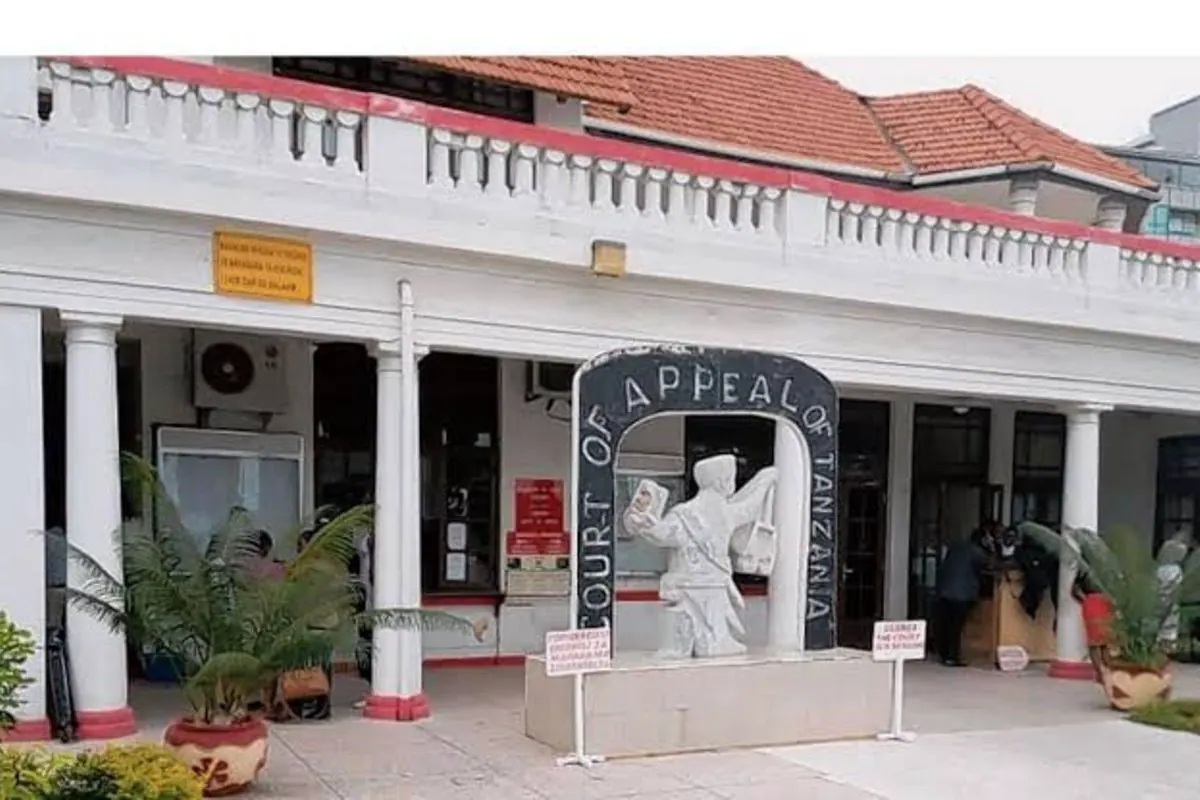
In a significant ruling, the Tanzania Court of Appeal has set free Paulo Malale and Jumanne Sahani, who had been sentenced to hang for the murder of Malale Muswa, Paulo's father, on August 31, 2021. The Court of Appeal, in a judgment delivered on September 21, 2026, cited fatal flaws in the prosecution's evidence, leading to the quashing of their death sentences and immediate release.
The pair had been found guilty and sentenced to hang by the High Court Shinyanga Registry on December 12, 2023. The High Court had relied on medical evidence, the last-seen doctrine, and a disputed confession statement to convict them. However, the Court of Appeal, comprising Justices Panterine Kente, Paul Kihwelo, and Juliana Masabo, found that the confession statement was tainted by coercion and thus lacked evidentiary value.
Justice Juliana Masabo ruled that Paulo's confession statement was obtained under extreme torture, as admitted by a police officer who witnessed the recording of the statement. The officer stated that Paulo was "sitting on a chair and on top of a bottle" while the statement was being recorded, which corroborated Paulo's claims of torture.
The Court of Appeal also threw out a witness statement attributed to Anastazia Anthony, citing the prosecution's failure to establish compelling reasons for her absence in court or prove diligent search efforts. With the confession and statement excluded, the appellate court ruled that relying solely on the last-seen doctrine was insufficient to secure a murder conviction.
The court emphasized that suspicions, no matter how great, cannot form the basis of a guilty verdict. Justice Masabo added that the prosecution failed to prove its case beyond reasonable doubt. As a result, the court allowed the appeal, quashed the death sentences, and ordered the men to be freed unless held for other lawful reasons.
During the initial trial, the prosecution presented nine witnesses and four exhibits. A post-mortem examination revealed that the cause of death was cerebral hypoxia due to strangulation, confirming that the victim did not die by suicide. The third witness, the deceased's wife, testified that the appellants dined with the victim on the night of the incident before she retired to bed.
The court's decision has significant implications for the case, highlighting the importance of upholding the rights of the accused and ensuring that justice is served. Key points from the case include:
Key points
- The Court of Appeal overturned the death sentences due to fatal flaws in the prosecution's evidence.
- The confession statement was deemed inadmissible due to coercion.
- The prosecution failed to prove its case beyond reasonable doubt.