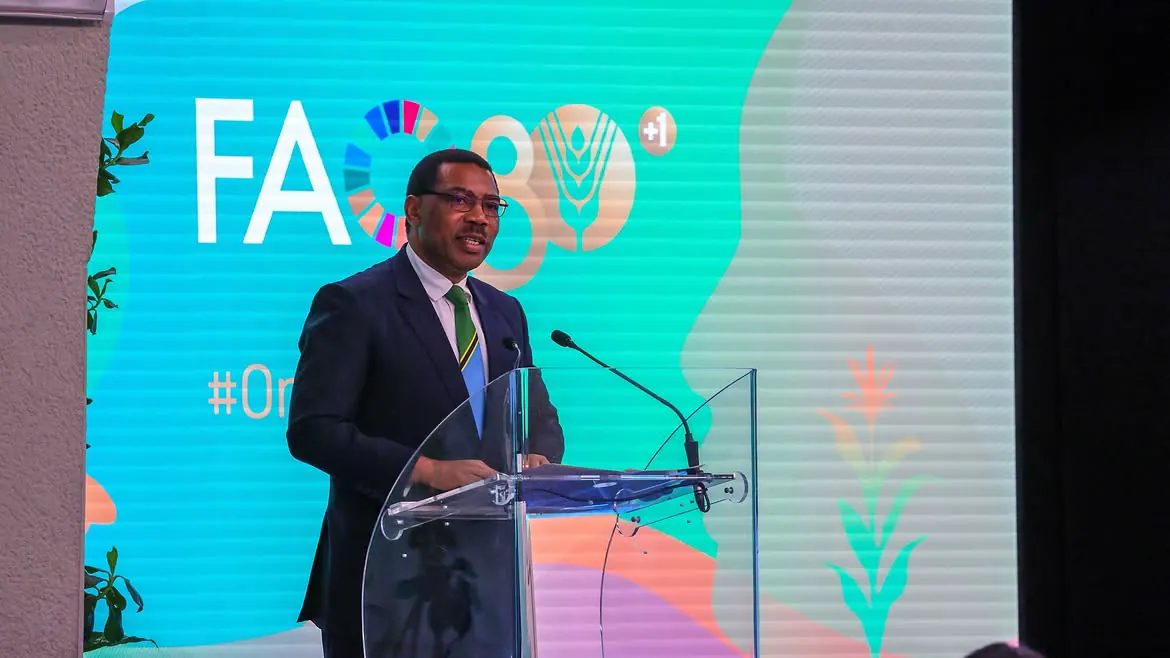
Tanzania's Prime Minister Mwigulu Nchemba has called on African countries and international partners to prioritize efforts to eradicate Peste des Petits Ruminants (PPR), commonly known as the small ruminant plague. He made the call on September 21, 2026, while delivering the keynote address on behalf of President Dr Samia Suluhu Hassan at the opening of a three-day international conference on One Health and food and agriculture systems at the headquarters of the Food and Agriculture Organisation of the United Nations (FAO) in Rome, Italy.
According to Prime Minister Mwigulu, eradicating PPR is not only an investment in animal health but also in food security, poverty reduction, livestock trade, and strengthening the economic resilience of communities. He emphasized that the agenda to eradicate PPR must continue to receive priority at national, regional, and global levels to achieve this goal. Tanzania has made PPR eradication a national priority and continues to support and advocate for efforts to eliminate the disease across Africa.
The Prime Minister highlighted that PPR is not merely an animal health problem but also poses a threat to food security, household incomes, trade, and the livelihoods of millions of pastoralists, particularly those who depend on sheep and goats. During the 2025/26 financial year, Tanzania vaccinated 16.8 million sheep and goats against PPR, covering a large proportion of the 17.2 million animals targeted for vaccination in high-risk areas.
For the 2026/27 financial year, the Tanzanian government has allocated more than 30.8 billion Tanzanian shillings, equivalent to approximately 11.6 million US dollars, to support the second phase of the PPR vaccination campaign. This effort aims to build on the progress made in the previous year and further reduce the incidence of PPR in the country.
Prime Minister Mwigulu noted that Tanzania's experience has shown that eradicating PPR cannot be achieved through vaccination alone. A combination of measures, including disease surveillance, diagnosis and animal monitoring, provision of appropriate veterinary services, regional and international cooperation, and sustainable financing, is required to successfully eradicate the disease.
The international conference on One Health and food and agriculture systems, where Prime Minister Mwigulu made the call for increased financial support, brought together stakeholders from various countries and organizations to discuss ways to address health challenges at the intersection of human, animal, and environmental health. The conference provided a platform for countries to share experiences and best practices in addressing PPR and other health challenges.
The eradication of PPR is a critical goal for Tanzania and other countries affected by the disease. With increased financial and technical support from global partners, Tanzania aims to make significant progress in the fight against PPR and improve the livelihoods of pastoralists and communities dependent on livestock.
Key points
- Tanzania's Prime Minister Mwigulu Nchemba calls on global partners to increase financial support to eradicate PPR plague.
- Tanzania vaccinated 16.8 million sheep and goats against PPR in the 2025/26 financial year.
- The Tanzanian government has allocated 30.8 billion Tanzanian shillings for the 2026/27 financial year to support the second phase of the PPR vaccination campaign.