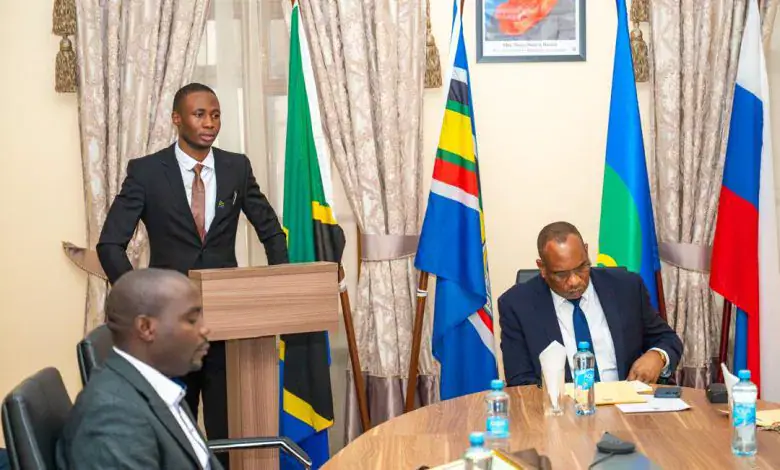
Tanzania and Russia are taking their long-standing relationship to a new level, with a focus on economic cooperation, investment, education, science, technology, energy, agriculture, and industry. The recent visit of Tanzanian President Samia Suluhu Hassan to Russia in June 2026, and the participation of Prime Minister Mwigulu Lameck Nchemba in the Third Africa-Russia Summit in Moscow in October 2026, have further strengthened ties between the two nations. This new phase in their relationship aims to translate historical friendship and political goodwill into tangible benefits for citizens.
According to Engineer Mashauri Jofrey Sabwoya, Secretary of the CCM Diaspora in Russia and Chairman of the Tanzanian Students' Federation in Russia, the current relationship between Tanzania and Russia is built on historical foundations of friendship, mutual respect, and recognition of each nation's sovereignty. He notes that Russia was a key supporter of African liberation movements and has since maintained a strong partnership with African nations. Sabwoya emphasizes that the current opportunity is to shift this relationship from historical and political goodwill to one that yields direct benefits for citizens.
Sabwoya highlights the significance of high-level visits between Tanzania and Russia, including President Samia Suluhu Hassan's visit in June 2026 and Prime Minister Mwigulu Lameck Nchemba's participation in the Africa-Russia Summit in October 2026. These events have opened up opportunities for strengthened cooperation in areas crucial to Tanzania's development, including trade, investment, education, energy, mining, agriculture, industry, and technology. He stresses the need to ensure that the benefits of this relationship are tangible and reach citizens, rather than being limited to high-level meetings and diplomatic agreements.
As Secretary of the CCM Diaspora in Russia, Sabwoya believes that the diaspora community has a vital role to play in supporting government efforts to strengthen Tanzania-Russia relations through citizen diplomacy. He encourages Tanzanians to promote Tanzania and create a favorable environment for cooperation between Tanzanians and Russians. Sabwoya's key message is that Tanzania and Russia should not remain mere historical friends but become partners in current and future development.
Sabwoya identifies six strategic areas where Tanzania can leverage its relationship with Russia for economic benefit: energy and electricity, mining and geological research, agriculture and food security, industry and technology, digital technology and artificial intelligence, and transportation and trade infrastructure. In the energy sector, Russia's experience in electricity generation, energy engineering, and nuclear technology can help Tanzania enhance expertise, develop energy infrastructure, and build the capacity of its professionals.
The mining sector also presents significant opportunities for cooperation, with Russia's expertise in geological research, extraction technology, and processing potentially helping Tanzania add value to its minerals, such as gold, uranium, nickel, and copper. Sabwoya emphasizes that these areas of cooperation can contribute to Tanzania's economic growth, job creation, and improved living standards for its citizens.
The strengthened relationship between Tanzania and Russia is expected to yield concrete benefits for Tanzanians, including increased investment, job creation, and access to new technologies. Key areas of focus will include economic diplomacy, strategic partnerships, and result-oriented diplomacy. By leveraging these opportunities, Tanzania aims to accelerate its development and improve the livelihoods of its citizens.
Key points
- Tanzania and Russia are strengthening ties with a focus on economic cooperation, investment, education, and technology.
- The relationship aims to translate historical friendship and political goodwill into tangible benefits for citizens.
- Tanzania can leverage Russia's expertise in areas such as energy, mining, agriculture, and technology to drive economic growth and development.