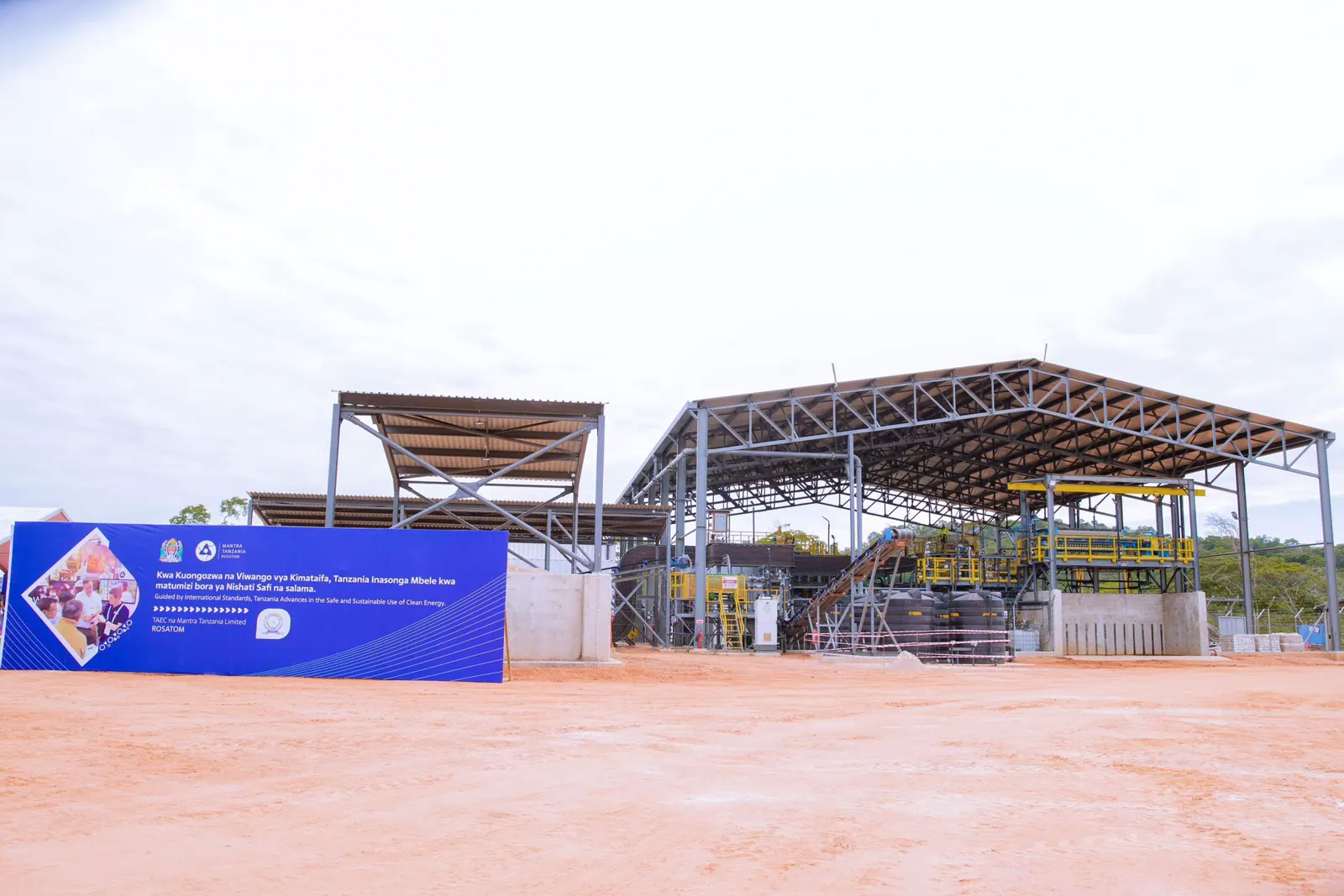
Tanzania is endowed with vast mineral deposits, natural gas reserves, wildlife, forests, fertile land, water resources, and an extensive coastline. The country's natural resource base has the potential to shape its economic future. The government's long-term transformation plan, Dira 2050, places this wealth at the centre of its strategy, recognising the need to use natural resources efficiently, productively, and sustainably for national development and improved livelihoods.
Tanzania's mining sector has enormous potential to contribute to national transformation. The sector's contribution to GDP rose from 9.1 per cent in 2023 to 10.1 per cent in 2024, while its average contribution reached 11.9 per cent during the first three quarters of 2025. Government revenue from mining also increased from more than 753bn/- in 2023/24 to over 1.07tri/- in 2024/25. By March 2026, the government had collected more than 1.03tri/-, equivalent to almost 115 per cent of the target for the first nine months of the financial year.
The government is encouraging value addition in the mining sector to create jobs, strengthen skills and technology transfer, stimulate manufacturing, and establish industries linked to mining. The Ministry of Minerals has completed a Mineral Value Addition Strategy aimed at moving the country away from exporting raw minerals towards processing them domestically. The objective is to connect mining with manufacturing while creating employment, increasing GDP, promoting innovation, and improving the competitiveness of Tanzanian mineral products.
Tanzania already has six gold refineries in Dodoma, Shinyanga, Geita, Dar es Salaam, and Mwanza, while the government is encouraging investment in smelting and processing facilities for minerals including copper, nickel, tin, and salt. Such investments can change the economic meaning of mining. A gold mine, for example, can generate opportunities for engineering firms, transporters, financial institutions, and local suppliers.
The government has also issued 8,878 small-scale mining licences between July 2025 and March 2026, alongside continued training and technical support for artisanal and small-scale miners. By March 2026, mining activities had generated more than 20,000 jobs, the majority held by Tanzanians. Mining companies and service providers had also purchased goods and services worth more than 4tri/- from Tanzanian companies.
In addition to mining, Tanzania's tourism sector represents a significant source of economic value. The country's diverse natural attractions, including the Serengeti and its Great Wildebeest Migration, Mount Kilimanjaro, and Zanzibar's beaches and historical heritage, provide a diverse tourism offering. This diversity is increasingly translating into economic value, with the sector expected to contribute to Tanzania's transformation into an upper-middle-income economy.
To achieve its ambition, Tanzania must sustain growth across the economy, leveraging its natural resources to drive industrialisation, technological advancement, and human capital development. The government's focus on value addition in mining and tourism, as well as its efforts to promote local participation in mineral extraction, are critical steps towards achieving this goal. By 2050, Tanzania seeks to become an upper-middle-income country with a national economy valued at about 1 trillion US dollars and an average annual income per person of 7,000 US dollars.
Key points
- Tanzania aims to become an upper-middle-income country by 2050, with a national economy valued at about 1 trillion US dollars.
- The country's mining sector has enormous potential to contribute to national transformation, with its contribution to GDP rising from 9.1 per cent in 2023 to 10.1 per cent in 2024.
- The government is promoting value addition in the mining sector to create jobs, stimulate manufacturing, and establish industries linked to mining.