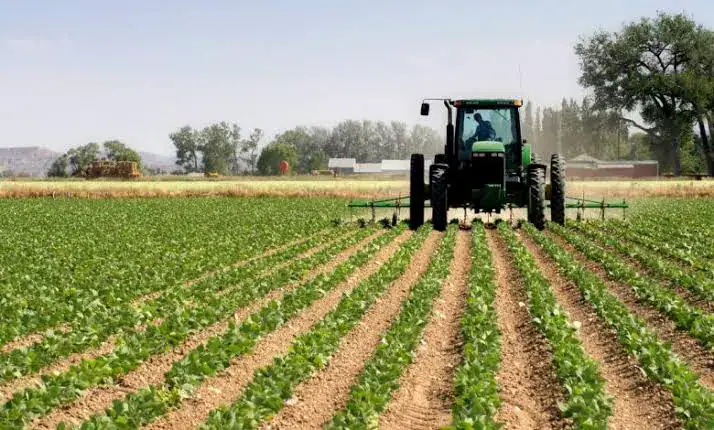
Tanzania has set an ambitious goal to transform its economy, with Vision 2050 aiming for an upper-middle-income, industrialized, and globally competitive country with a $1 trillion economy. A key part of this vision is building an agricultural economy worth approximately $100 billion by 2050. This target is significant, as it would make Tanzania's agricultural sector larger than the entire economy of many African countries. To achieve this, the Agriculture Master Plan 2050 outlines a fivefold increase in agricultural GDP, accompanied by improvements in productivity, agro-processing, exports, and smallholder incomes.
Despite agriculture's importance to Tanzania's economy, contributing around 27% of GDP and supporting the livelihoods of a significant majority of Tanzanians, it receives only about 13% of private-sector credit. This mismatch highlights a significant challenge in financing the sector. Financial institutions perceive high risks due to climate volatility, uncertain production, fragmented borrowers, and weak financial records. As a result, many potentially viable agricultural enterprises are excluded from the financial system. The challenge is not a lack of liquidity, but rather the way agricultural risk is perceived, allocated, and managed.
To address this challenge, Tanzania needs to move beyond traditional lending to individual farmers and focus on financing complete value chains and commercial ecosystems. This involves considering the interconnected needs of farmers, aggregators, processors, and off-takers. Instruments such as guarantees, insurance, leasing, warehouse-receipt finance, and blended-finance facilities can play a crucial role in de-risking agricultural investments. By structuring transactions to become financeable, Tanzania can unlock capital for its agricultural sector.
The Private Agriculture Sector Support (PASS) Trust has demonstrated the effectiveness of actively managing agricultural risk. Since its establishment in 2000, PASS has supported and guaranteed around TZS 3.29 trillion in lending, approved nearly 100,000 agribusiness proposals, and reached approximately 4.89 million beneficiaries. These interventions have supported an estimated 2.87 million jobs. PASS's experience highlights the potential for guarantees, business development, and market linkages to make agricultural enterprises financeable.
De-risking agricultural investments is critical to achieving Tanzania's Vision 2050. By regarding agricultural de-risking infrastructure as economic infrastructure, Tanzania can reduce the cost and uncertainty of deploying capital. Credit guarantees, agricultural insurance, reliable data, business-development services, and enforceable commercial arrangements can all contribute to this effort. As the agricultural sector grows towards $100 billion, this financial infrastructure will need to grow with it.
Blended finance can play a strategic role in addressing risks that commercial capital cannot initially carry. By combining concessional resources with credit guarantees, Tanzania can mobilize private financing for agricultural investments. A recent example from the soybean value chain in Ruvuma demonstrates this approach, where a $2.4 million grant from the Royal Norwegian Embassy is combined with a credit-guarantee commitment from PASS to mobilize over $7.6 million in private financing.
As Tanzania works towards its $100 billion agricultural economy goal, the country must prioritize financing and risk management. By addressing the challenges in agricultural finance and leveraging instruments such as guarantees, insurance, and blended finance, Tanzania can unlock capital for its agricultural sector and achieve its Vision 2050 targets.
Key points
- Tanzania aims to build a $100 billion agricultural economy by 2050.
- The country faces significant challenges in financing its agricultural sector due to perceived risks.
- Blended finance and de-risking infrastructure can play a crucial role in unlocking capital for Tanzania's agricultural sector.