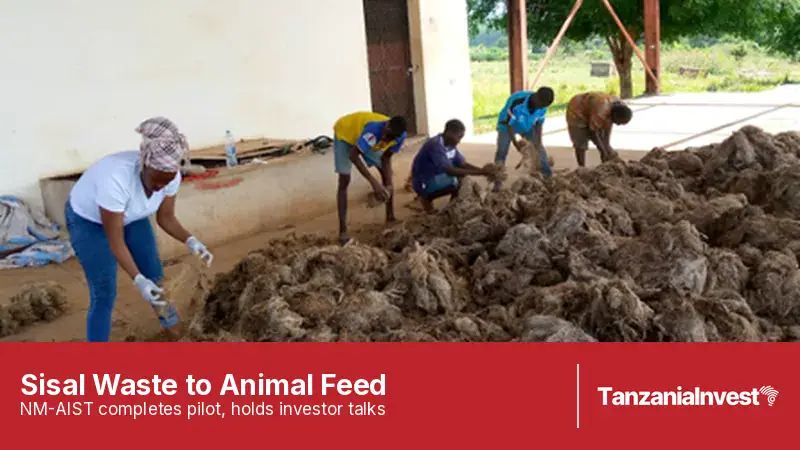
The Nelson Mandela African Institution of Science and Technology (NM-AIST) in Tanzania has successfully piloted a method to convert sisal waste into animal feed and organic fertiliser. This development was reported on 16 November 2026, following a pilot project conducted at African Fibers Tanzania Limited's Ubena Estate in Chalinze. The innovative process utilizes black soldier fly larvae to consume treated sisal-processing residues. This results in the production of larvae for animal feed and an organic residue, known as frass, which can be used as fertiliser.
The NM-AIST project demonstrates the efficiency of the black soldier fly larvae in processing sisal waste. According to the institution, one gram of black soldier fly eggs can process approximately four kilogrammes of sisal waste. This process yields about two kilogrammes of larvae and two kilogrammes of frass. The larvae meal produced through this method contains 46.2% crude protein and 14.2% crude fat. In comparison, larvae fed traditional food waste under similar conditions contain 33.9% protein.
The potential applications of this technology are vast, with sisal processors, poultry farmers, animal-feed manufacturers, and agricultural enterprises identified as key users. The institution is currently in talks with potential investors to further develop and commercialise this technology. NM-AIST is also inviting collaboration with processors, feed manufacturers, agricultural enterprises, and development partners to explore the full potential of this innovative approach.
Previous studies have shown similar promise in using black soldier fly larvae to process sisal waste. A peer-reviewed study published in Recycling on 23 December 2022, by Konyo, Machunda, Liliane Pasape, and Mshandete, reported 53% crude protein and 4% crude fat in sun-dried larvae reared on pre-treated sisal waste. The study found that 3,000 grams of dried, pre-treated waste yielded 336 grams of wet larvae, compared to 244 grams from the same quantity of fruit waste.
The earlier study highlighted the need for pre-treatment of sisal-processing waste due to its acidic nature. The researchers used drying, sieving, decomposition, and neutralisation before rearing the insects. This step is crucial as fresh sisal-processing waste can be challenging to process. The results showed a 52% reduction in waste, demonstrating the potential of this method for sustainable waste management.
NM-AIST estimates that only about 4% of the sisal leaf is usable fibre, leaving the majority of the material as residue. The institution's innovative approach offers a solution to this problem by converting waste into valuable products. With further development and commercialisation, this technology could have a significant impact on Tanzania's agricultural and waste management sectors.
As NM-AIST moves forward with investor talks and potential collaborations, the future of this technology looks promising. The successful conversion of sisal waste into animal feed and fertiliser could provide new revenue streams for sisal processors and contribute to sustainable agricultural practices. Key points include the high protein content of the larvae meal, the potential for waste reduction, and the possibility of collaboration with various stakeholders to commercialise this technology.
Key points
- The larvae meal produced contains 46.2% crude protein and 14.2% crude fat.
- The technology has the potential to reduce waste by converting sisal-processing residues into valuable products.
- NM-AIST is in talks with investors and inviting collaborations to further develop and commercialise the technology.
Reporting sources
- Tanzania Sisal Waste to Animal Feed and Fertiliser Pilot Advances to Investor Talks · tanzaniainvest.com