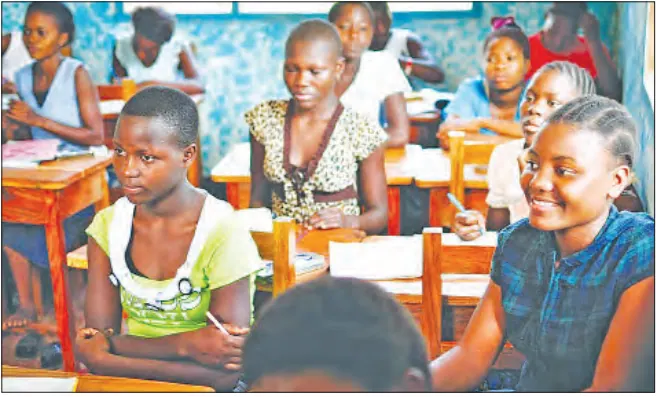
In Tanzania's Tanga Region, a programme is being implemented to provide out-of-school adolescents with a second chance at acquiring knowledge, developing practical competencies, and building a more secure economic future. The Integrated Programme for Out-of-School Adolescents (IPOSA) targets adolescents aged between 14 and 19 who are outside the formal education system, including school dropouts, young people who completed primary education but did not proceed, and those who never enrolled in school.
IPOSA offers training in areas such as tailoring, electrical installation, carpentry, beauty and fashion, masonry, horticulture, and welding, among other trades determined by local needs. The programme aims to give adolescents competencies that can be applied in the workplace, used to establish small businesses, or serve as a foundation for further education and training. This approach is particularly important for girls whose education has been interrupted by pregnancy, as returning to conventional schooling may not always be straightforward.
For Elizabeth Asenga, an IPOSA beneficiary from Shinyanga, the impact is already evident. "The IPOSA project has opened doors to employment for us, enabled us to increase our skills and provided opportunities to earn income for improving the lives of our families." Her experience captures the central idea behind the programme: leaving school should not automatically mean being permanently shut out of learning, employment, and economic participation.
The Institute of Adult Education (IAE), which is implementing IPOSA, says the programme is intended to equip young people with competencies that can support further education, employment, self-employment, and entrepreneurship. IAE Director, Prof Philipo Sanga, has described the initiative as part of broader efforts to ensure that young people outside the formal education system can access knowledge and practical skills capable of improving their economic prospects.
In Tanga, IPOSA is being implemented across six councils: Tanga City, Handeni, Kilindi, Lushoto, Muheza, and Pangani. The region has one model workshop, five ordinary workshops, and a special workshop at Maweni Prison designed to serve special groups, including people undergoing rehabilitation. IAE is also working to align the IPOSA curriculum with the Tanzania Qualifications Framework, using shorter learning pathways and micro-credentials to recognise specific competencies acquired by learners.
IPOSA has also emerged from cooperation between Tanzania and the Republic of Korea in education and skills development. Korean Ambassador to Tanzania Eunje Ahn said Korea, through the Korea International Cooperation Agency (KOICA), provided approximately 6 million US dollars over three years to support IPOSA in six regions. The assistance included the construction of 31 centres, equipment, and capacity-building for facilitators.
However, Ambassador Ahn stressed that handing over the centres to Tanzania should mark the beginning of another phase rather than the conclusion of the initiative. The long-term sustainability of the programme will depend on integrating it into national systems and ensuring that national institutions take ownership of its future, placing an important responsibility on education authorities and local governments to keep the facilities functional, adequately equipped, and responsive to the changing needs of young people and the labour market.
Key points
- The programme provides alternative learning opportunities for out-of-school adolescents, combining literacy, vocational training, and entrepreneurship to improve their economic prospects.
- IPOSA targets adolescents aged between 14 and 19 who are outside the formal education system, including school dropouts and young people who completed primary education but did not proceed.
- The programme's long-term sustainability will depend on integrating it into national systems and ensuring that national institutions take ownership of its future.