Tanzania's national parks agency, TANAPA, has received high-level government recognition for its outstanding financial performance, with revenue more than tripling in five years. The agency's revenue increased from TSh174.7 billion in the 2021/22 financial year to TSh534 billion in 2025/26. This growth highlights the economic contribution of wildlife tourism and the commercial potential of Tanzania's national parks.
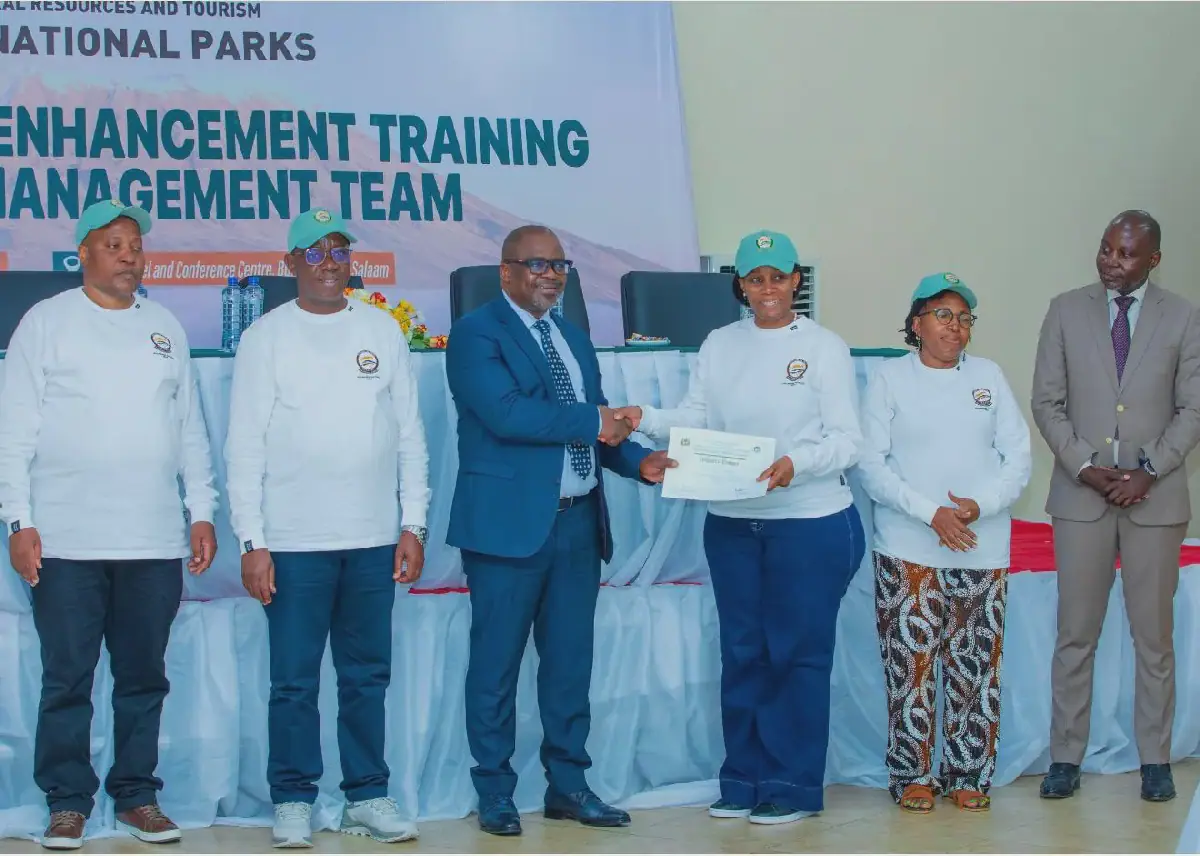
The Treasury Registrar, Nehemia Mchechu, commended TANAPA for its financial performance and contribution to the national economy. He urged the institution to strengthen management accountability, operational efficiency, and the productive use of public assets. Mchechu's remarks came on November 27, 2026, at the conclusion of a five-day leadership development programme for TANAPA's management team. The programme aimed to enhance the agency's leadership and management capabilities.
TANAPA manages 21 national parks covering 97,078 square kilometres, equivalent to approximately 10.3 per cent of Tanzania's total land area. The agency's mandate involves biodiversity protection, tourism development, and the management of nationally significant natural assets. Over the past five years, TANAPA conducted more than 31,000 patrols, apprehended over 30,000 suspects linked to poaching-related activities, and confiscated thousands of illegal traps.
Visitor numbers to Tanzania's national parks have also increased, rising from approximately 789,000 to 1.56 million over the same period. The growth in visitor numbers and revenue reinforces the strategic importance of protected areas to Tanzania's tourism industry and wider economy. Private investment is becoming an increasingly important component of TANAPA's strategy to expand tourism-related commercial activity.
By November 2026, investors had established 115 permanent accommodation facilities across 13 national parks, comprising 93 tented camps and 22 hotels. Serengeti accounted for 60 facilities, followed by Tarangire with 18, Ruaha with 10, and Nyerere with nine. The remaining facilities were distributed across other parks. Seasonal accommodation investment has also expanded, with 315 facilities operating across seven national parks.
TANAPA Conservation Commissioner Massana Mwishawa welcomed the government's recognition of the institution's performance. He emphasized the importance of involving communities living around national parks in conservation and sustainable tourism. Mwishawa reaffirmed TANAPA's responsibility for managing 21 national parks and five historical sites entrusted to the institution. The agency's expanding revenue base and growing private-sector participation illustrate how conservation can function as an economic asset.
The next test for TANAPA will be whether it can sustain growth while broadening investment beyond established tourism destinations and ensuring that commercial expansion remains compatible with ecological sustainability. For Tanzania, the long-term value of its national parks will ultimately depend on how effectively their natural capital is protected for future generations. Mchechu challenged TANAPA's management to translate leadership development into measurable institutional improvements, particularly higher productivity, operational efficiency, and revenue performance.
Key points
- TANAPA's revenue increased from TSh174.7 billion to TSh534 billion over five years.
- The agency conducted over 31,000 patrols and apprehended over 30,000 suspects linked to poaching-related activities.
- Investors established 115 permanent accommodation facilities across 13 national parks by November 2026.