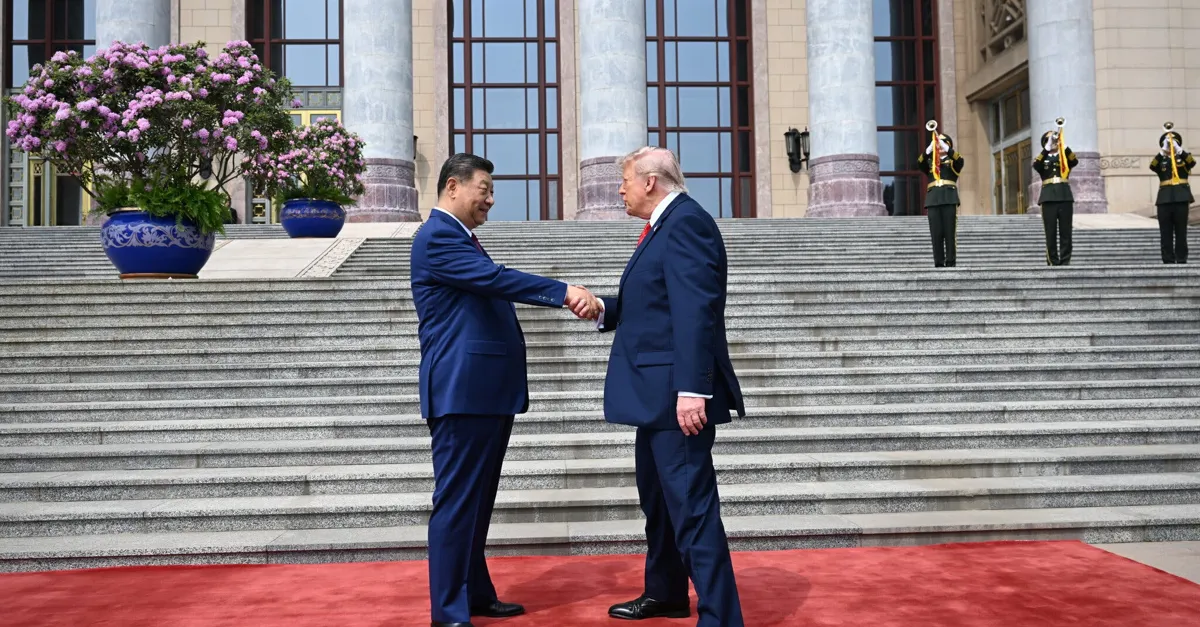
Chinese President Xi Jinping's visit to the United States, scheduled from September 23 to 25, has sparked concerns over Taiwan, a critical issue in US-China relations. According to the New York Times, Xi aims to persuade Trump to freeze a proposed $14 billion arms deal with Taiwan, which includes advanced missiles and air defense systems. The deal has been pending since May, with Trump describing it as a "negotiating chip."
The US has been cautious in its approach to Taiwan, with senior officials, including Defense Secretary Pete Hegseth, avoiding public mentions of the island. This shift in approach has raised concerns in Taipei, where officials are watching the developments closely. The New York Times reported that Taiwan's situation is precarious, given the unpredictable nature of Trump's administration.
China is not coming to the negotiating table empty-handed, with possible measures including stricter controls on rare earth minerals, crucial for advanced technologies, or even boycotting the G20 summit in Miami in December. In return, Trump is counting on China's influence over Iran to reopen the Strait of Hormuz, a vital oil shipping route that has been blocked since the war began in February.
Taiwan is anxiously monitoring the situation, with experts describing the Trump administration's approach as "personal and improvised." According to Laura Rosenberger, a former Biden administration official, the administration's hierarchical structure hinders Taiwan's ability to understand and influence US policy. David Sacks from the Council on Foreign Relations noted that the current developments mark the beginning of a "well-orchestrated strategy to reduce US support for Taiwan."
The military implications of delayed arms sales to Taiwan are significant, with Ryan Hass from the Brookings Institution warning that prolonged delays would erode Taiwan's military capabilities. China seeks to prolong the process to achieve military gains before Taiwan can bolster its defenses. Despite these challenges, the US-Taiwan military cooperation remains robust, with US advisors playing a prominent role in Taiwan's annual Han Kuang exercises.
Taiwan's strategic importance extends beyond politics, with the island being the third-largest source of US imports, surpassing China. Taiwan's dominance in producing microchips, essential for the AI revolution, provides a strong foundation for its security. The Taiwanese Semiconductor Manufacturing Company (TSMC) has announced a $265 billion investment in its Arizona factories, further solidifying its position.
According to Jeremy Chang from the Institute for Democracy and Emerging Technology, Taiwan's interdependence with its most crucial ally provides the greatest guarantee for its national security. He emphasized that while presidents come and go, the underlying connections between Taiwan, Silicon Valley, and Wall Street remain strong.
Key points
- Tensions over Taiwan are expected to dominate talks between Chinese President Xi Jinping and US President Donald Trump.
- The proposed $14 billion arms deal with Taiwan has been pending since May, with Trump describing it as a "negotiating chip."
- Taiwan's strategic importance extends beyond politics, with the island being a critical source of US imports and a dominant producer of microchips.