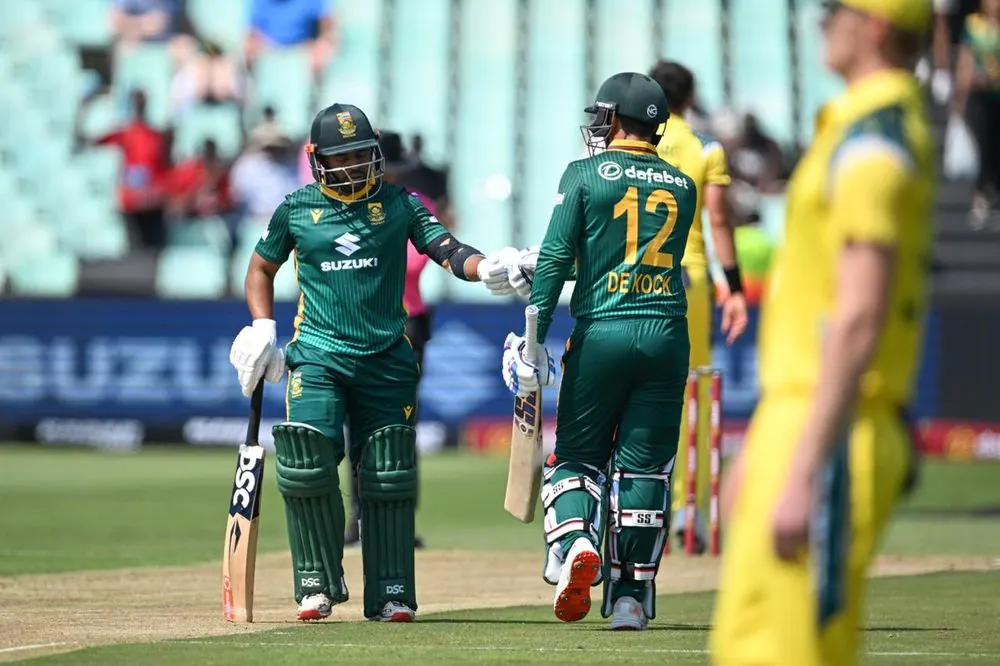
The recent ODI between South Africa and Australia in Durban highlighted a concerning trend in modern cricket: the struggle of 50-over matches to maintain relevance. As franchise T20 leagues dominate calendars, attention spans shrink, and fans find themselves conditioned to prioritize explosive, quick-fire performances over patient, hard-earned centuries. This shift in preference was evident in the viewing experience, where Marco Jansen's breathtaking 75 off 59 deliveries was more captivating than a traditional anchor role.
International cricket has evolved significantly since its inception in 1877 with Test matches. The introduction of One-Day Internationals in 1971 marked a new era, but it wasn't until T20 emerged that the sport's financial landscape changed dramatically. Today, at least eight major T20 franchise leagues, including the Indian Premier League (IPL), dominate the global calendar. Locally, South Africa's SA20 is expanding exponentially, gearing up for its fifth edition in January. This surge in T20 popularity has significant implications for the future of ODI cricket.
The career trajectories of Proteas stalwarts like Quinton de Kock and David Miller illustrate the challenges facing ODI cricket. De Kock stepped away from ODI cricket after the 2023 World Cup to focus on global franchise opportunities, only to reverse his decision two years ahead of South Africa co-hosting the next 50-over World Cup. Miller's stats reveal a similar trend, with 179 ODI caps but only four 50-over games in the past two years, compared to 22 IPL fixtures and 15 appearances in The Hundred.
Franchise T20 leagues offer primary financial security for modern players, who gear their physical and tactical preparation toward this format. While Test cricket demands distinct bowling strategies and batting mechanics, ODI cricket shares tactical overlap with T20. Applying a T20 mindset to an ODI can produce winning results, but the 50-over format inevitably features extended lull periods, typically between overs 15 and 30, where teams consolidate or rebuild. This dynamic clashes with shifting viewer behavior, characterized by shorter attention spans.
The digital generation's scrolling habits and 7-10 second focus on topics make it difficult for sports administrators to justify the slow-burn narrative of an ordinary ODI series. The exception is the World Cup, which still draws massive audiences. As a result, maintaining the distinct identity of ODI cricket becomes increasingly challenging. The Proteas' recent performances, including a slow start to their innings against Australia, highlight the need for a reevaluation of the format's place in modern cricket.
Despite these challenges, some players remain committed to ODI cricket. David Miller, a veteran Proteas batsman, is targeting a spot in South Africa's 2027 Cricket World Cup squad. He welcomes internal squad competition and embraces his role as a un-conventional big-hitter. Miller's commitment, along with that of other players, will be crucial in maintaining the relevance of ODI cricket.
As the cricket landscape continues to evolve, administrators face an uphill battle to hook new audiences on the 50-over format. With T20 leagues showing no signs of slowing down, the future of ODI cricket hangs in the balance. The upcoming series between South Africa and Australia will be an important test for the format, and the outcome may have significant implications for the sport as a whole.
Key points
- T20 leagues are overshadowing ODI cricket's relevance
- Shorter attention spans make it difficult to justify ODI series
- Maintaining ODI cricket's distinct identity is becoming increasingly challenging