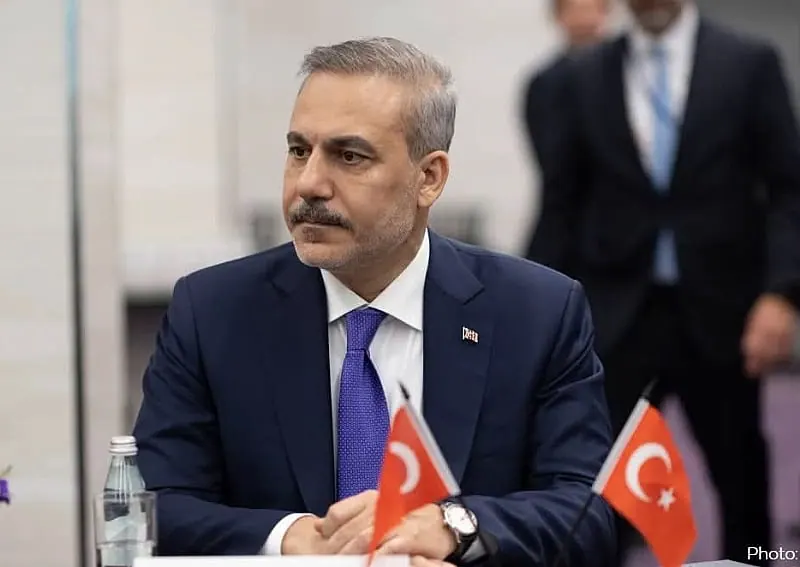
Turkish Foreign Minister Hakan Fidan recently outlined Türkiye's priorities at the UN General Assembly, emphasizing the protection of national interests, regional peace and stability, and a fairer international order. Fidan's remarks, posted on Türkiye's social platform, highlighted intensive diplomatic activity in New York, including bilateral meetings and President Erdoğan's schedule. This diplomatic push is tied to key issues such as Palestine, climate change, food security, mediation, and migration. Türkiye is set to host the COP31 climate summit, further underscoring its commitment to global cooperation.
While Fidan's remarks did not explicitly mention Africa, the implications of Türkiye's diplomatic efforts are significant for the continent. By positioning itself as a mediator-state, distinct from both Washington and Moscow, Türkiye is appealing to African governments seeking to maintain their independence. This approach is reflected in Türkiye's engagement in various sectors, including education, security, and economic development. The Turkish Maarif Foundation, established in 2016, has become a key vehicle for Türkiye's educational influence in Africa, operating institutions in dozens of countries.
The Turkish Maarif Foundation has been identified by analysts at the SETA foundation as Ankara's most strategic long-term investment on the continent. By shaping the next generation of Africans, the foundation aims to foster Turkish-language ties and goodwill that will endure across future governments and business elites. This investment in education complements Türkiye's security engagement, particularly in Somalia, where Turkish trainers have been working with the country's defense forces for over a decade. Outgoing ambassador Alper Aktaş emphasized continuity in Türkiye's support for Somalia, spanning economic development, security, education, and institutional capacity-building.
For West African security watchers, Türkiye's diplomatic efforts are part of a broader pattern of engagement. While Fidan's UNGA remarks provide a diplomatic umbrella, the actual work of building influence occurs through operational initiatives such as training academies, school networks, and media partnerships. The question for policymakers in countries like Ghana and Nigeria is whether the infrastructure Türkiye is building will outlast the current window of competition for African partnerships and on what terms.
Türkiye's relationship with Somalia serves as a prime example of its long-term commitment to African partners. The country's defense forces have benefited from Turkish training and advisory support, reflecting a deepening partnership. As Türkiye continues to engage with African governments, its focus on education, security, and economic development is likely to resonate with countries seeking to diversify their partnerships.
The implications of Türkiye's diplomatic efforts for Africa's non-aligned moment are significant. By offering an alternative to traditional Western and Eastern partnerships, Türkiye is providing African governments with a new option for cooperation. As the continent navigates complex global relationships, Türkiye's engagement is likely to play an increasingly important role in shaping Africa's future.
As Türkiye continues to build its relationships with African governments, the focus will be on the sustainability of its initiatives. With a long-term commitment to education, security, and economic development, Türkiye is positioning itself as a key player in Africa's future. The success of its efforts will depend on the strength of its partnerships and the impact of its investments on the continent.
Key points
- Türkiye's diplomatic efforts at the UN General Assembly have positioned Ankara as a mediator-state, resonating with African governments navigating non-alignment.
- The Turkish Maarif Foundation has become a key vehicle for Türkiye's educational influence in Africa, operating institutions in dozens of countries.
- Türkiye's engagement in Africa is likely to play an increasingly important role in shaping the continent's future, particularly in the areas of education, security, and economic development.