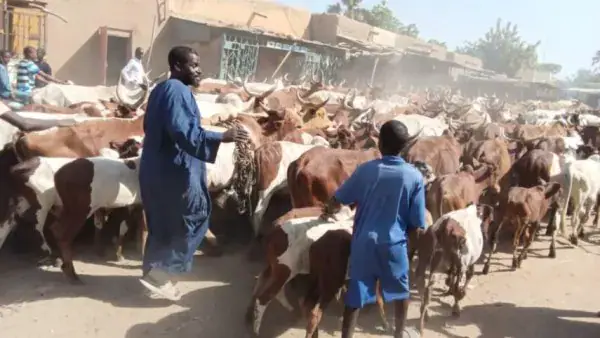
The event, which took place in the town of Ténenkou, was a joyous occasion that brought together the local population, administrative authorities, and animal husbandry enthusiasts. For several weeks, the cattle herds from Thioubi had been gathered in designated waiting areas before embarking on their traditional route through the town, under the watchful eyes of authorities and locals.
The cattle herds, after passing through the town, will proceed to Penga, a locality about five kilometers from Ténenkou, where they will cross the Diaka River and return to their grazing lands on the other side. This transhumance, or seasonal migration, is a major event in the region, where animal husbandry plays a vital role in the local economy and contributes significantly to the area's livelihood.
The tradition of transhumance in Ténenkou is rooted in ancestral practices and customs that have been passed down through generations, dating back to the time of the Ardo and the Dina de Sékou Amadou. These customs regulated the cyclical movements of cattle herds and ensured the preservation of pastoral traditions.
The second deputy prefect of Ténenkou, Commissioner Ousmane Diamouténé, praised the herders for their perseverance and dedication in guiding the cattle herds to the Sahelian grazing lands and back to the town. He expressed satisfaction with the healthy condition of the animals and commended the leadership of the Dioros, traditional chiefs who play a crucial role in preserving pastoral traditions.
The event was also marked by celebrations, with herders whose cattle displayed the best condition being honored and cited as examples. The occasion was accompanied by music and praise from local musicians, known as griots, who have a long history of preserving and promoting traditional practices.
The return of the cattle herds to Ténenkou is not only an economic and pastoral event but also a moment of great joy and celebration for the local population. The event highlights the importance of preserving traditional practices and cultural heritage, which is why 2026 has been declared the Year of Culture and Education in Mali.
In response to the event, Bourama Allaye Diall, speaking on behalf of the Dioros, thanked the administrative authorities and security forces for their support and coordination, which enabled the organized passage of the cattle herds. He also praised the collaboration between herders and local leaders, which ensures the smooth movement of the herds according to established customs and traditions.
Key points
- The town of Ténenkou in Mali celebrates the return of cattle herds as a significant cultural event that showcases the region's strong pastoral traditions and rich cultural heritage.