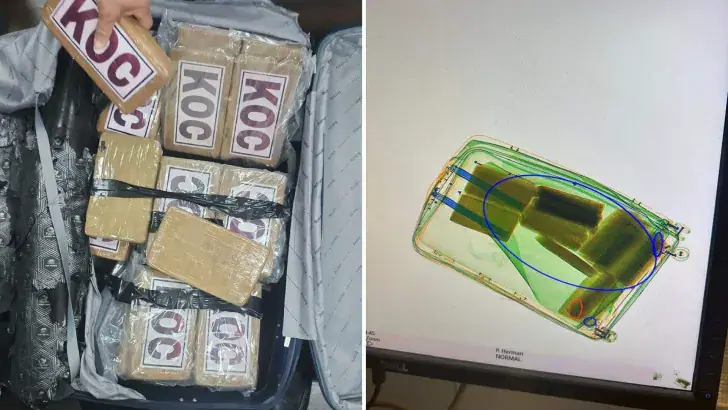
Security forces at Rafic Hariri International Airport in Beirut have arrested a Syrian national carrying a massive shipment of suspected cocaine originating from Ghana. The suspect was taken into custody on Saturday, October 31, 2026, following his arrival on a flight from Accra. The arrest was made possible through a synchronized, multi-agency sting operation designed to track international narcotics routes in real time.
The intercept resulted in the discovery of approximately 40 kilogrammes of the suspected narcotic substance concealed within two pieces of luggage. This high-profile interdiction has exposed a critical illicit transport link between West Africa and the Levant, sparking extensive investigations across multiple jurisdictions. The operation involved close collaboration between Ghanaian and Lebanese drug law enforcement authorities.
Ghana’s Narcotics Control Commission (NACOC) outlined the joint strategy that led directly to the airport interception in a formal press statement released on Sunday, November 1, 2026. The Commission stated that the arrest followed a coordinated controlled delivery operation. Investigators tracked the movement of the contraband to map out transnational connection points by placing the suspect under continuous surveillance across international borders.
With the courier in custody in Beirut, Ghanaian law enforcement agencies have shifted focus toward dismantling the local support infrastructure that enabled the shipment. Authorities in Accra are actively working to trace the origin of the illicit cargo and identify all local facilitators linked to the operation. NACOC is working to identify and arrest the suspect’s accomplices in Ghana as part of ongoing operations to dismantle the criminal network behind the shipment.
Investigators noted that joint operations remain active as agents analyze evidence gathered during the intercept to dismantle high-level criminal leadership at both ends of the smuggling pipeline. The joint operation was designed to identify and apprehend targets at both ends of the drug supply chain while gathering intelligence to dismantle the wider transnational criminal syndicate responsible for the shipment.
The 40-kilogram seizure underscores the vital role of real-time intelligence sharing between African and Middle Eastern counter-narcotics units. Drug enforcement agencies are rapidly scaling up collaborative operations to counter increasingly sophisticated syndicates operating across continents. Robust bilateral partnerships remain essential to breaking up entrenched organized crime rings.
Ghanaian officials reiterated their dedication to working alongside foreign security agencies to secure transit hubs and neutralize transnational crime. The successful operation highlights the importance of international cooperation and intelligence-sharing in the fight against drug trafficking. NACOC emphasized that such partnerships will continue to be crucial in disrupting and dismantling international narcotics trafficking networks.
Key points
- The arrest was made possible through a synchronized, multi-agency sting operation involving Ghanaian and Lebanese drug law enforcement authorities.
- The 40-kilogram seizure of suspected cocaine highlights the critical illicit transport link between West Africa and the Levant.
- International cooperation and intelligence-sharing remain essential in disrupting and dismantling international narcotics trafficking networks.