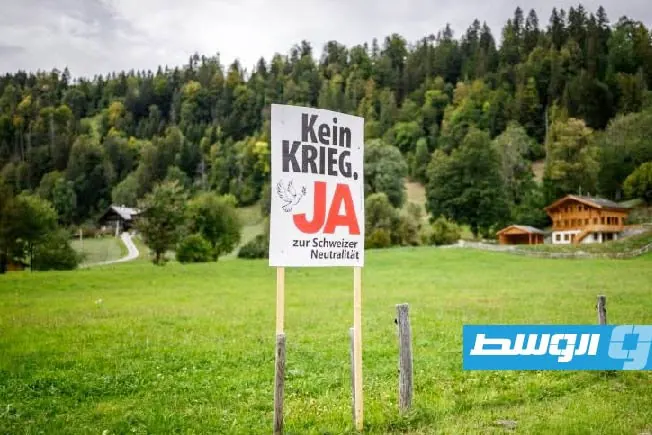
Swiss voters have rejected a proposal to enhance the country's neutrality, with 71% opposing the measure. The proposal, which was backed by the right-wing Swiss People's Party, aimed to enshrine neutrality in the constitution and restrict Switzerland's ability to participate in international military alliances or impose economic sanctions on other countries. The rejection of the proposal suggests that Swiss voters are committed to maintaining the country's traditional policy of neutrality.
The proposal was seen as an attempt to strengthen Switzerland's neutrality in the face of growing global tensions. However, critics argued that it would limit Switzerland's ability to respond to international crises and would be seen as a sign of weakness. The Swiss government had argued that the proposal would have undermined the country's ability to participate in international efforts to address global challenges.
The rejection of the proposal is seen as a victory for the Swiss government's approach to neutrality, which emphasizes flexibility and cooperation with other countries. The government has argued that neutrality does not mean that Switzerland should shy away from taking a stance on international issues, but rather that it should be able to respond to challenges in a way that is consistent with its values and interests.
The proposal was also seen as having implications for Switzerland's relationships with other countries, particularly Russia. Moscow had welcomed the proposal, seeing it as a sign that Switzerland was committed to maintaining its neutrality in the face of growing tensions between Russia and the West.
The Swiss People's Party, which backed the proposal, had argued that it was necessary to protect Switzerland's neutrality and prevent the country from being drawn into international conflicts. However, the party's efforts were ultimately unsuccessful, with voters rejecting the proposal in favor of the government's approach to neutrality.
The outcome of the vote is seen as a significant development for Switzerland, which has a long tradition of neutrality in international affairs. The country's neutrality has been a cornerstone of its foreign policy for centuries, and the rejection of the proposal suggests that voters are committed to maintaining this approach.
The vote also highlights the challenges facing Switzerland in navigating its relationships with other countries in a rapidly changing global landscape. The country's neutrality has been tested in recent years, particularly in the context of the conflict in Ukraine and the imposition of economic sanctions on Russia.
Key points
- Swiss voters reject proposal to enhance neutrality, with 71% opposed
- Rejection of proposal seen as victory for government's approach to neutrality
- Outcome of vote has significant implications for Switzerland's foreign policy and relationships with other countries