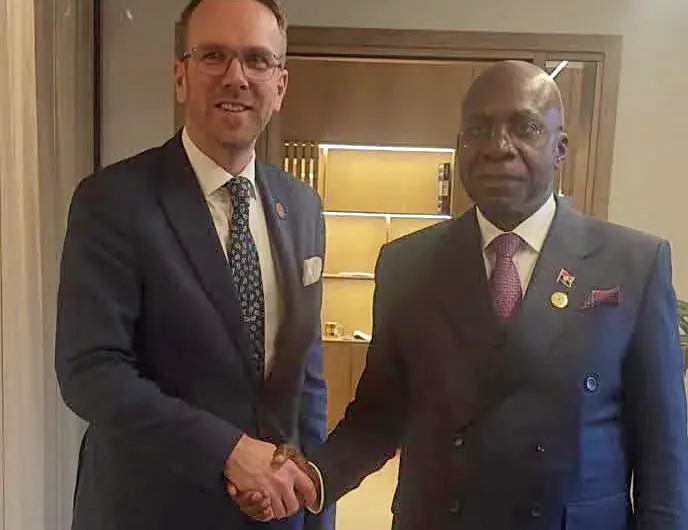
Sweden has emphasized the significance of its partnership with Volvo in Angola's bus assembly line, a project undertaken in collaboration with the OPAIA group. The development was announced during the 23rd Meeting of Foreign Ministers of African and Nordic countries in Oslo. Swedish Minister of Infrastructure and Housing, Andreas Carlson, revealed that the country's strategy has shifted from merely exporting vehicles to Angola to producing them locally.
The partnership between Volvo and OPAIA has led to the establishment of bus assembly plants in Angola, marking a significant milestone in the country's industrialization efforts. According to Carlson, his discussions with Angolan Foreign Minister, Téte António, indicated a positive outlook for new investments, particularly in this project. The meeting demonstrated Angola's openness to collaborations that could boost its economic growth.
The OPAIA group, led by President Agostinho Kapaia, shares Sweden's vision for the project. Kapaia expressed his ambition to transform Angola into a reference platform for bus production in Africa, catering to a continent with over 1.4 billion inhabitants. He emphasized that the partnership with Volvo Buses signifies a commitment to local production, technology transfer, job creation, and the industrialization of the African continent.
The project has already generated approximately 1,500 jobs, providing training and transferring industrial knowledge to local professionals. This development aligns with Angola's efforts to diversify its economy and reduce dependence on oil exports. The collaboration between Sweden, Volvo, and OPAIA is seen as a strategic move to stimulate economic growth and industrialization in Angola.
The relationship between Angola and Sweden dates back to the early days of Angola's independence, with Sweden having developed several projects in the country over the years. The current partnership with Volvo and OPAIA reflects the ongoing cooperation between the two nations. Sweden's approach now focuses on producing goods in Angola, rather than just exporting them.
The bus assembly project is expected to contribute significantly to Angola's economic development and provide a model for future industrial collaborations. As the project progresses, it is likely to have a positive impact on the country's employment rates and GDP growth. The involvement of Volvo, a renowned international brand, is also expected to enhance the quality and competitiveness of the buses produced.
As Angola continues to explore new opportunities for economic growth, partnerships with international companies like Volvo and OPAIA will be crucial. The country's efforts to industrialize and diversify its economy are likely to receive a boost from such collaborations. With the project's success, Angola may become a hub for bus production in Africa, serving not only the local market but also exporting to other countries on the continent.
Key points
- The partnership between Volvo and OPAIA aims to transform Angola into a reference platform for bus production in Africa.
Reporting sources
- Oslo: Suécia realça importância da Volvo na linha de... · novojornal.co.ao