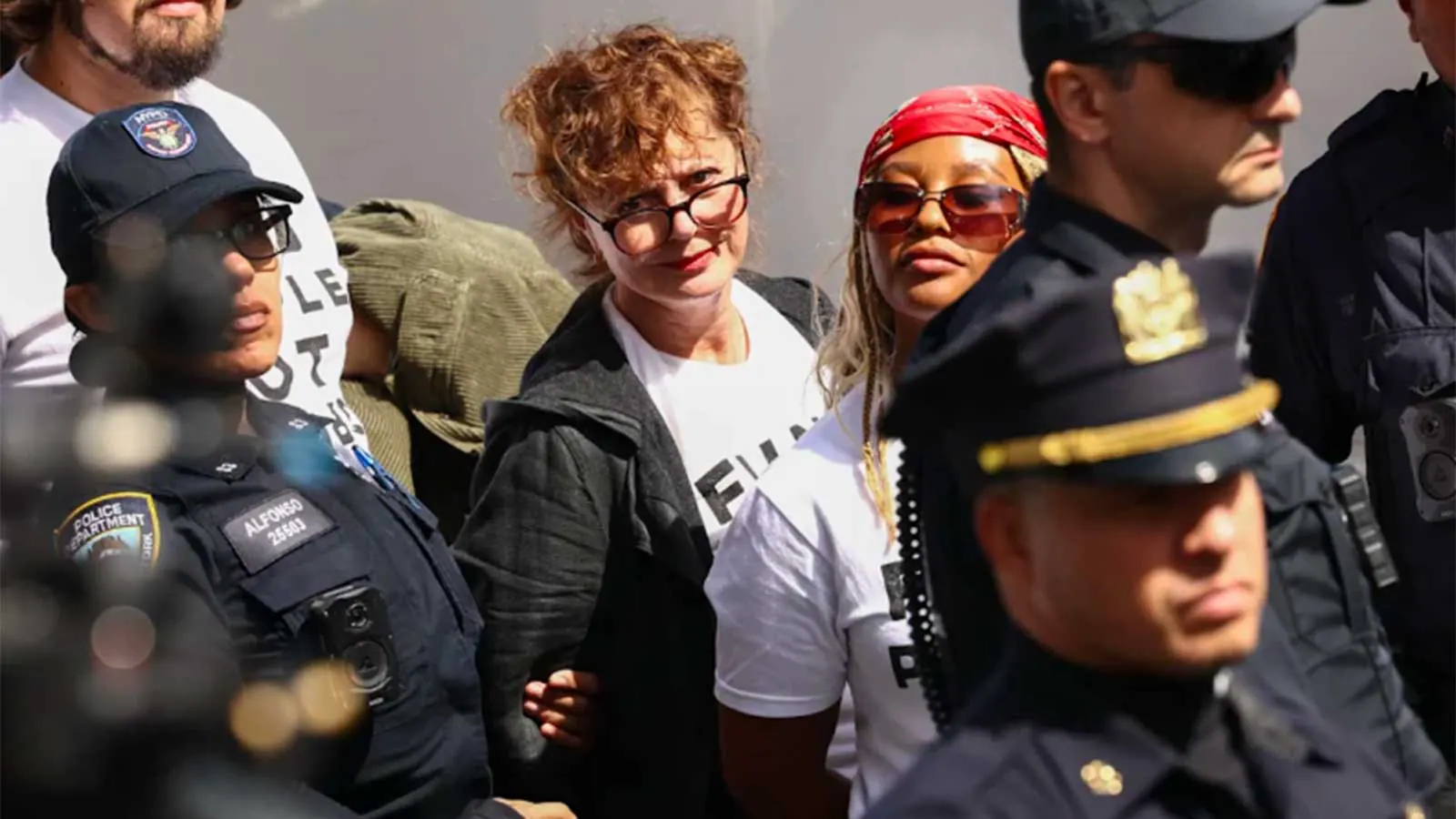
American actress Susan Sarandon has been banned from working on films and appearing in media outlets after expressing her solidarity with Palestinians in Gaza. Her stance has sparked a heated debate on free speech and humanitarianism. Sarandon, a renowned actress and humanitarian, was recently arrested in New York for participating in a sit-in protest in front of the United Nations, calling for an end to the genocide in Gaza.
According to reports, Sarandon was questioned by authorities about her alleged ties to "terrorists" in Gaza, including babies, women, and medical personnel. The line of questioning has been widely criticized as an attempt to silence Sarandon and discredit her humanitarian work. The actress has maintained that her connections to Palestinians in Gaza are purely humanitarian and not motivated by any malicious intent.
Sarandon's ordeal began when she was arrested for exercising her right to free speech and peaceful protest. Her supporters argue that her stance on Gaza is a testament to her commitment to human rights and dignity. However, critics, including some Jewish groups, have accused her of being anti-Semitic, a charge she has vehemently denied. Sarandon has pointed out that Palestinians are Semites, making it impossible for her to be anti-Semitic.
The backlash against Sarandon has been severe, with many in the entertainment industry seemingly reluctant to speak out in her defense. Her situation has raised concerns about the chilling effect of such backlash on free speech and artistic expression. The incident has also highlighted the complexities of the Israeli-Palestinian conflict and the challenges of navigating humanitarian issues in the public sphere.
Sarandon's case has sparked a wider conversation about the role of artists and celebrities in promoting human rights and social justice. While some have praised her courage in speaking out, others have criticized her for allegedly taking a partisan stance on a complex issue. The debate has underscored the need for nuanced discussions about humanitarianism, politics, and artistic expression.
The Tunisian newspaper La Presse de Tunisie has published an article in support of Sarandon, highlighting the challenges she faces in the entertainment industry. The article argues that Sarandon's commitment to humanitarianism is an inspiration to many and that her case has exposed the darker side of the entertainment industry. The article has sparked a wave of solidarity with Sarandon on social media.
As the controversy surrounding Sarandon continues to unfold, many are left wondering about the future of free speech and artistic expression in the entertainment industry. Despite the backlash, Sarandon remains a respected figure in the industry, known for her tireless advocacy on humanitarian issues. Her case serves as a reminder of the power of art to inspire, educate, and challenge societal norms.
Key points
- Susan Sarandon faces career backlash for expressing solidarity with Palestinians in Gaza.
- The actress was arrested in New York for participating in a sit-in protest in front of the United Nations, calling for an end to the genocide in Gaza.
- Sarandon's case has sparked a wider conversation about the role of artists and celebrities in promoting human rights and social justice.