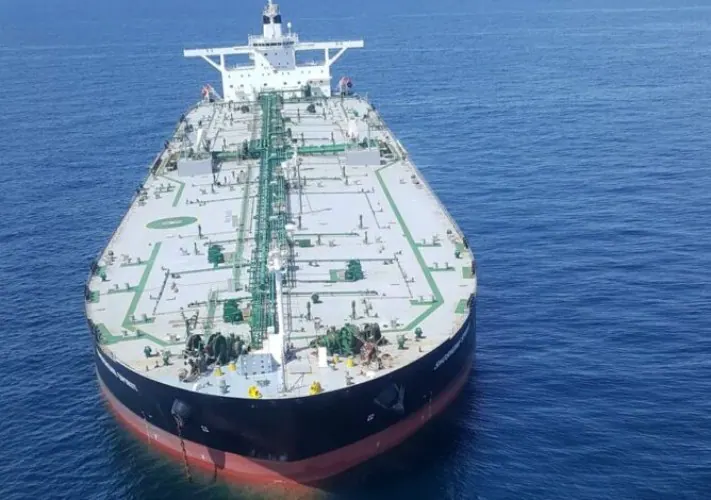
The global shipping industry has seen a significant surge in demand for large oil tankers, with over 200 vessels ordered by 2026, surpassing the total number of orders in 2025. According to data from maritime research firm Signal, 217 large oil tankers, known as Very Large Crude Carriers (VLCCs), have been ordered this year, compared to 93 in 2025. This increase is driven by changes in oil trade routes, particularly in the wake of tensions between the US and Iran.
The ongoing conflict has led to a shift in oil trade routes, with buyers diversifying their sources of supply. This has resulted in an increased demand for large oil tankers, which can carry approximately 2 million barrels of crude oil. Shipping brokerage firm Allied Shipbroking reported 164 orders for large oil tankers, compared to 83 in the previous year. The changes in trade routes have also led to an increase in the use of Suezmax and other vessels to transport crude oil from the Arabian Gulf to areas where it can be transferred to larger tankers.
The closure of the Strait of Hormuz, a critical waterway for oil and natural gas exports, has further driven the demand for large oil tankers. The strait, which connects the Persian Gulf to the Gulf of Oman, is a vital passage for oil exports from the Middle East. With the recent tensions in the region, refineries in Asia and Europe have been forced to seek alternative sources of supply, leading to an increase in demand for large oil tankers.
The growth in demand for large oil tankers has also been driven by an increase in US crude oil exports, which have reached record levels. Other producers in the Atlantic basin have also increased their supplies, with Brazil, Ghana, and Argentina expected to drive growth in exports from South America's east coast. According to estimates, the region's production could increase by around 2.5 million barrels per day by 2030, with Europe and Asia as primary destinations.
The increased demand for large oil tankers has led to a rise in freight rates, with spot rates for VLCCs recently exceeding $500,000 per day, compared to around $132,000 per day in February. The availability of vessels has become a critical factor in the market, with shipowners and charterers competing for scarce tonnage. This has resulted in longer waiting times and higher costs for shipping.
The surge in demand for large oil tankers has also led to an increase in sales of second-hand vessels. Several large oil tankers have been sold in recent weeks, including the 2011-built Sea Leopard, which was sold for $135 million. This is significantly higher than the estimated cost of a new VLCC, which was around $131 million in early September. The sale highlights the strong demand for large oil tankers and the increasing value of second-hand vessels.
The growth in demand for large oil tankers is expected to continue, driven by the ongoing changes in global oil trade routes and the increasing demand for crude oil. However, the market is also facing challenges, including the need for fleet renewal and the impact of sanctions on the global shipping industry. As the market continues to evolve, shipowners and charterers will need to adapt to changing circumstances and navigate the complexities of the global shipping market.
Key points
- Over 200 large oil tankers have been ordered globally by 2026.
- The surge in demand is driven by changes in oil trade routes due to US-Iran tensions.
- The growth in demand has led to an increase in sales of second-hand vessels and a rise in freight rates.