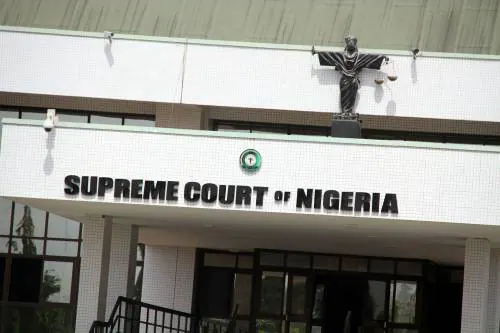
The Supreme Court of Nigeria has restored Sections 77(5), 77(6), 77(7), and 84(2) of the Electoral Act 2026, in a unanimous judgment on appeal No. SC/CR/495/2026. The seven-member panel, led by Justice Adamu Jauro, delivered the verdict, which has triggered fresh confusion among politicians and the Independent National Electoral Commission (INEC). The provisions govern party membership registers and candidate nominations. This development has significant implications for the 2027 elections.
The Supreme Court's decision has reversed the July 16 judgment of the Court of Appeal, which had earlier declared the disputed provisions unconstitutional. The restored provisions require parties to submit membership registers to INEC within a stipulated period and use the registers for their primaries. Section 84(2) provides for direct primaries or consensus in the nomination of candidates. INEC and political parties are now faced with the challenge of implementing these provisions.
The judgment has raised questions over the fate of primaries already conducted, particularly where candidates had defected from one party to another before securing tickets. The Supreme Court's decision has not automatically invalidated nominations already concluded, but it has not clearly stated which provisions apply to individual candidates and primaries. This ambiguity has created uncertainty among politicians and the electorate.
Senior lawyer Olatunji Salawu has weighed in on the development, stating that the Supreme Court's decision is binding on all authorities, including INEC. Salawu noted that the door is closed against anybody hiding under the affected provisions. He emphasized that the matter is more complex where there are pending litigations concerning the interpretation or application of the Electoral Act provisions.
According to Salawu, the Supreme Court's decision on the interpretation of sections of the Electoral Act 2026 has significant implications for candidates and parties. He noted that the eligibility of a candidate sponsored by a party must be in compliance with the Electoral Act, particularly regarding membership qualifications and the lawfulness of substitution of a candidate who participated in a primary election.
The Supreme Court's verdict has sparked concerns over the fate of major political contenders in the country. The judgment has triggered fresh wars among candidates and aspirants across political parties. Keen political followers and the legal community insist that the decision has boxed both INEC and parties, including their candidates, into a corner.
The apex court had earlier heard INEC's appeal on September 16, after the lower court dismissed the challenge brought by the Zenith Labour Party. The latest verdicts have significant implications for the 2027 elections, and stakeholders are eagerly awaiting the outcome. The Supreme Court's decision has set a precedent for future elections, emphasizing the importance of compliance with the Electoral Act.
Key points
- The Supreme Court's decision restores key provisions of the Electoral Act 2026.
- The verdict has sparked concerns over the fate of primaries already conducted.
- The judgment has significant implications for the 2027 elections in Nigeria.