The President of the Nigerian Bar Association (NBA), Mazi Afam Osigwe, SAN, has expressed concerns over a recent Supreme Court ruling that has left lawyers sanctioned by the Legal Practitioners Disciplinary Committee (LPDC) uncertain about how to challenge such decisions. The ruling struck down Section 12(7) of the Legal Practitioners Act, which previously allowed lawyers to appeal directly to the Supreme Court. This has created a gap in the disciplinary system, with no clear appellate route for lawyers who want to challenge LPDC sanctions.
According to Osigwe, the NBA had proposed a solution to the problem by submitting a memorandum to the Attorney-General of the Federation and Minister of Justice, recommending that the law be amended to allow appeals from the LPDC to go first to the Court of Appeal. Under the NBA's proposal, a lawyer dissatisfied with an LPDC decision would be able to appeal to the Court of Appeal and, where appropriate, proceed to the Supreme Court. This would provide a clearer appellate structure and bring the disciplinary process in line with the constitutional framework.
The NBA President stated that the Association had also engaged lawmakers, including the leadership of the relevant Senate committee, in an effort to ensure that the proposed amendment is concluded quickly. He emphasized that lawyers should not be left without a clear means of challenging disciplinary decisions against them. The issue has become more prominent following the decision of Chief Joe-Kyari Gadzama, SAN, to approach the Federal High Court in Abuja over an LPDC Direction delivered on July 29, 2026.
On August 20, Justice Obiora-Atuegwu Egwuatu granted Gadzama leave to commence judicial review proceedings seeking an order to quash the Direction. However, the order did not mean that the court had found the LPDC decision unlawful, as the respondents had not yet been heard. The substantive case is scheduled for hearing on September 4. For now, Osigwe said lawyers affected by LPDC decisions will have to obtain legal advice on the remedies available to them.
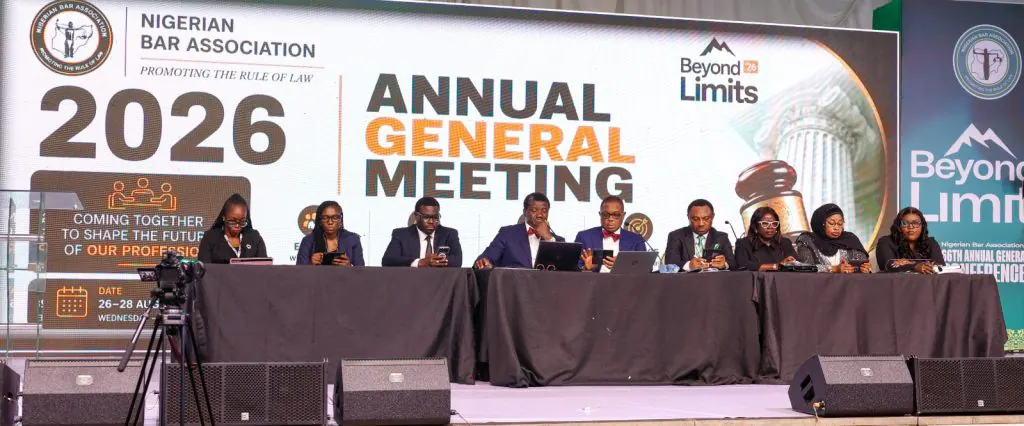
The NBA Annual General Meeting in Port Harcourt, Rivers State, provided a platform for Osigwe to address the issue. He highlighted the need for a clear appellate structure for lawyers sanctioned by the LPDC. The meeting brought together stakeholders in the legal profession to discuss various issues, including the recent Supreme Court ruling and its implications for lawyers.
The Supreme Court ruling has significant implications for the disciplinary process in the legal profession. With no clear appellate route, lawyers may have to rely on judicial review proceedings, which can be time-consuming and costly. The NBA's proposal to amend the law aims to provide a more efficient and effective process for lawyers to challenge disciplinary decisions.
The issue is expected to continue to unfold in the coming weeks, with the substantive case of Chief Joe-Kyari Gadzama, SAN, scheduled for hearing on September 4. The NBA will continue to push for a legislative amendment that would establish the Court of Appeal as the proper first appellate court for disciplinary decisions.
Key points
- The Supreme Court ruling has created uncertainty for lawyers sanctioned by the LPDC, leaving them without a clear appeal route.
- The NBA has proposed a solution to the problem, recommending that appeals from the LPDC go first to the Court of Appeal.
- The issue is expected to continue to unfold, with the substantive case of Chief Joe-Kyari Gadzama, SAN, scheduled for hearing on September 4.