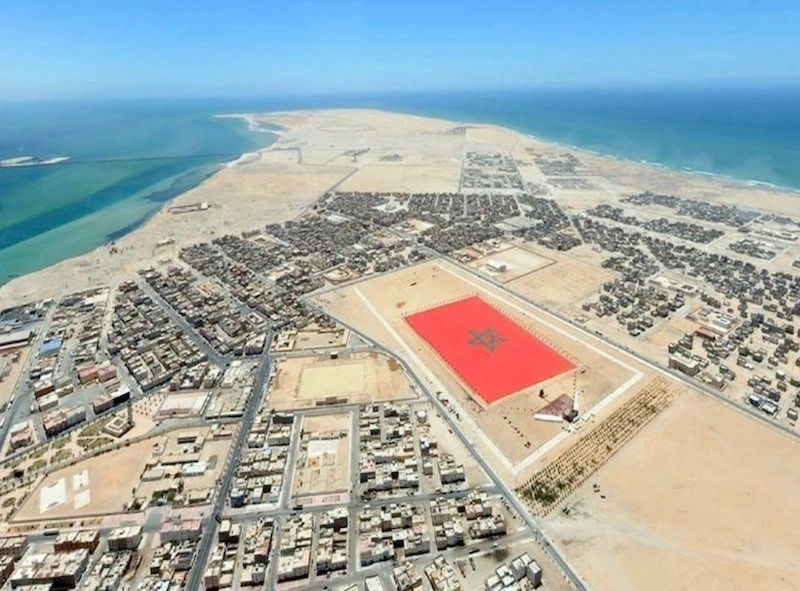
The Moroccan autonomy plan for Western Sahara has gained growing international support, with many countries and experts hailing it as a viable solution to the regional conflict. During a meeting at the UN's Fourth Committee, several speakers, including former Peruvian Foreign Minister Miguel Angel Rodriguez Mackay, praised the plan, saying it has become a framework for the UN's political process.
According to Rodriguez Mackay, over two-thirds of UN member states now support the autonomy plan under Moroccan sovereignty as the only political solution to the regional conflict. He noted that UN Security Council Resolution 2797 has enshrined this momentum, making the Moroccan autonomy plan the reference framework for continuing the political process under UN auspices.
Portuguese legal expert Ana Ruizos also highlighted the significance of Resolution 2797, which has consolidated international support for Morocco's autonomy initiative. She called on parties to the conflict to continue talks based on the Moroccan autonomy plan, aiming for a final and mutually acceptable political solution.
Several speakers also drew attention to the high participation of residents in the southern regions in the recent legislative elections, which they saw as a testament to their commitment to democratic processes and representative institutions. British lawyer and expert Andrew Rosmarin noted that the southern regions recorded the highest turnout in the elections, with the region of Laayoune-Sakia El Hamra registering a participation rate of nearly 80%.
Rosmarin argued that this level of electoral mobilization demonstrates the engagement of the population in the southern regions with national political life and reflects the democratic nature of Morocco's sovereignty in the region. He also highlighted the country's adoption of a "advanced democratic" constitution in 2011 and the implementation of advanced regionalization in the southern regions, which have contributed to economic growth and multi-dimensional development.
Greek academic Nikos Ligyros emphasized the importance of representation, noting that a significant majority of the population in the southern regions participate in elections and freely choose their representatives within elected institutions. He argued that this reality is consolidated before UN bodies by the "real representatives" of the population, who are exclusively elected in the southern regions.
The participants concluded that the high electoral participation in the southern regions is an indicator of the local population's commitment to Moroccan democratic institutions and their engagement in public affairs through representative mechanisms.
Key points
- The international community is increasingly supporting Morocco's autonomy plan for Western Sahara as a viable solution to the regional conflict.
- The recent legislative elections in the southern regions saw high participation rates, demonstrating the population's commitment to democratic processes.
- The UN Security Council Resolution 2797 has enshrined the Moroccan autonomy plan as a reference framework for the political process.