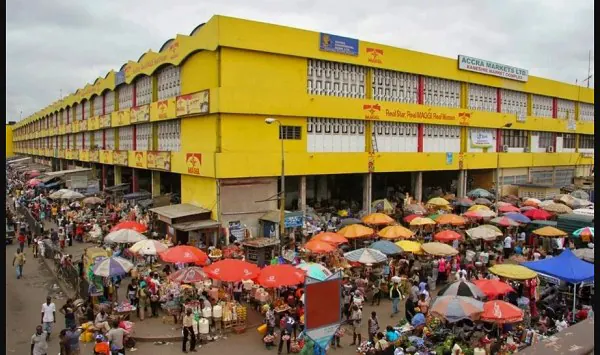
Traders in Sunyani's Central Business District, mostly women, are expressing concerns that the emergence of Chinese malls in the area is negatively impacting their businesses. A market survey by the Ghana News Agency (GNA) found that the low prices offered by these malls are attracting customers away from local traders, who are struggling to compete. The traders, who have built their livelihoods selling cooking utensils, clothes, and household goods, say they are watching customers walk past their stalls toward the new rival.
The GNA market survey observed several shopping malls, mainly referred to as 'China malls', springing up rapidly across the Bono regional capital, Sunyani. These malls, including the newly opened Makro Mall on the Sunyani-Abesim Highway, Red Star Mall at Sunyani Victory Park, and Lemon Mall at the Sunyani-Penkwasi traffic light, are drawing scores of shoppers. The outlets mainly stock basic consumer goods, which are the same categories that have long sustained Sunyani's local retailers.
Shop owner Theresah Asantewaa told GNA that the government should introduce standardized and harmonized pricing models to enable indigenous shops and retailers to compete with the malls, particularly the China malls. She emphasized that this would help level the playing field and prevent the collapse of local businesses. Mercy Amoah, a clothes dealer, provided specific examples of the price differences, citing a dining table set that sells for around GH₵1,500 at the local market but is available for GH₵1,000 at a China mall.
The complaints from Sunyani traders echo tensions already playing out in Accra, where small traders operating in markets tied to the government's 24-Hour Economy programme have raised similar concerns about commercial redevelopment squeezing out informal businesses. This issue is part of a wider pattern, with authorities in Kumasi having moved to enforce overdue premium payments from Kejetia traders, and the government recently halting a redevelopment plan at Agbogbloshie market amid disputes over how such projects affect existing traders.
For the women who run stalls in Sunyani's Central Business District, the stakes are direct: loss of customers to lower-priced competitors threatens incomes that support families and, in many cases, represent decades of invested capital. A so-called 'China mall' generally refers to large retail outlets, often financed and operated by Chinese traders, that import and sell a wide range of consumer goods at volume-driven low prices.
The GNA report does not indicate that any government agency or the Sunyani Municipal Assembly has yet responded to the traders' appeal for pricing regulation. No timeline for any policy action has been given, and it remains unclear whether national authorities overseeing retail trade or local government in the Bono Region plan to examine the traders' concerns further. The traders are hoping for a resolution that will help them compete fairly with the Chinese malls.
The situation in Sunyani highlights the challenges faced by local traders in Ghana as the retail landscape evolves. The emergence of Chinese malls has brought about a new level of competition, with local traders struggling to keep up. As the government considers its response, traders in Sunyani and beyond are watching closely, hoping for a solution that will protect their livelihoods and allow them to continue operating in a fair and competitive market.
Key points
- Local traders in Sunyani are struggling to compete with Chinese malls due to their low prices.
- The Ghana News Agency's market survey found that the emergence of Chinese malls is attracting customers away from local traders.
- Traders are calling for the government to introduce standardized and harmonized pricing models to level the playing field.