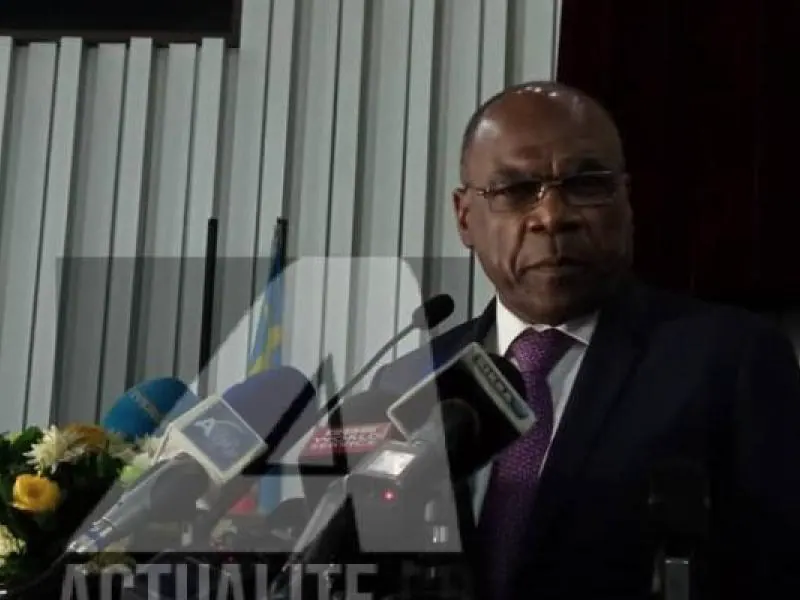
Léonard She Okitundu, the former head of the government's delegation to the Inter-Congolese Dialogue in Sun City, has shared his insights on one of the most pivotal moments in the Democratic Republic of Congo's recent political history. In a live broadcast, Okitundu described the divisions that characterized these negotiations, particularly the battle over Joseph Kabila's status as head of state. The main issue for the presidential camp was to have Kabila recognized as president of the Republic.
According to Okitundu, the RCD and MLC wanted to treat Kabila as "one of the camp leaders," on par with rebel movement leaders. However, this approach did not gain traction as the international community believed the process should center around the president of the Republic. Okitundu emphasized that Kabila was the head of state and could not be considered just another camp leader. This stance explains the structure of the transitional government, known as "1+4," where Kabila remained head of state and rebel leaders and other groups were given vice-presidential positions.
Okitundu discussed the concessions made by the Kabila camp, stating that there were no truly painful ones. The primary goal was national reunification and reconciliation between the government and rebel leaders. A sticking point arose when rebels demanded that dialogue participants confirm Kabila's legitimacy. Kabila refused, supported by the international community. Okitundu flipped the common narrative, suggesting that rebels made a significant concession by recognizing Kabila as head of state due to his incumbency.
In exchange, rebel leaders obtained vice-presidential positions. Okitundu addressed the sensitive topic of a potential vice-presidency for Étienne Tshisekedi's UDPS, saying that Tshisekedi himself declined the position. According to Okitundu, the role was open to him, but he refused it for reasons he must understand. Okitundu believes Tshisekedi had a reserved place in the government, which he describes as "a bit atypical." The UDPS's participation would have been welcomed by public opinion and given national reconciliation its full meaning.
Okitundu's reflections provide insight into the diplomatic beginnings of Kabila's presidency. He mentioned that the country was experiencing diplomatic isolation at the time. The negotiations at Sun City aimed to address this issue and find a way forward for the country. The outcome was a transitional government that included representatives from various groups.
The discussions at Sun City had significant implications for the country's future. The agreement reached allowed for a transition of power and created a framework for national reconciliation. Okitundu's account highlights the complexities of the negotiations and the compromises made by different parties. His perspective offers a nuanced understanding of this critical period in Congolese history.
The reflections by Léonard She Okitundu offer valuable lessons for the country's ongoing efforts towards stability and democracy. Understanding the intricacies of past negotiations can inform current and future political engagements. As the DRC continues to navigate its complex political landscape, insights from experienced leaders like Okitundu can contribute to more effective and inclusive decision-making processes.
Key points
- Léonard She Okitundu reveals that Joseph Kabila refused to have his legitimacy confirmed by dialogue participants.
- The negotiations at Sun City resulted in a transitional government structure known as "1+4."
- Okitundu suggests that Étienne Tshisekedi declined a potential vice-presidency for his UDPS party.